


 US-Led Coalition Targets Global Factory Overcapacity
  Iran Tanker Attacks Surge as Hormuz Oil Flows Near Prewar Levels
  Houthis Strike Aden Airport as Yemen Fighting Escalates
  Saudi Arabia Probes Flydubai Cockpit Attack
  Illinois Delays Crypto Tax Law Until July 2027
  Judge Orders Trump to Restore White House Access for CNN, MS NOW and Politico
  Trump Opens Tax-Exempt Dyed Diesel Access as Fuel Prices Surge
  Wall Street Falls as Fed Minutes Signal Another Rate Hike
  Appeals Court Rejects Trump Third-Country Deportation Policy
  Crypto Lobbying Hits $13M as Clarity Act Stalls
  CNN, Politico and MS NOW Seek Court Order Blocking Trump White House Ban
  Fed Minutes Signal Another Rate Hike by Year-End
  Deere, CNH and AGCO Stocks Fall as FTC Launches Farm Equipment Probe
  US Conducts Non-Nuclear Explosion Test to Boost Nuclear Detection
  JD Vance Says Iran Must Cut Nuclear Enrichment to End War
  Japan Real Wages Rise 1.5%, Supporting BOJ Rate Hikes
  TikTok Accused of Testing Fake Safety Tools on Users


 Add as a preferred source on Google
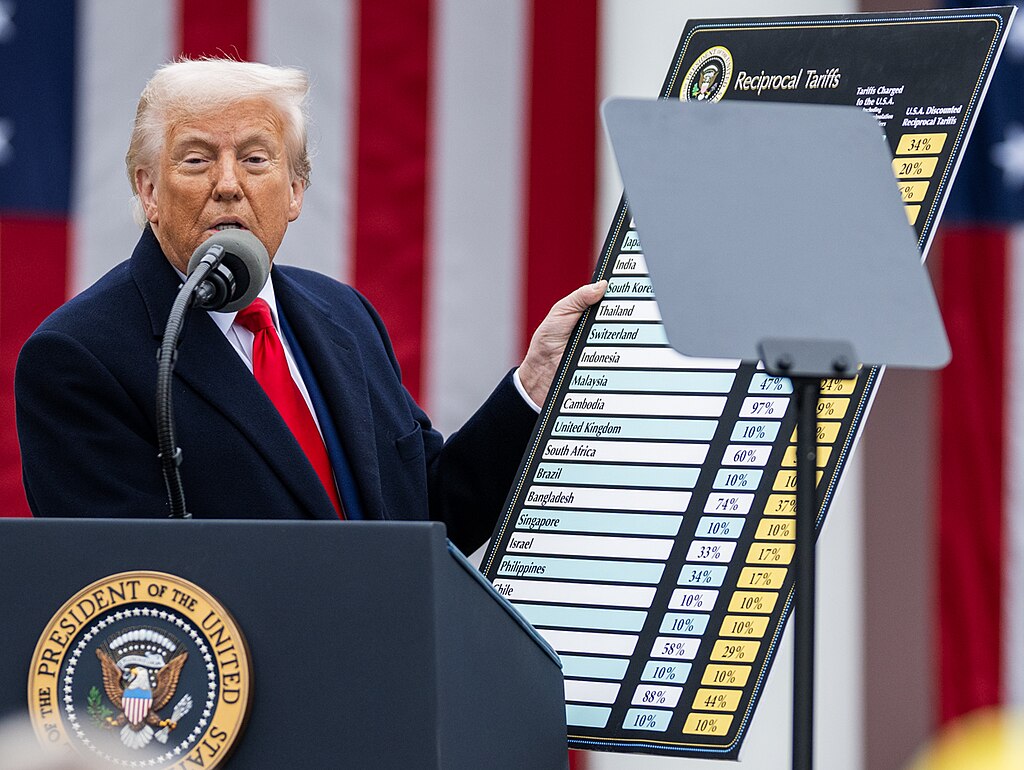
A coalition of 25 Democratic-led U.S. states has filed a lawsuit challenging President Donald Trump’s latest round of global tariffs, arguing that the administration exceeded its legal authority by imposing broad import taxes on goods from 60 trading partners. The case, filed Monday in the U.S. Court of International Trade in New York, marks the latest legal battle over Trump’s aggressive trade policy.
The lawsuit follows similar legal challenges from small U.S. businesses that sought to block the tariffs when they took effect last month. Previous court rulings have already struck down several of Trump’s sweeping tariffs during his second term, yet the administration has continued introducing new trade measures despite repeated legal setbacks.
The tariffs, announced on July 24, impose duties of 10% and 12.5% on imports from 60 trading partners, including the European Union. The Trump administration justified the move by claiming those countries had failed to adequately prevent exports linked to forced labor. The measures replaced an earlier 10% global tariff that had expired.
States including Oregon and New York, all led by Democratic attorneys general or governors, argue the administration is misusing Section 301 of the Trade Act of 1974. While Section 301 has been used by previous presidents to address unfair trade practices, the plaintiffs contend it has historically targeted specific countries or industries—not nearly all U.S. imports.
Oregon Attorney General Dan Rayfield criticized the policy, saying the administration continues to create uncertainty for businesses and consumers despite multiple court defeats. The White House defended the tariffs, arguing they are a lawful response to unfair trade practices and necessary to protect American workers from goods produced with forced labor.
The lawsuit also claims the administration is using forced labor concerns as a legal pretext to revive tariffs that courts previously ruled unlawful under different authorities, including the International Emergency Economic Powers Act (IEEPA). According to the states, broad tariffs affecting more than 99% of U.S. imports are unlikely to address global forced labor issues and instead impose higher costs on American businesses and consumers while creating additional legal uncertainty over U.S. trade policy.







