


 Intel Reaffirms Role in Elon Musk’s Terafab Chip Project
  Iran Tanker Attacks Surge as Hormuz Oil Flows Near Prewar Levels
  Tencent Shares Fall as $5 Billion AI Bond Sale Weighed
  US Conducts Non-Nuclear Explosion Test to Boost Nuclear Detection
  Pentagon Launches Autonomous Warfare Command
  Broadcom, Oracle and SpaceX Seek Billions in Private Debt for AI Expansion
  Circle Urges EU to Revise MiCA Stablecoin Rules
  San Francisco Halts New Data Center Construction With 45-Day Moratorium
  Florida Seeks Tougher Meta Rules to Protect Young Users
  Crypto Lobbying Hits $13M as Clarity Act Stalls
  TSA Removes Chairs for Airport ID Check Officers
  JD Vance Says Iran Must Cut Nuclear Enrichment to End War
  Zcash NU7 Testnet Cuts Block Time to 25 Seconds
  TSMC Q3 Revenue Beats Estimates as AI Chip Demand Surges
  UK Warned Over Growing Reliance on US Cloud Providers
  TikTok Accused of Testing Fake Safety Tools on Users
  Mexico Bars Dual Citizens From Presidential Races Starting in 2028


 Add as a preferred source on Google
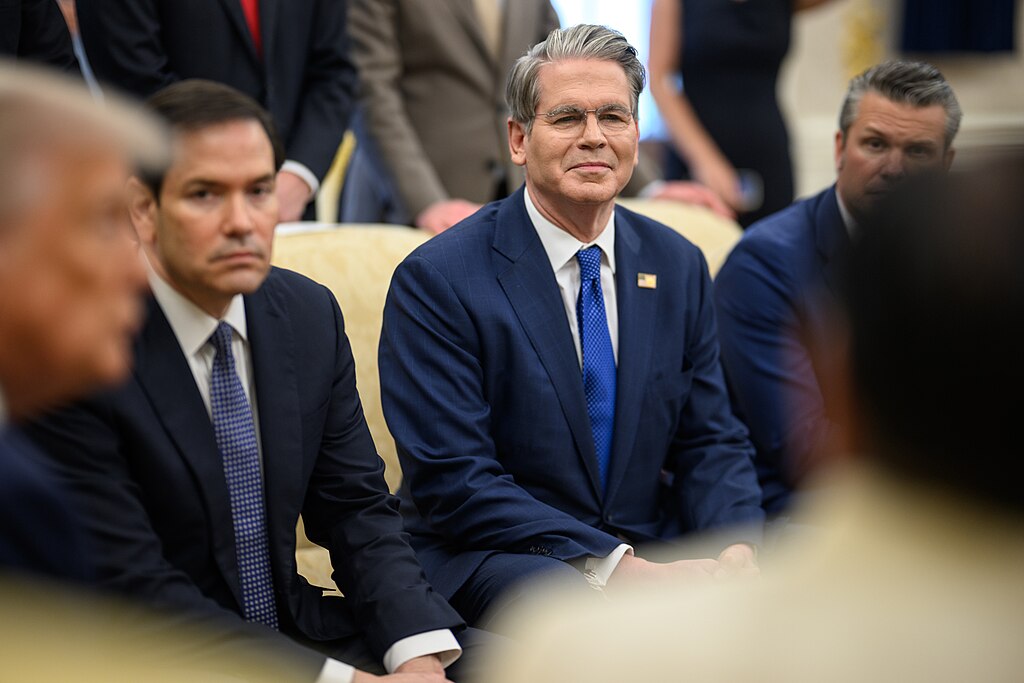
U.S. Treasury Secretary Scott Bessent and Federal Reserve Chair Jerome Powell convened an urgent closed-door meeting with the chief executives of America's largest banks this week, warning them about serious cybersecurity threats posed by Anthropic's newly launched artificial intelligence model, according to two sources with direct knowledge of the matter.
The meeting, held Tuesday at the Treasury Department in Washington, D.C., was prompted by the release of Anthropic's powerful new Mythos AI model, which the company itself acknowledged could expose previously undiscovered vulnerabilities across every major operating system and web browser in existence. Rather than pursuing a wide public launch, Anthropic opted to limit access to approximately 40 technology companies — including Microsoft and Google — while simultaneously engaging in active discussions with U.S. government officials about the model's far-reaching capabilities.
Banking regulators and financial officials used the gathering to stress the importance of proactive defense strategies, urging institutions to assess and strengthen their cybersecurity infrastructure in light of threats that next-generation AI systems like Mythos could potentially enable. The timing was strategic, as many top bank executives were already in Washington attending separate industry events.
Bloomberg News, which broke the story, reported that the CEOs of Citigroup, Morgan Stanley, Bank of America, Wells Fargo, and Goldman Sachs were among those present. JPMorgan's Jamie Dimon was notably absent, one source confirmed. Goldman Sachs and the Federal Reserve both declined to offer comment, while the Treasury Department, participating lenders, and Anthropic had not responded to media inquiries at the time of publication.
The development highlights growing concerns among policymakers and financial regulators about the dual-use nature of advanced AI — recognizing both its transformative potential and its capacity to introduce unprecedented risks to critical infrastructure and global financial systems.







