


 Genesis Minerals to Acquire Vault in A$5.6 Billion Deal After Regis Withdraws
  AstraZeneca Shares Sink After Wainua Trial Misses Key Heart Disease Goal
  SK Hynix Prices Record U.S. ADR Offering at $149 After $200 Billion Investor Demand
  Chinese Chip Stocks Jump as Apple Reportedly Tests CXMT Memory Chips for China Devices
  OpenAI Executive Fidji Simo to Step Down Amid Health Challenges Ahead of IPO
  Wolfspeed Sues Navitas Over GaN and SiC Patent Infringement
  SpaceX Stock Draws Bullish Wall Street Coverage Ahead of Nasdaq-100 Inclusion
  Paramount-Warner Bros. Discovery Merger Faces Lawsuit From 12 States
  Morgan Stanley Names Marks & Spencer Top European Retail Pick, Sees Strong Upside
  UBS Starts CarTrade Tech With Buy Rating, Sees Strong Earnings Growth and ₹4,000 Target
  Elon Musk Says Anthropic Leads AI Race as Claude Models Challenge OpenAI
  Fast Retailing Raises Full-Year Forecast After Uniqlo Owner Beats Q3 Profit Estimates
  Levi Strauss Raises 2026 Outlook After Q2 Earnings Beat, Shares Drop Despite Strong Results
  SK Hynix Shares Drop After Strong Nasdaq Debut Despite $26 Billion ADR Listing
  SoftBank Corp Partners With Sierra to Expand AI Customer Support Across Japan


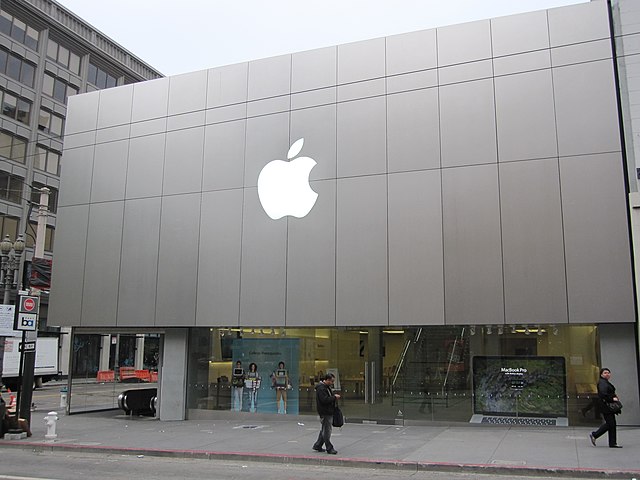
Apple may soon increase prices across some of its products as rising memory and storage chip costs continue to pressure the consumer electronics industry. In an interview with The Wall Street Journal, Apple CEO Tim Cook said the company is facing significant cost increases driven by surging demand for artificial intelligence infrastructure and data centers.
The growing adoption of AI technologies has intensified competition for memory and storage components, particularly DRAM chips and high-bandwidth memory (HBM), which are essential for AI servers. As more chip production is directed toward AI-related applications, supplies available for smartphones, laptops, and other consumer devices have become tighter, resulting in higher prices throughout the semiconductor market.
Cook acknowledged that Apple has worked to absorb some of these costs to protect consumers from price increases. However, he noted that the scale of the recent cost surge has made that approach increasingly difficult to maintain.
“Price increases are unavoidable,” Cook said, explaining that suppliers are passing substantial cost increases on to manufacturers. He added that the company hopes memory pricing and supply conditions will eventually stabilize for consumer electronics.
While Cook did not specify when price adjustments could take effect, he also declined to identify which Apple products may be impacted. The comments come as Apple prepares for several major product launches, including its highly anticipated foldable iPhone, which is reportedly expected to debut alongside the iPhone 18 Pro and iPhone 18 Pro Max later this year.
Industry groups representing automakers, retailers, electronics manufacturers, and other sectors have recently warned that increasing demand for memory chips could lead to higher prices for a wide range of consumer goods while also creating supply chain disruptions.
Cook revealed that Apple is willing to use its substantial cash reserves to help address supply constraints and support increased semiconductor production capacity. However, he emphasized that Apple has no intention of entering the memory manufacturing business or building its own storage and memory chip factories.
The situation highlights how the rapid expansion of AI infrastructure is reshaping the global semiconductor industry, affecting both enterprise technology providers and everyday consumer electronics products.







