


 Trump Threatens Escalation Against Iran, Warns of Infrastructure Strikes
  Fonterra Admits Anchor Butter "Grass-Fed" Label Misled Consumers After Greenpeace Lawsuit
  U.S. Stock Futures Steady Amid Iran Ceasefire Talks and Trump Address
  Japan Business Sentiment Rises as Iran War Fuels Inflation Fears, BOJ Rate Hike Looms
  U.S. Job Market Braces for Slow Recovery Amid Middle East Tensions and Economic Uncertainty
  Japan Signals Readiness to Intervene as Yen Weakens Toward 160 Per Dollar
  Annie Altman Amends Sexual Abuse Lawsuit Against OpenAI CEO Sam Altman
  Russell 1000 Companies Hit $2.2T Cash Record While Aggressively Reinvesting in Growth
  Apple Turns 50: From Garage Startup to AI Crossroads
  Trump Expands Tariffs on Pharmaceuticals and Metals One Year After Liberation Day
  Nike Beats Q3 Estimates but China Weakness and Margin Pressure Weigh on Outlook
  Cybersecurity Stocks Tumble After Anthropic's Claude Mythos AI Leak Sparks Market Fears
  Novartis to Acquire Biotech Firm Excellergy in $2 Billion Deal
  Europe's Aviation Sector on Track to Meet 2025 Green Fuel Mandate
  Jefferies Upgrades Sodexo to Buy With €55 Target After Historic CEO Appointment
  Trump Administration Plans 100% Tariffs on Pharmaceutical Imports
  Tesla Q1 2026 Deliveries Miss Estimates as AI Strategy Takes Center Stage


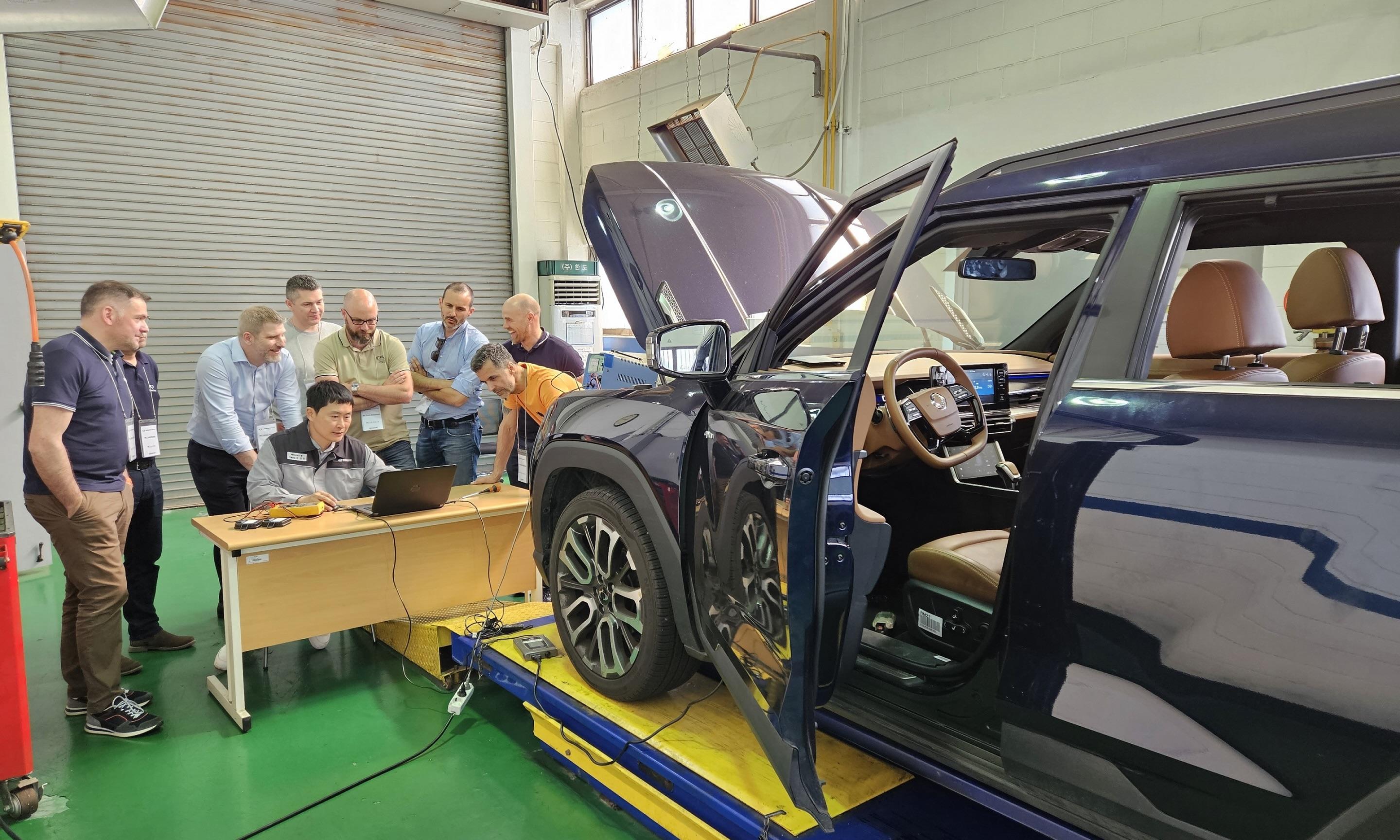
BYD, the world's third-largest EV battery producer, and KG Mobility Corp. are reportedly in advanced talks to jointly establish an EV battery cell factory in South Korea, aiming to bolster supply for smaller automakers and further green mobility.
As reported by industry sources in Seoul on Sunday, discussions between the Chinese cell manufacturer and the South Korean automaker, specializing in sport utility vehicles, have indicated a target start date for mass production of the battery pack plant in January 2025. This facility will mark the first joint factory in the nation between a foreign cell producer and a local carmaker.
Amidst the ongoing negotiations, details such as the exact location and capacity of the factory are yet to be finalized, according to a KG Mobility official. Industry insiders have suggested that the factory might be established near KG Mobility's plant in Pyeongtaek, approximately 80 kilometers (50 miles) southwest of Seoul.
One of KG Mobility's key plans involves incorporating lithium iron phosphate batteries into the upcoming Torres EVX, an electric variant of their mid-sized SUV, set to launch in September. This SUV holds the distinction of being the first South Korean electric vehicle equipped with LFP batteries.
Since 2021, the automaker has collaborated with BYD to develop this new line. With its vision fixed in the upcoming years, KG Mobility intends to utilize BYD's batteries for its electric pickup truck, codenamed O100EV, which is expected to be unveiled by 2025, and a large SUV called SUV-F100EV.
Renault S.A., a French automaker with plans to manufacture electric vehicles in South Korea's largest port city, Busan, has been actively exploring battery suppliers from other countries.
While reportedly engaging with Chinese cell manufacturers, including the industry leader Contemporary Amperex Technology Co. (CATL) and BYD, Renault Korea Motors Co., the South Korean subsidiary, has also been in talks with Panasonic and Automotive Energy Supply Corp. (AESC) from Japan, and Sweden's Northvolt AB.
Renault Korea Motors Co. has faced certain difficulties in securing battery supplies from South Korean manufacturers, such as LG Energy Solution Ltd., SK On Co., and Samsung SDI Co., despite discussing partnerships for EV production starting in 2026.
In response, these cell manufacturers have been expediting the construction of factories in the United States to maximize the benefits offered by Washington's policy, which prioritizes products manufactured in the country or by its trading partners.
According to the US Department of Energy, out of the 15 planned plants scheduled for completion by 2025, the three leading battery makers spearhead 11 projects for major production facilities in the U.S.
Photo: KG Mobility Newsroom







