


 China vs. NASA: The New Moon Race and What's at Stake by 2030
  NASA Resumes Cygnus XL Cargo Docking with Space Station After Software Fix
  Trump Administration Releases New UFO Files and Apollo Mission Records
  Blue Origin New Glenn Explosion Could Delay Launch Operations Until 2028
  FDA Pilot Program Eases Rules for Nicotine Pouch Makers
  Is space worth the cost? Accounting experts say its value can’t be found in spreadsheets
  Cogent Biosciences Soars 120% on Breakthrough Phase 3 Results for Bezuclastinib in GIST Treatment
  Trump and Merck KGaA Partner to Slash IVF Drug Costs and Expand Fertility Coverage
  Tabletop particle accelerator could transform medicine and materials science
  Trump Administration to Launch Autism Initiatives Targeting Acetaminophen Use and New Treatment Options
  SpaceX Delays Starship V3 Launch Ahead of Potential Record IPO


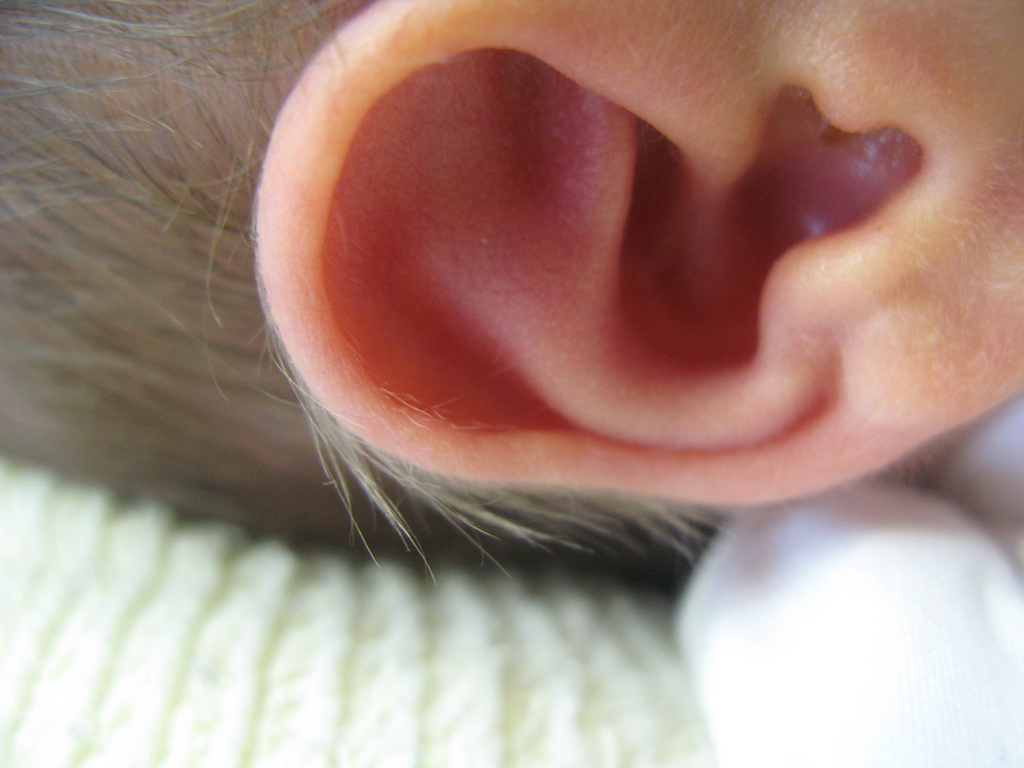
Growing human body parts has been the focus of study for many in the medical industry for decades. In a recent breakthrough, a new study revealed that children with underdeveloped ears were given new ones that were grown using their own cells. This is a first in the world and is touted by the researchers behind the study as proof that restoring the ear structure can be done.
As Tessa Hadlock, of the Massachusetts Eye and Ear Infirmary in Boston, explained to New Scientist, children with underdeveloped ears suffer from a condition known as microtia. Those who are afflicted by the condition often feel self-conscious and can also become a target for bullying. By restoring these children’s ears to how they would have normally developed, they won’t simply get an ear or two; they’ll also get the chance to live a normal life.
“It’s a very exciting approach,” Hadlock said. “They’ve shown that it is possible to get close to restoring the ear structure.”
The research explained the method and implications of their study in a paper. The ears were basically grown using the cells of the children, shaped using structures that dissolve. This is a huge advancement in terms of how the condition can be treated.
Previously, those suffering from microtia could only choose to have a prosthetic ear or to harvest cartilage from the child’s ribs to create a false ear. Neither of these solutions was perfect and were often accompanied by dangerous side-effects.
Naturally, since this is the first procedure of its kind in the world, the results were rather mixed. Some of the ears were misshapen, but the parts were intact.
The researchers will now focus on refining the approach to make it safer, more precise, and produce more aesthetically pleasing results. In any case, it’s still a promising development.







