


 Venezuela Appoints Felix Plasencia to Lead Foreign Relations and Trade
  Reuters/Ipsos Poll: Most Americans Expect U.S.-Iran War to Be Prolonged
  Trump to Deliver National Address on 2020 Election Intelligence, Voting Machine Security
  Zelenskiy Plans Ukraine Government Shake-Up as Prime Minister Svyrydenko Set to Step Down
  Minnesota Wildfires Spread as Governor Tim Walz Deploys National Guard
  Republican Senator Lindsey Graham Dies at 71, Leaving South Carolina Senate Seat Vacant
  Trump to Deliver National Address on Declassified 2020 Election Intelligence
  Brazil Court Bars Flavio Bolsonaro From Visiting Jair Bolsonaro Ahead of Election
  UK Sanctions 24 Russian-Linked Targets Over Cyberattacks and Election Interference
  Israel-Lebanon Talks Resume in Rome as Ceasefire and Troop Withdrawal Remain Elusive
  Iranian Missile Strike on UAE Oil Tankers Kills Indian Crew Member in Strait of Hormuz
  Trump Administration Bars U.S. Travelers From Congo Flights Amid Ebola Outbreak
  Israeli Strikes Kill Six in Gaza as Ceasefire Talks Continue in Cairo
  Trump Says U.S. Strikes on Iran Will Continue Until Nuclear Deal Is Reached
  UN Says Hamas Disrupted Gaza Aid Distribution, Group Denies Allegations
  Western Allies Push for More Air Defenses for Ukraine at Paris Summit
  HHS Watchdog Reports $5.56 Billion in Healthcare Fraud Recoveries as Enforcement Actions Decline


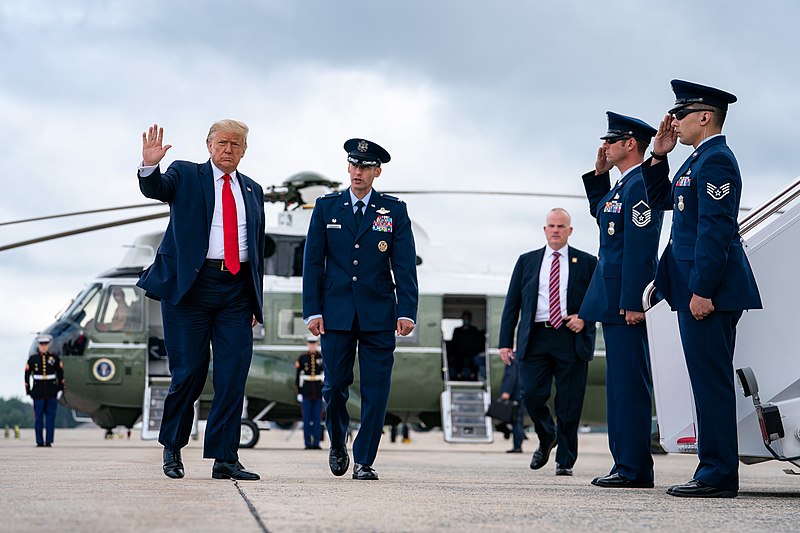
Since 2019, Hong Kong underwent a lot of mass protests, with many of its residents facing police brutality because of China’s interference with its autonomy. Recently, Donald Trump announced that he has signed legislation to impose sanctions on China for its interference.
CNBC reports during a meeting with the press at the White House Rose Garden, Trump announced that he has signed the legislation that will bring sanctions onto China. The law, which is now referred to as the Hong Kong Autonomy Act, would result in mandatory sanctions against Chinese officials and companies that aided in the nation’s imposing of a security law designed to forcibly eliminate any dissent in Hong Kong. The bill was passed in Congress earlier in the month.
The Trump administration has long been critical of the national security law Beijing has tried to impose on Hong Kong. The law would mean rejection of any literary material that opposes or criticizes the Chinese Communist Party as well as place a limit on Hong Kong’s autonomy.
Along with imposing sanctions on China, Trump has also announced that he signed a new Executive Order ending the preferential treatment for Hong Kong. “Hong Kong will now be treated the same as mainland China. No special privileges, no special economic treatment, and no export of sensitive technologies. In addition to that, as you know, we are placing massive tariffs and have placed very large tariffs on China,” said Trump during the meeting.
Meanwhile, the administration has come under fire for its new law forcing international students to return to their home countries unless they are enrolled in classes in the upcoming semester. This policy has resulted in states as well as educational institutions filing lawsuits to drop the rule. The first to sue were ivy league schools Harvard and MIT. 59 other universities and educational institutions have expressed their support to drop the policy in a court brief. 18 state attorneys general have also filed lawsuits.
Massachusetts District Judge Allison Burroughs revealed that the parties have now come to an agreement. The agreement stipulates the policy made back in March, that foreign students would be able to attend their classes that have since moved online because of the pandemic, and that they would be allowed to remain in the US legally.







