


 Asian Stocks Drop as Trump Signals Iran War Escalation
  Trump Expands Tariffs on Pharmaceuticals and Metals One Year After Liberation Day
  Asian Stocks Surge on Trump's Iran War Comments and Dip-Buying
  The Beauty Beneath the Expressway: A Journey from Self to Service
  Nike Beats Q3 Estimates but China Weakness and Margin Pressure Weigh on Outlook
  Bank of America's $72.5M Epstein Settlement: What You Need to Know
  Oil Prices Climb as Middle East Conflict Keeps Supply Risks Elevated
  Trump Administration Plans 100% Tariffs on Pharmaceutical Imports
  Columbia Student Mahmoud Khalil Fights Arrest as Deportation Case Moves to New Jersey
  Gold Prices Rebound But Head for Worst Month Since 2008 Amid Iran War Uncertainty
  Every generation thinks they had it the toughest, but for Gen Z, they’re probably right
  Brazil Meat Exports Weather Iran War Disruptions With Rerouted Shipments
  Russell 1000 Companies Hit $2.2T Cash Record While Aggressively Reinvesting in Growth
  Star Entertainment Secures $390M Refinancing Deal to Stabilize Operations
  Nomura Upgrades PDD Holdings to Buy, Calls Stock Too Cheap to Ignore
  KPMG UK Cuts 440 Audit Jobs Amid Low Attrition and Cooling Professional Services Demand
  U.S. Dollar Climbs as Trump Escalates Rhetoric Against Iran


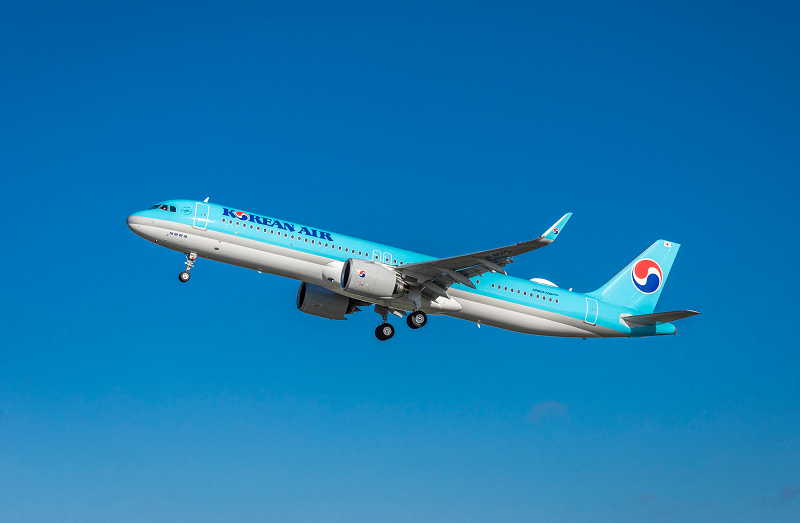
The $1.37 billion merger of South Korea's leading air carriers, Korean Air and Asiana Airlines, faces another delay as European antitrust authorities temporarily halt their investigation amid competition concerns.
In an effort to address the antitrust concerns raised by the European Commission (EC), Korean Air has requested an extension for the deadline to make a final decision on the merger with its smaller rival, Asiana Airlines. Korean Air is committed to developing measures that alleviate these concerns and aims to conclude discussions within the new timeframe.
This is the second time European authorities have postponed their decision on the Korean Air-Asiana deal since the initiation of their thorough investigation in February. Industry insiders suggest that Korean Air has been granted an additional two-month grace period.
In November 2020, Korean Air unveiled its bid to acquire the financially struggling Asiana Airlines, presenting an opportunity to become the largest airline in Northeast Asia. Following the announcement, the company submitted documents to gain antitrust approval from 14 countries.
Thus far, 11 countries have given their consent to the deal, while pending decisions remain in the US, Europe, and Japan.
The preliminary report issued by European regulators in May expressed concerns over potential antitrust issues, emphasizing the potential dominance of the merged unit in passenger and cargo flights between Korea and European cities such as Paris, Frankfurt, Rome, and Barcelona.
Despite these hurdles, experts hold an optimistic outlook, suggesting that the deal stands a chance of ultimately receiving approval. Hwang Yong-sik, a professor at Sejong University's School of Business & Economics and the head of the Civil Aviation Business Research Institute, believes that if Korean Air continues its efforts to meet the EC's demands, conditional approval is achievable.
Throughout this process, Korean Air has remained resolute in its commitment to completing the merger. This acquisition gained significant attention as it was the first major deal announced amidst the COVID-19 pandemic, at a time when the entire aviation industry was grappling with numerous uncertainties.
Upon completion of the planned merger, Korean Air, currently the 18th-largest airline by fleet, is projected to ascend to the 10th position globally, with an estimated business synergy valued between 300 billion to 400 billion won.
By enhancing the structure and incorporating more engaging elements, the revised text seeks to provide a clearer and more fascinating account of the ongoing merger process.
Photo: Korean Air Newsroom







