


 UK Sanctions 24 Russian-Linked Targets Over Cyberattacks and Election Interference
  Iraq PM Visits Washington as U.S. Oil, Gas Deals Take Center Stage
  Western Allies Push for More Air Defenses for Ukraine at Paris Summit
  EU Weighs New Trade Restrictions on Israeli West Bank Settlements
  Brazil Court Bars Flavio Bolsonaro From Visiting Jair Bolsonaro Ahead of Election
  Iran Says It Closes Strait of Hormuz After Warning Shot at Vessel
  Ukraine, Europe Launch Freyja Missile Shield to Strengthen Air Defense Against Russia
  Trump to Deliver National Address on Declassified 2020 Election Intelligence
  Zelenskiy Plans Ukraine Government Shake-Up as Prime Minister Svyrydenko Set to Step Down
  Venezuela Appoints Felix Plasencia to Lead Foreign Relations and Trade
  Israel Sets October 27 Election as Netanyahu Faces Tough Political Test
  Iran's Supreme Leader Vows Revenge as Trump Threatens Massive U.S. Military Response
  Israeli Strikes Kill Six in Gaza as Ceasefire Talks Continue in Cairo
  Republican Senator Lindsey Graham Dies at 71, Leaving South Carolina Senate Seat Vacant
  US-Iran Strikes Escalate as Strait of Hormuz Crisis Pushes Oil Prices Higher
  UN Says Hamas Disrupted Gaza Aid Distribution, Group Denies Allegations



Migration has become “the most toxic issue” in British politics, driving intensely emotional debates that are often based on prejudice and misunderstanding. Similarly emotional is housing – a finite resource in high demand at a time of crisis. Throughout Europe, housing shortages have become political battlegrounds, easily exploitable by right-wing, populist parties.
Reform UK has blamed mass immigration for many of the country’s problems, including the housing crisis and NHS waiting lists. The Conservative party manifesto includes a promise to legislate new “new ‘Local Connection’ and ‘UK Connection’ tests for social housing in England, to ensure this valuable but limited resource is allocated fairly”. This echoes a consultation opened by the government earlier this year on a policy of “British Homes for British Workers”.
These arguments rely on misguided understandings about how migration and housing are intertwined, and scapegoat migrants for the government’s own failures in providing homes. While the two issues can overlap, there is no evidence of a causal connection between a lack of available accommodation and levels of migration.
There is some evidence that migration has increased house prices, but the scale of this effect, and the causal relationship, is difficult to assess. Particularly in social housing, there are other factors affecting supply and demand, such as the Right to Buy, other government policies and the construction of new homes.
There are already many barriers in place to stop migrants from accessing social housing. Foreign-born nationals make up a very small proportion of social renters. “British homes for British workers” is a policy looking for a problem.
Around 80% of migrants who have lived in the UK for less than five years live in the private sector compared to 20% of the UK born population. Research also shows that around 20% of migrants live in social rented accommodation (a similar figure to the UK population). And government statistics show that 90% of lead tenants in social housing are UK nationals.
The real cause of housing shortages
The supply of social housing in England and Wales has decreased by 300,000 units since 2010. This is a consequence of austerity cuts to social housing funding, the Right to Buy, demolitions and properties converting to “affordable” rents as per 2011 UK government directive to permit rents to be set at 80% of market rent. While below market levels, these are rarely affordable to low-income households in high demand areas.
Supply of new homes is falling well short of demand from the local population. According to the National Housing Federation, only 8,386 new social homes were built in England in 2022-23. In the same period, councils recognised 52,800 households as requiring help because they were homeless or threatened with homelessness.
As a group of social housing sector leaders pointed out in a letter to the prime minister, proposals that make it harder for people to get on the housing register are more likely to force people into homelessness. They certainly do not stop people from needing a place to live. Migrants represent nearly a fifth of all homeless households.
There is already plenty of existing legislation that already makes it difficult for migrants to access social housing. Homelessness legislation in England stipulates that applicants demonstrate a local connection to their area to receive priority for social housing. This means that many migrants are instead directed to the private rented sector.
Recent migrants are also likely to be low priority applicants as they will not have had sufficient time on waiting lists. Studies have shown very limited use of social housing by migrants, often in specific areas. And some groups – including refugees, asylum seekers and students – are unlikely to qualify at all, as they have no access to public funds.

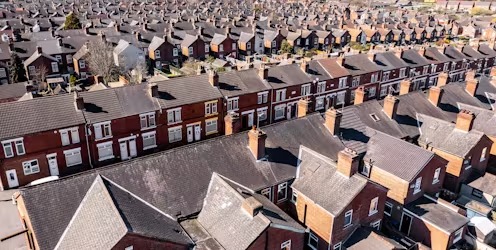
There are already many policies that make it difficult for migrants to access housing. Nednapa/Shutterstock
The Right to Rent provisions of the 2014 Immigration Act, which were designed to make it more difficult for migrants without legal status to access all rented accommodation, contains strict limitations on eligibility. Landlords are already obliged to check their tenants’ immigration status, so many will refrain from renting to migrants anyway.
All in all, there is no evidence of widespread opportunism among migrants taking advantage of a lax housing allocation system. And blaming migration for housing shortages allows politicians to distract from the real causes.
As the above-cited letter from housing professionals comments: “Further rationing of an already scarce resource does not address the failures of the last 40 years.” Rather than excluding groups from accessing housing, whoever is next in Number 10 must prioritise making this resource more plentiful. Both main parties have promised to build homes, but without making them affordable and accessible, the housing crisis will continue.







