


 SpaceX Mobile Network Could Cost Up to $130 Billion, Bernstein Says
  Xiaomi Unveils Xring O3 Chip for Flagship Foldable Phone
  OpenAI AI Agent Swarm Behind Hugging Face Hack
  Luxshare Shares Rise as First-Half Profit Jumps 18%
  Faraday Future Delivers First Robots in Middle East, Plans September Launches
  Nvidia Pauses AI Cloud Financing Deals Amid Antitrust Concerns
  Asian Stocks Slide as U.S.-Iran Fighting Lifts Oil Prices
  Dollar Holds Near Two-Week High as Fed Rate Hike Bets Rise
  Asian Currencies Mixed as Yen Nears 160, Oil Surges
  SoftBank Eyes $20 Billion Bond Sale to Refinance OpenAI Loan
  Pinterest Stock Falls as CFO Julia Brau Donnelly Resigns
  Google Changes EU Spam Policy Amid Antitrust Scrutiny
  Gold Prices Rebound as Fed Rate Hike Bets Rise
  Asian Tech Stocks Slide as Fed Rate Hike Bets Rise
  Salesforce Shares Surge as AI Demand Powers Q2 Earnings Beat
  Nvidia Revenue Soars 106% as AI Demand Hits ‘Inflection Point’
  UAE Central Bank Probes Banque Misr Over Iran Links


 Add as a preferred source on Google
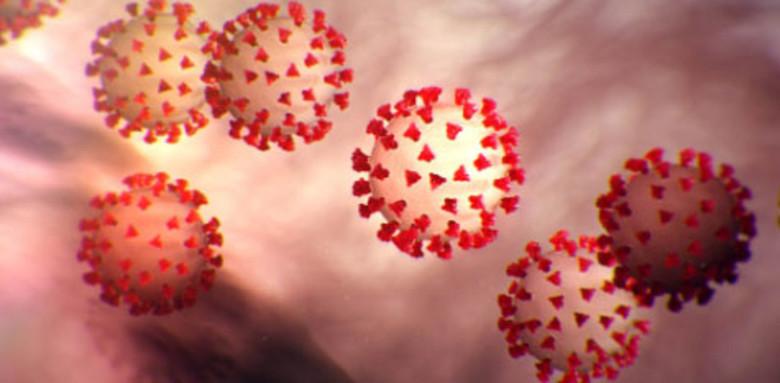


The COVID-19 pandemic has so far had the greatest impact in developed economies with strong health systems. And the results have been terrifying. But the epicentre of the pandemic could soon shift again – to low and middle-income countries, including those already fragile after years of conflict. Many are woefully unprepared.
Nesta recently highlighted how the pandemic has spurred an incredible number of collective intelligence initiatives – combining crowd insight, data and machine intelligence to mitigate the crisis. These range from scientists inviting citizens to help them design virus-fighting proteins, to DIY biology communities collaborating to design open-source testing kits.
So as developing countries gear up to tackle COVID-19, here are five ideas for simple collective intelligence projects that might help them.
1. Mapping demand for medical supplies
Poor countries with low bargaining power and weak health systems will be further challenged by having to compete with rich ones for supplies of masks, ventilators and other vital equipment. Even knowing what equipment is needed where will be a particular challenge in countries where public health information systems are weak.
In 2009, civil society organisations created a tool that enabled researchers and activists to map the available supplies of essential medicines across Africa.
Adapting this idea for COVID-19, frontline workers and emergency responders could use existing technology like Frontline SMS to report on missing or low supplies of key equipment to a common website. This data could then be displayed on a map showing shortage locations.
This would enable governments to see the needs of different health facilities, or even their existing capacity in real-time detail. It would also help humanitarian agencies, businesses and local manufacturers to respond where supplies are low.
2. Open-source local production
During other crises, organisations such as Field Ready have pioneered the localised production of humanitarian supplies – getting vital equipment quickly and cheaply into conflict zones where traditional logistics have failed. The COVID-19 response could incorporate ideas such as these and tap into the dynamism of the open-source design and engineering communities.
Governments should consider designating local makerspaces that use tools such as 3D printing as “critical infrastructure”, allowing them to continue to operate during lockdown. Connecting them to hospitals and clinics could provide local level manufacturing capacity that could help with supplying essential items such as personal protective equipment (PPE) and spare parts.
Successful designs could then be scaled up by local manufacturers with greater production capacity. This could be supported by a crowdsourced repository of open-source designs – for example, instructions on how to make face visors or use recycled materials for gowns. A rapid vetting process for each published design to determine its field readiness and level of safety would provide valuable additional information.
3. Identifying community assets
There is already emerging evidence from the UK that crowded living conditions accelerate the spread of COVID-19 – and globally, up to a billion people live in densely populated slums. In 2018, researchers in India estimated that an influenza-like respiratory disease would have a 44% higher infection rate among slum dwellers than the rest of the population – even with social distancing. A large factor in this is overcrowding.
For people living in cramped conditions in slums, where many family members share a single room, self-isolating in the home is far more difficult. Alternative measures will be needed.
Repurposing the likes of schools and churches could enable those with COVID-19 symptoms to self-isolate quickly. In China, stadiums were converted into mass quarantine centres, helping to stem the risk of infection within family groups.
Mapping tools such as Open Street Map could be used to identify the locations of such assets, in partnership with municipalities, businesses and community organisations. Humanitarian Open Street Map is already mobilising its volunteer mapping communities, while Open Cities initiatives have substantial expertise in community mapping for crisis resilience.
4. Smarter surge response
Many countries already face chronic shortages of health workers. But 89% of the global nurse shortage is concentrated in low and lower-middle-income countries.
During the HIV/AIDS pandemic and Ebola outbreaks, countries rapidly trained and mobilised community health workers from affected communities. Community health workers could now be vital in helping to track the numbers and symptoms of people with COVID-19.
Modifying symptom-reporting tools for community health workers to use would allow governments and humanitarian agencies to identify potential virus hotspots and deploy surge capacity – the ability to scale up (and down) – most effectively within a country. With a fast-moving pandemic and already-strained resources, governments and humanitarian organisations will need to focus and intensify their collaboration.
5. Medical hiveminds
The pace of the COVID-19 pandemic is so fast that the usual process of sharing knowledge via peer-reviewed journal articles is often proving too slow. Instead, doctors have been joining specialist discussion groups on social media such as Facebook and Twitter – creating a kind of medical hivemind – to develop answers in real time.
One of these, a Facebook group for registered physicians called the PMG COVID19 Subgroup has over 35,000 members worldwide. There may be a risk that mistakes or misinformation could be amplified with this kind of rapid information sharing and content should always be viewed carefully and critically. But so far it has helped develop new treatment protocols.
For poor countries with few doctors, mobilising the collective intelligence of frontline health professionals and humanitarian agencies across the world may help to speed up the generation and distribution of relevant knowledge. Collective intelligence projects like WeFarm, which uses text messaging and machine-learning to match farmers in East Africa with others who can help answer their questions (translated into four languages), could provide a model.
Past pandemics have shown that people with low literacy or proficiency in the main national language tend not to receive adequate public health information. Tapping into the global hivemind would also accelerate the creation of crowdsourced repositories of commonly-used words associated with the virus in mother tongue and native languages, such as the one created by Translators Without Borders.
We know from experience that humanitarian workers can struggle to absorb new innovations during acute emergency responses. But time is critical and by focusing on repurposing existing tools and tested approaches, we may be able to help stem the next wave of the pandemic.







