


 AstraZeneca’s LATIFY Phase III Trial of Ceralasertib Misses Primary Endpoint in Lung Cancer Study
  Jared Isaacman Confirmed as NASA Administrator, Becomes 15th Leader of U.S. Space Agency
  Sanofi’s Efdoralprin Alfa Gains EMA Orphan Status for Rare Lung Disease
  India–U.S. Interim Trade Pact Cuts Auto Tariffs but Leaves Tesla Out
  Anta Sports Expands Global Footprint With Strategic Puma Stake
  Prudential Financial Reports Higher Q4 Profit on Strong Underwriting and Investment Gains
  Alphabet’s Massive AI Spending Surge Signals Confidence in Google’s Growth Engine
  American Airlines CEO to Meet Pilots Union Amid Storm Response and Financial Concerns
  South Africa Eyes ECB Repo Lines as Inflation Eases and Rate Cuts Loom
  Viking Therapeutics Sees Growing Strategic Interest in $150 Billion Weight-Loss Drug Market
  Gold Prices Slide Below $5,000 as Strong Dollar and Central Bank Outlook Weigh on Metals
  Uber Ordered to Pay $8.5 Million in Bellwether Sexual Assault Lawsuit
  Royalty Pharma Stock Rises After Acquiring Full Evrysdi Royalty Rights from PTC Therapeutics
  SpaceX Starship Explodes in Texas During Test, Citing Nitrogen Tank Failure
  Tencent Shares Slide After WeChat Restricts YuanBao AI Promotional Links
  Neuralink Plans High-Volume Brain Implant Production and Fully Automated Surgery by 2026


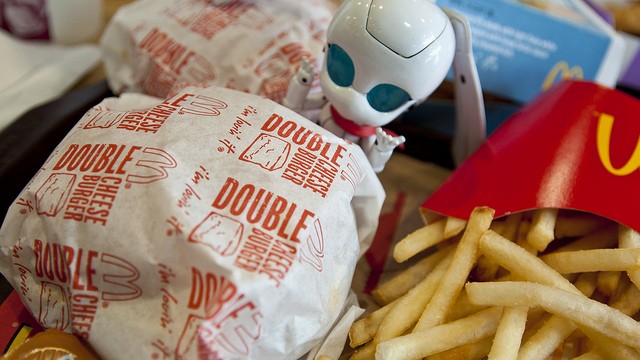
An investigation from Consumer Reports revealed that the packaging used for food at many major fast-food chains including McDonald's, Burger King, Chick-Fil-A, and Sweet Green contain a cancer-causing called PFAS, or per- and polyfluoroalkyl substances.
The same chemical is used for nonstick coating on pans, creating water-resistant clothing, and making fabrics and carpets stain-resistant.
PFAS-made packaging resembles paper or cardboard, but oils from greasy foods do not soak through.
Health and environmental advocates are calling for restrictions on PFAS use, especially in food packaging.
McDonald's has vowed to end the use of the chemical by 2025.
PFAS exposure has been linked to a growing list of problems, including increased risk for some cancers, immune system suppression, and lower birth weight, raising alarms about the use of these compounds, especially in items such as burger wrappers and salad bowls.
Some studies show PFAS exposure may LAO affect the growth, learning, and behavior of infants and older children, in addition to other health effects, according to Tracy Gregoire, Healthy Children Project Director of the Learning Disabilities Association of America. "There are safer alternatives to these harmful forever chemicals, and we are thrilled that McDonald's is joining a growing number of quick-service restaurants."
Justin Boucher, an environmental engineer at the Food Packaging Forum, a nonprofit research organization based in Switzerland, described the exposure as clear and direct, as the substances migrate into food.
Consumer Reports tested over 100 food packages from restaurants and grocery chains, finding the chemicals in many types of packaging—from single-use paper plates to wrappers and paper bags.
The report states that PFAS was found in some packaging from every retailer they tested, including many fast-food chains, such as McDonald's, Burger King, and Chick-fil-A.
The fast-food chains have publicly committed to reducing PFAS in their packaging after learning of CR's test results.
Even chains that promote healthier fare, such as Cava and Trader Joe's, were also found to have some packaging that contained PFAS, CR's tests found.













