


 Evernorth XRPN Nasdaq Listing Delayed to October 12
  Kazakhstan and Tether Explore Tenge Stablecoin and RWA Tokenization
  Cardano Price Eyes $0.30 as ADA Whale Activity Surges
  JPMorgan CEO Jamie Dimon Warns Mythos AI Raises Cyber Risk Tenfold
  Bitmine to Stop Ethereum Buying After Reaching 5% ETH Supply
  Kalshi Withdraws PEPE Perpetual Futures Filing
  Robinhood Buys $25 Million in Bitcoin for Corporate Treasury
  China Shuts 670 Banks as Bitcoin Eyes Financial Risks
  Solana User Growth Jumps 33%, Outpacing Ethereum and Chainlink
  Zcash Privacy Demand Rises as AI Exposes Bitcoin Transactions
  Sector Spotlight: Data Availability and Storage Lead 24-Hour Market Gains
  Bitcoin Price Falls Below $83K as Liquidations Hit $697M
  Circle Stock Falls 4% as Crypto Selloff Overshadows SAP Pay Expansion


 Add as a preferred source on Google
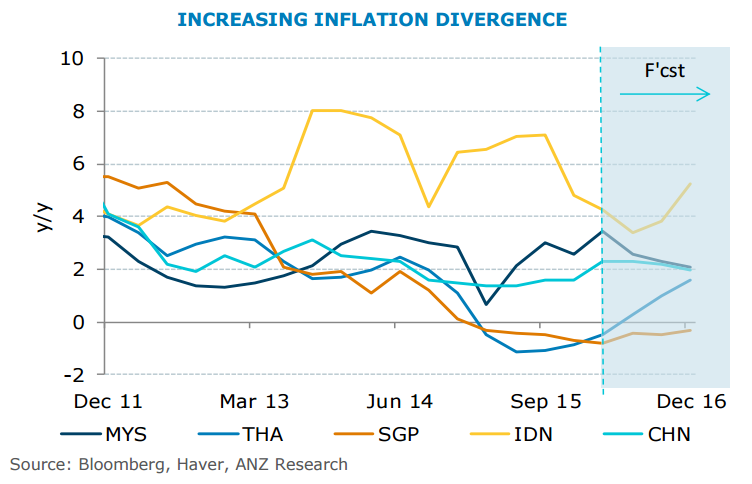
In emerging Asia, oil prices constitute a significant proportion of production costs for many items with large weights in the CPI baskets. Inflationary pressures are set to return to Asia as oil and food prices edge higher. Regional inflation is expected to pick up significantly on the back of price rises of nearly 25% in Brent crude and almost 10% for agricultural commodities since end-March.
The disinflationary impact of falling oil prices now appears to be behind us. The price of oil has gone above $50 a barrel for the first time in 2016 as supply disruptions and increased global demand continue to fuel a recovery. There is a clear causal relationship between international oil price developments and the prices of food and clothing and apparel. These three items together account for the bulk of consumer price baskets across South and Southeast Asia.
That said, a greater divergence in inflation outturns is likely across the Asian region. South Korea’s excess capacity to weigh on prices, while Indonesia’s stimulus gains traction. As the deflationary risk for China has dropped significantly, PBoC is likely to be less aggressively in terms of monetary policy easing. For Singapore, any inflation bounce is likely to be muted as the economy’s headline inflation will remain entrenched in negative territory on accommodation and private transport costs.
A range of trade and production data in the Asian region are scheduled for release this week. Data is likely to reveal that activity indicators are less idiosyncratic than inflation indicators across the region. Over the past couple of quarters, ASEAN central banks have exercised restraint in not cutting rates aggressively even amid subpar growth. As a result, Asian currencies have borne the bulk of the adjustments to the US Fed’s normalisation and volatile external markets. And now, with the US Fed getting close to hiking rates and global inflation starting to turn higher, it is becoming more challenging for Asian central bank to ease.
"Perhaps the urgency is for governments to shift their focus on fiscal stimulus to stimulate economic growth, given the diminishing efficacy of monetary policy, particularly during a protracted period of low, and in the case of Japan, negative, interest rates." said ANZ in a report to clients.







