


 Trump Recommends Darline Graham for Interim South Carolina Senate Seat
  UK Sanctions 24 Russian-Linked Targets Over Cyberattacks and Election Interference
  AstraZeneca Shares Sink After Wainua Trial Misses Key Heart Disease Goal
  Bain Capital Exits Kioxia After AI-Fueled Valuation Surge
  US-Iran Strikes Escalate as Strait of Hormuz Crisis Pushes Oil Prices Higher
  Iran Says It Closes Strait of Hormuz After Warning Shot at Vessel
  EU Weighs New Trade Restrictions on Israeli West Bank Settlements
  Republican Senator Lindsey Graham Dies at 71, Leaving South Carolina Senate Seat Vacant
  Israeli Strikes Kill Six in Gaza as Ceasefire Talks Continue in Cairo
  Western Allies Push for More Air Defenses for Ukraine at Paris Summit
  Iran's Supreme Leader Vows Revenge as Trump Threatens Massive U.S. Military Response
  Samsung Chairman Lee Jae-yong Expected to Meet Nvidia CEO Jensen Huang on AI and Chip Partnership
  Ukraine, Europe Launch Freyja Missile Shield to Strengthen Air Defense Against Russia
  SpaceX Stock Draws Bullish Wall Street Coverage Ahead of Nasdaq-100 Inclusion
  OpenAI Executive Fidji Simo to Step Down Amid Health Challenges Ahead of IPO
  SK Hynix Shares Drop After Strong Nasdaq Debut Despite $26 Billion ADR Listing
  Yaskawa Electric Shares Slide as Weak Profit Overshadows Strong AI Demand


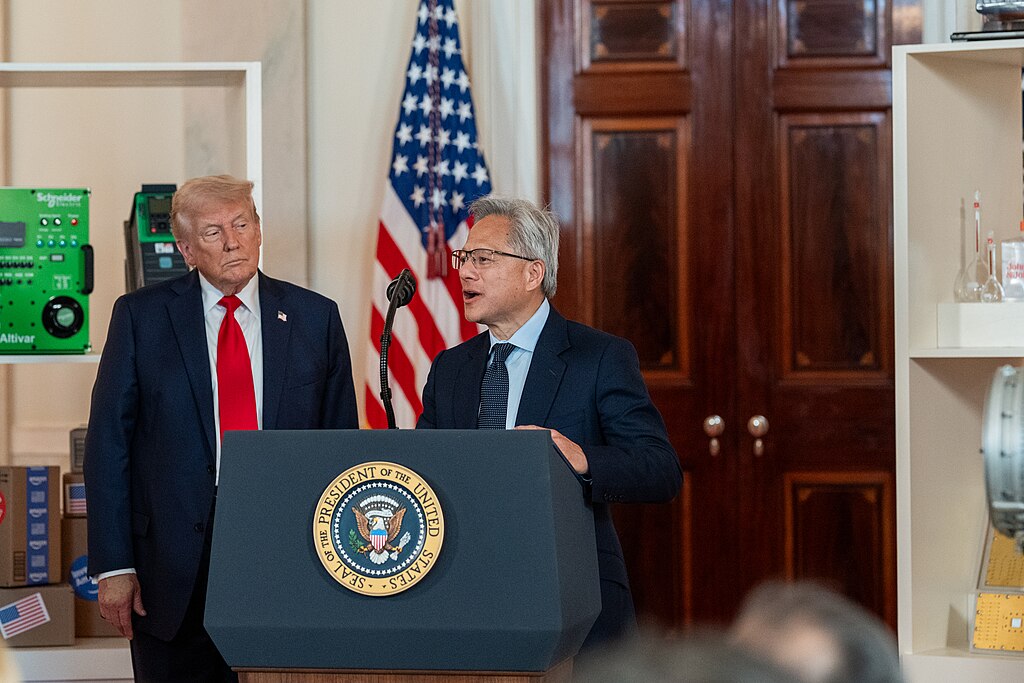
Nvidia’s efforts to expand AI chip sales in China remain stalled even after the U.S. approved several Chinese technology giants to purchase the company’s H200 processors. Although around 10 Chinese firms, including Alibaba, Tencent, ByteDance, and JD.com, reportedly received approval to buy Nvidia’s second-most powerful artificial intelligence chip, no shipments have been completed so far.
The delay highlights the growing tension in the U.S.-China technology rivalry, which continues to disrupt global semiconductor trade. Nvidia CEO Jensen Huang recently joined President Donald Trump’s trip to Beijing ahead of talks with Chinese President Xi Jinping, raising expectations that diplomatic discussions could help revive the blocked transactions.
Before tighter U.S. export controls were introduced, Nvidia controlled nearly 95% of China’s advanced AI chip market. China previously contributed about 13% of Nvidia’s revenue, while Huang estimated the country’s AI market could reach $50 billion this year. However, stricter regulations and political pressure from both governments have complicated the company’s business operations in the region.
The U.S. Commerce Department reportedly approved distributors such as Lenovo and Foxconn to facilitate H200 sales in China. Under licensing rules, approved buyers can purchase up to 75,000 chips each. Despite these permissions, Beijing has reportedly become cautious about allowing large-scale imports due to concerns that reliance on foreign technology could weaken China’s domestic semiconductor industry.
China is increasingly pushing local firms to adopt homegrown AI chips, especially products developed by Huawei. This strategy reflects Beijing’s broader goal of reducing dependence on U.S. technology amid escalating geopolitical competition. Additional security concerns over supply chain vulnerabilities and foreign technology oversight have also intensified scrutiny of Nvidia’s products.
Meanwhile, critics in Washington argue that allowing Nvidia to continue supplying advanced AI chips to China could reduce America’s technological advantage in artificial intelligence. The ongoing uncertainty leaves Nvidia caught between two powerful governments while the global AI chip market continues to grow rapidly.







