


 US Resumes Dollar Shipments to Iraq After Months-Long Suspension
  Gold Price Today: Bullion Heads for First Weekly Gain as Weak U.S. Jobs Data Eases Rate Hike Fears
  U.S. Dollar Drops as Weak Jobs Data Boosts Fed Pause Bets, Yen Jumps on Intervention Talk
  JPMorgan Cuts Gold Price Forecast, Sees Bullion Reaching $4,500 by End of 2026
  Oil Prices Slip as Iran Talks and Strong Supply Outlook Ease Market Concerns
  US Jobs Report Preview: June Payroll Growth Seen Slowing as Fed Rate Decision Looms
  Goldman Sachs Says China Competition Weighs More on EU Growth Than Trade Deficit
  Oil Prices Steady as U.S.-Iran Peace Talks Ease Strait of Hormuz Supply Fears
  China Services PMI Beats Forecasts as Strong Demand Supports June Growth
  Denmark Central Bank Intervenes to Support Krone Peg Against Euro
  New Zealand Consumer Confidence Rises in June as Inflation Expectations Ease
  Oil Prices Steady as U.S.-Iran Talks Ease Supply Fears Ahead of Holiday Weekend
  Moody’s Says Peru’s President-Elect Keiko Fujimori Could Boost Investor Confidence
  Australia Trade Balance Swings to Surprise Deficit as Imports Outpace Exports in May
  Japan Signals Surprise Yen Intervention Strategy as BOJ Hawkish Stance Puts FX Traders on Alert
  Asian Stocks Rebound as Tech Shares Rally on Fed Rate Cut Hopes and Easing Iran Tensions
  Asian Currencies Rise as Dollar Weakens; Yen Holds Steady Amid Japan Intervention Watch




To what extent does private investment help developing countries to reduce conflict and violence and to achieve the Sustainable Development Goals?
This is a hotly debated issue. Most international institutions such as the World Bank Group take the stance that the problem is not enough private investment. So they mobilise public resources to subsidise and protect private sector actors with the goal of greatly increasing foreign direct investment.
Meanwhile, community, labour and human rights advocates – particularly in fragile and conflict-affected countries – tend instead to see the dominant patterns of foreign direct investment as part of a continuing history of exploitation of the developing world.
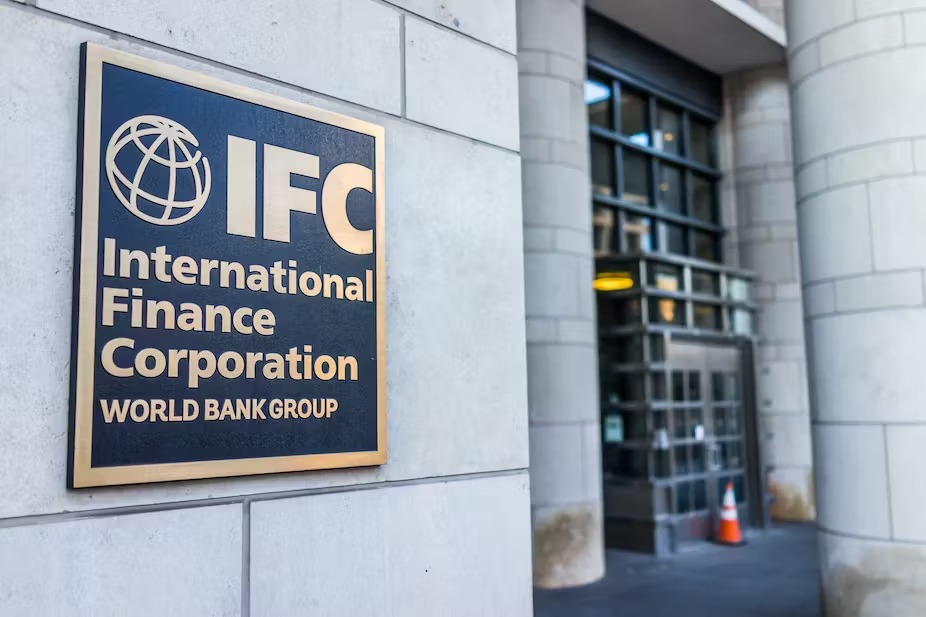
To help shed light on this debate, we undertook a comprehensive study of thousands of projects of the International Finance Corporation (IFC), the private sector arm of the World Bank Group. We focused on the period between 1994 and 2022.
We chose the IFC because it claims to invest with developmental purpose. It also purports to apply the highest standards of social and environmental performance. Additionally, many other private and public actors follow its lead in setting standards. If the IFC is getting it wrong it would be a good indicator of how things stand in the broader global system. We focused our study on the relationship between IFC projects and armed conflict, as violence has a clear and detrimental effect on human development.
The results establish that IFC projects cause significant increases in armed conflict around the world. A single project, on average, causes 7.6 additional armed conflict events in the year after it is introduced. These findings are consistent with other large quantitative studies that question the relationship between foreign direct investment and development. Foreign direct investment that increases violent conflict and makes development nearly impossible appears the rule, not the exception.
We conclude that current approaches to foreign investment need urgent reconsideration, with particular focus on the risk of violent conflict.
Our methodology
Many factors influence violent conflict, including the history of intergroup and state-society relations. So the study used sophisticated econometric analyses to isolate the IFC’s impact.
We first geolocated IFC projects and noted the years in which they were approved. Then we tested whether armed conflict rose in the area proximate to the IFC project in the following year. We controlled for other factors – such as the presence of politically excluded groups, GDP, the regime type, or the population size – that affect conflict.
In the analysis, we were careful to match and compare an IFC project area with those areas without IFC projects to which it is most similar. Finally, we considered and controlled for the possibility that conflict was already rising before the IFC project arrived. By excluding these other explanations for conflict events, we were able to make reasonable causal attributions.
Disturbingly, the study found that increases in armed conflict were concentrated in projects that the IFC told local and international stakeholders had potential limited adverse environmental or social risks. It claimed that these could be readily addressed through mitigation measures. These mitigation measures appear to be either ineffective or under-employed. Alternatively, the IFC is mis-classifying projects that carry more substantial conflict risk than it recognises or cares to make public.
One particularly disturbing example is the Ugandan government’s campaign of terror against local citizens to turn land over to an IFC client. The IFC also has yet to resolve activists’ complaints from 2019 of gender-based violence and threats of reprisals and intimidation against one of its project partners, Salala Rubber Corporation in Liberia.
The study also demonstrated that capital-intensive projects (that is, agribusiness, oil, gas, mining and infrastructure) have a larger propensity for socio-political and socio-economic disruption. Areas that receive capital-intensive projects experience, on average, an additional death from armed conflict in the following year.
Not above the rule of law
These results should perhaps not be surprising. Civil society groups have long concluded that the IFC prioritises its own profits and business interests over the “suffering of others” in ways that contribute to “multiple paths of extraction, dispossession, and conflict”. In 2020 Human Rights Watch characterised the IFC as “failing at remedies for project abuses”. This was based on the World Bank Group’s own commissioned review.
Yet, the IFC’s strategy has been to position itself above the rule of law. It continues to assert sovereign immunity. It claims that, as an international organisation, it should not be liable in national courts – even to parties it admittedly harms.
It maintains this stance despite recent reports of IFC complicity in covering up the sexual abuse of children to further its investment projects.
It appears beyond time for the 186 member governments that own the IFC to demand transparency, accountability and redress for harms done from the corporation and the private sector actors it funds. Others can also play a role. Governments that have perhaps naively relied on the World Bank halo should question the benefits they are told they can expect from IFC investments. The ratings agencies that classify IFC bonds as positive from an environmental, social, and governance perspective may want to question the bases on which such determinations are made.
At the same time, perhaps more credence can be given to recent calls by the UN secretary general to reform the global financial system to better support human security and human development.
This could include specialised intermediaries between the IFC and sensitive projects in difficult places. Independent and empowered local oversight appears necessary to ensure more inclusive and accountable forms of contextual analysis and risk mitigation planning, monitoring and evaluation of development impact, proactive conflict management, and accessible redress for harms done. This could reduce violent conflict and open more developmental potential for private investment in the developing world.







