


 SoftBank Shares Slide as OpenAI IPO Delay Concerns Weigh on AI Investment Outlook
  Meta CEO Zuckerberg Says AI Agent Development Has Slowed Despite Massive AI Investment
  Trump Administration to Launch Voluntary AI Standards for Frontier Models
  Microsoft Reportedly Plans New Job Cuts Across Sales, Consulting, and Xbox
  Kioxia Bets on AI Memory Boom With Next-Gen NAND Production in Japan
  Apple Eyes Chinese Memory Chips as AI Shortage Pressures iPhone Supply Chain
  Super Micro Shares Slide After Taiwan Raids Over Alleged Nvidia AI Chip Smuggling Probe
  Apple Expands iPhone Lineup, Boosts Foldable iPhone Production Plans Through 2027
  Baidu Shares Rally as Kunlunxin Eyes $50 Billion Hong Kong IPO
  Baige Online Shares Soar 333% in Hong Kong IPO Debut as AI Insurance Demand Lifts Chinese Listings
  TSMC CoWoS Capacity Forecast Raised as Mizuho Sees AI Server CPU Demand Surging Through 2027
  Chip Stocks Rally as Samsung and SK Hynix’s $1.3 Trillion Investment Plan Boosts AI Optimism
  Nvidia Stock Rises as SemiAnalysis Sees AI Data Center Revenue Beating Wall Street Forecasts
  Anthropic Restores Claude Fable 5 and Mythos 5 After U.S. Lifts AI Export Controls
  Apple Challenges India Antitrust Probe, Says CCI Copied Rivals’ Claims in App Store Case
  Meta Stock Jumps as AI Cloud Expansion Challenges AWS, Microsoft, and Google
  Anthropic Brings Claude AI Models to Microsoft Azure Foundry With NVIDIA Blackwell GPUs


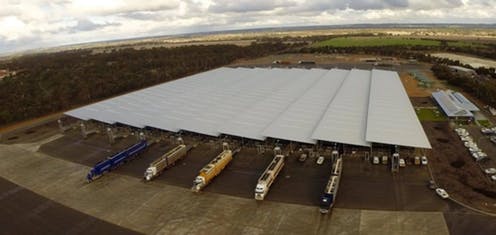


While many Australians were preoccupied with panic-buying toilet paper, sales of another commodity encountered a very different sort of crisis.
Wool sales were severely disrupted last week by a ransomware attack on IT company Talman Software, which processes more than 75% of sales in Australia and New Zealand.
A ransomware attack is a form of cyber-extortion, involving software that encrypts all of the files on a system. In this case, cyber-criminals then demanded A$8 million to unlock the files. Talman has refused to pay and has instead built a replacement version of the software.
Wool sales were halted for several days and hastily rescheduled, with an estimated 70,000 bales held in limbo. The industry’s turnover in a typical week is up to A$80 million, but prices may now drop as the postponed sales cause a glut in the market.
A ransomware attack on such an important sector of Australia’s economy shows how vital it is for authorities to defend markets against cyber threats. It is a matter of when, not if, these attacks will happen. There is a ransomware attack on a business every 14 seconds and by 2021 it will be every 11 seconds.
Diverse defences
How do we improve our resilience? One way is to avoid being too dependent on particular technologies. The wool industry already knew Talman Software’s dominant role represented a significant vulnerability.
Having a wider choice of software providers, not to mention an offline alternative, would have reduced or avoided the disruption.
Previous ransomware attacks on vital infrastructure, including last month’s attack against Toll Group, have shown the need for companies to keep their operations and IT systems separate.
We can define “operations” as the software and hardware that allow a company to keep its assets and processes working. IT systems, meanwhile, are the software and hardware that handles the company’s information and data.
Separating the two would make it harder for hackers to disrupt a company’s operations by invading its IT system. However, this would make it impossible to use IT systems to control operations remotely, which would bring its own pros and cons. Imagine a nuclear power plant – do you fit it with a remote shutdown option that could be crucial in an emergency but might also become a tempting target for hackers?
Governments need to help
This issue is bigger than simply a threat to companies’ profits. Although the latest attack targeted a commercial company, it damaged the economic welfare of farmers in two countries.
Fending off future attacks shouldn’t be a job just for companies seeking to safeguard their own profits – governments need to help too.
Governments should have a cyber-resilience unit that supports businesses in such emergencies. They should also provide support funds for victims, and national compulsory cyber insurance to guarantee the least disruption possible.
Governments need to defend public and economic infrastructure such as transport networks, power grids and important commercial markets.







