


 Anthropic Expands Claude Access for Cyber Defense Teams
  Australia Probes Flydubai Co-Pilot’s Links After FZ1073 Hijack Attempt
  EU Gives Crypto Platforms Three Months to Remove USDT Under MiCA Rules
  Micron Shares Rise 4% Despite Taiwan Strike Risk
  Florida Seeks Tougher Meta Rules to Protect Young Users
  TikTok Accused of Testing Fake Safety Tools on Users
  US DOT Ends Airline Privacy Review Without Enforcement
  US Government Moves $1 Billion in Bitcoin Amid Sale Speculation
  Intel Reaffirms Role in Elon Musk’s Terafab Chip Project
  Lincoln University Students Sue Missouri Over Decades of Underfunding
  Trump Weighs FBI Probe Into Nolan Wells’ Death
  OpenAI, Anthropic Back Mandatory AI Breach Reporting in Australia
  Elon Musk Accuses Indian Telecom Giants of Blocking Starlink Launch
  Circle Urges EU to Revise MiCA Stablecoin Rules
  Iran Tanker Attacks Surge as Hormuz Oil Flows Near Prewar Levels
  Crypto Lobbying Hits $13M as Clarity Act Stalls


 Add as a preferred source on Google
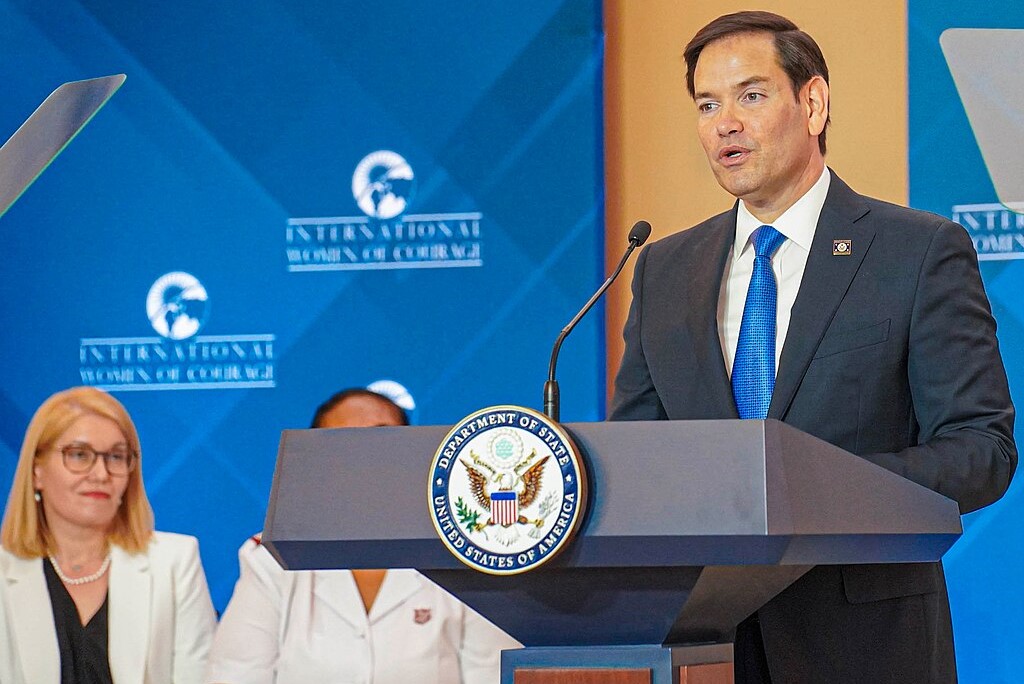
Secretary of State Marco Rubio has instructed American diplomats to leverage social media platform X and collaborate with Pentagon psychological operations units as part of a broader strategy to combat foreign anti-American propaganda. The directive, outlined in a cable reviewed by Reuters and first reported by The Guardian, targets foreign influence campaigns that threaten U.S. national security and stoke hostility toward American interests abroad.
The cable calls on diplomats to coordinate with the Pentagon's Psychological Operations division, formerly known as Military Information Support Operations (MISO). Historically, MISO has focused on influencing enemy combatants during active conflicts. One of its most notable efforts involved dropping graphic anti-ISIS leaflets over Syrian territory in 2015. However, the unit's involvement in civilian-facing information campaigns has drawn controversy. During the first Trump administration, Pentagon psyops teams ran covert social media accounts to undermine confidence in China's COVID-19 vaccine — a move that clashed with State Department officials at the time.
Rubio's directive also encourages diplomats to utilize X's crowdsourced "Community Notes" feature, along with unspecified artificial intelligence tools, to surface credible information and flag disinformation. The recommendation to rely on Elon Musk's platform has raised eyebrows, given that X has faced persistent criticism for enabling the spread of false information after Musk dramatically scaled back the platform's content moderation teams following his 2022 acquisition of Twitter. Musk and X maintain that community-driven moderation better preserves free expression.
The political dimensions are hard to ignore. Musk is a prominent Trump ally, and his platform has become a hub for pro-Trump voices online. Adding complexity, xAI was recently folded under SpaceX, placing a major defense contractor and a key social media outlet under unified ownership — a convergence that raises fresh questions about the boundaries between private tech influence and U.S. government information operations.







