


 Trump’s Inflation Claims Clash With Voters’ Cost-of-Living Reality
  Trump Allows Commercial Fishing in Protected New England Waters
  U.S. to Begin Paying UN Dues as Financial Crisis Spurs Push for Reforms
  India–U.S. Interim Trade Pact Cuts Auto Tariffs but Leaves Tesla Out
  Trump Endorses Japan’s Sanae Takaichi Ahead of Crucial Election Amid Market and China Tensions
  Federal Judge Restores Funding for Gateway Rail Tunnel Project
  U.S. Announces Additional $6 Million in Humanitarian Aid to Cuba Amid Oil Sanctions and Fuel Shortages
  Trump Signs Executive Order Threatening 25% Tariffs on Countries Trading With Iran
  US Pushes Ukraine-Russia Peace Talks Before Summer Amid Escalating Attacks
  Missouri Judge Dismisses Lawsuit Challenging Starbucks’ Diversity and Inclusion Policies
  Trump Says “Very Good Talks” Underway on Russia-Ukraine War as Peace Efforts Continue
  Jack Lang Resigns as Head of Arab World Institute Amid Epstein Controversy
  Netanyahu to Meet Trump in Washington as Iran Nuclear Talks Intensify
  U.S. Lawmakers to Review Unredacted Jeffrey Epstein DOJ Files Starting Monday
  Iran–U.S. Nuclear Talks in Oman Face Major Hurdles Amid Rising Regional Tensions
  Trump Backs Nexstar–Tegna Merger Amid Shifting U.S. Media Landscape
  South Korea Assures U.S. on Trade Deal Commitments Amid Tariff Concerns


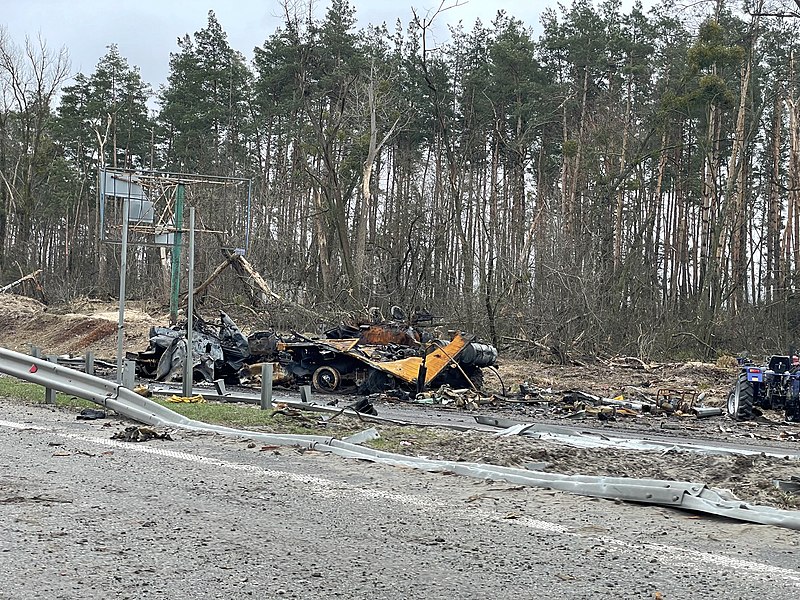
Australian Prime Minister Anthony Albanese said the Australian government might consider Ukrainian President Volodymyr Zelenskyy’s request to train Ukrainian forces. Albanese also condemned the recent air strikes by Russia on civilian targets in Ukraine.
Speaking to Australian media Wednesday, Albanese said he talked to Zelenskyy about what further assistance Australia may provide Ukraine at this time. Albanese said that his administration was considering Zelenskyy’s request to provide training for Ukrainian troops while condemning Russia’s latest attacks as “appalling.”
“I conveyed to him the condolences of the Australian people for the innocent victims who have been murdered by Russian aggression, targeting civilian locations including in Kyiv just about a kilometer from where I was just a couple of months ago,” said Albanese, referring to his visit to the Ukrainian capital back in July. “This is a fight not just about Ukraine’s sovereignty.”
“This is a fight about the international rule of law, about whether sovereign borders will be respected and that is why the world is united in their support for Ukraine against this Russian aggression,” said Albanese, adding that Australia is the largest non-NATO contributor.
Australia has provided around $314 million in military assistance to Ukraine with an additional $244 million in aid. Albanese’s comments also followed Zelenskyy’s appeal to the G7 countries this week for air defense capabilities to counter air strikes from Russia.
Zelenskyy told the G7 leaders that Ukraine needs an “air shield” to defend itself from Russian missiles following the strikes on civilian targets across Ukraine.
The United Nations General Assembly has also voted to condemn Moscow’s attempted annexation of four partially occupied Ukrainian territories. In a vote of 193-5, the countries that are part of the UNGA voted in favor of the resolution condemning the attempted annexation of Donetsk, Luhansk, Kherson, and Zaporizhzhia.
Five countries, including Russia, North Korea, Syria, Belarus, and Nicaragua, voted against the resolution. 35 countries, including China, India, South Africa, and Pakistan, chose to abstain. The result marks the strongest rebuke to Moscow, echoing the response when Russia annexed Crimea back in 2014.
China abstained, citing that it did not believe the resolution was helpful, according to its deputy UN ambassador Geng Shuang.













