


 Trump Says He Deserves 2026 Nobel Peace Prize Despite Uncertain Chances
  Trump Backs Florida Golf Course as Presidential Retreat
  Rapidus Seeks Chip Customers as Japan Pushes 2nm Semiconductor Revival
  France to Release 10 Million Barrels of Diesel to Ease Fuel Prices
  Mike Rogers Calls for End to US-Canada Tariff War
  US Pressures Allies to Distance From Anti-Disinformation Conference
  Vance Demands Iran Cut Nuclear Enrichment to End War
  Lincoln University Students Sue Missouri Over Decades of Underfunding
  San Francisco Halts New Data Center Construction With 45-Day Moratorium
  Houthis Strike Aden Airport as Yemen Fighting Escalates
  Mexico Bars Dual Citizens From Presidential Races Starting in 2028
  JD Vance Says Iran Must Cut Nuclear Enrichment to End War
  Pentagon Orders Iran Strike Preparations as Trump Weighs Military Action
  Trump Envoy Meets Sudan Army Chief in Egypt
  Russia Targets Danish Ukraine Suppliers in Sabotage Campaign
  Saudi Airport Attacks Kill Three as Yemen Fighting Escalates
  Tsai Warns of China’s Sustained Pressure on Taiwan


 Add as a preferred source on Google
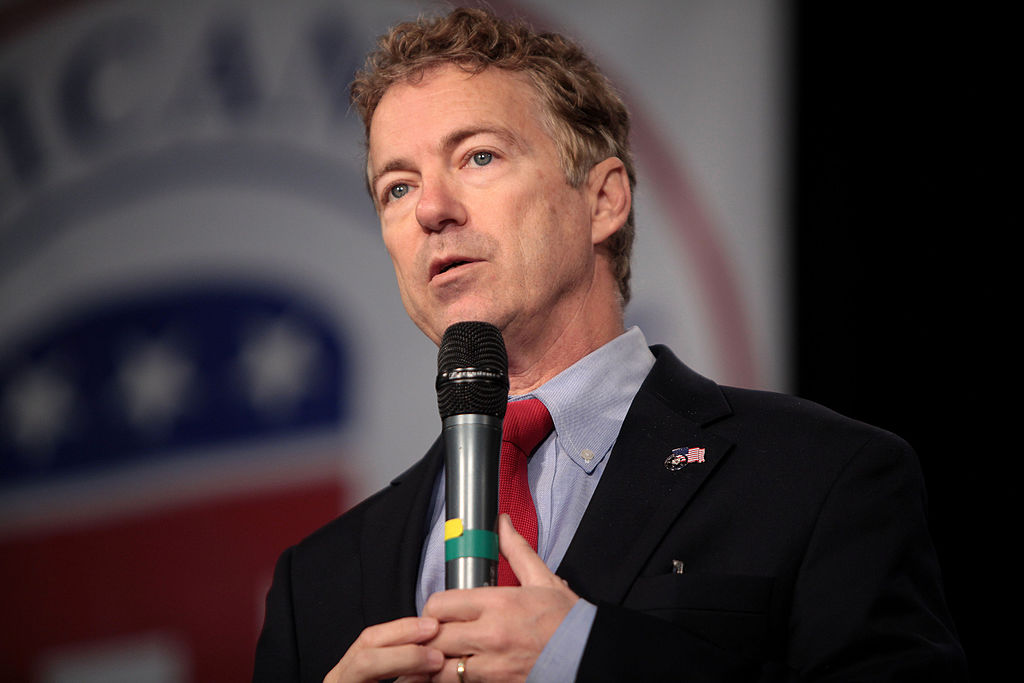
Senator Rand Paul (R-Ky.) has sharply criticized House Speaker Mike Johnson (R-La.), labeling him a "weak, weak man" for supporting a continuing resolution (CR) that Paul contends is filled with unnecessary spending.
Paul's Critique of the Continuing Resolution
The CR in question aims to extend government funding and prevent a shutdown. However, Paul argues that it perpetuates excessive spending without implementing necessary fiscal reforms. He expressed his disapproval on social media, stating, "This bill full of pork shows he is a weak, weak man."
Paul's criticism underscores a broader concern among fiscal conservatives who advocate for reduced government spending and a more balanced budget. They view the CR as a missed opportunity to address the nation's escalating debt.
Johnson's Position and Response
Speaker Johnson, who assumed his role in October 2023, has faced challenges in uniting a divided Republican caucus. His support for the CR reflects a pragmatic approach to avoid a government shutdown, which could have widespread economic repercussions.
In response to criticisms, Johnson has emphasized the importance of maintaining government operations while negotiations continue. He argues that the CR provides necessary time to reach a more comprehensive and fiscally responsible budget agreement.
Public Reaction and Social Media Buzz
The exchange between Paul and Johnson has ignited a flurry of reactions on social media platforms. Twitter user @FiscalHawk commented, "Rand Paul is right; we need leaders who stand firm against reckless spending." Conversely, @PragmaticPolicy noted, "While fiscal responsibility is crucial, avoiding a government shutdown should also be a priority."
User @ConservativeVoice expressed frustration, stating, "It's disappointing to see our leaders unable to come together for meaningful budget reform." Meanwhile, @BudgetWatcher observed, "This infighting only delays the necessary actions to address our national debt."
On the other hand, @PolicyAnalyst warned, "Continuing resolutions are temporary fixes; we need a long-term solution to our fiscal challenges." Finally, @TaxpayerAdvocate shared, "As a taxpayer, I expect my representatives to prioritize efficient and effective use of public funds."
Conclusion
The dispute between Senator Paul and Speaker Johnson highlights the ongoing tension within the Republican Party regarding fiscal policy and government spending. As Congress grapples with budget negotiations, the challenge remains to balance fiscal responsibility with the practicalities of governance. The outcome of these discussions will have significant implications for the nation's economic health and political landscape.







