


 UN Says Hamas Disrupted Gaza Aid Distribution, Group Denies Allegations
  Trump Administration Hands Over Key Evidence in Minnesota Immigration Shooting Investigations
  Zelenskiy Cabinet Reshuffle Puts Ukraine Defense Minister Fedorov’s Future in Focus
  EU Weighs New Trade Restrictions on Israeli West Bank Settlements
  Trump Administration Bars U.S. Travelers From Congo Flights Amid Ebola Outbreak
  Western Allies Push for More Air Defenses for Ukraine at Paris Summit
  Reuters/Ipsos Poll: Most Americans Expect U.S.-Iran War to Be Prolonged
  Russia Launches Missile and Drone Attacks on Kyiv, Zaporizhzhia, and Kharkiv
  Trump ICC Sanctions Challenged as Advocacy Groups File Free Speech Lawsuit
  Trump Says U.S. Strikes on Iran Will Continue Until Nuclear Deal Is Reached
  Venezuela Appoints Felix Plasencia to Lead Foreign Relations and Trade
  Ukraine, Europe Launch Freyja Missile Shield to Strengthen Air Defense Against Russia
  Trump to Deliver National Address on Declassified 2020 Election Intelligence
  HHS Watchdog Reports $5.56 Billion in Healthcare Fraud Recoveries as Enforcement Actions Decline
  Zelenskiy Plans Ukraine Government Shake-Up as Prime Minister Svyrydenko Set to Step Down
  US Military Launches New Strikes on Iran, Targets Threats to Strait of Hormuz Shipping
  Trump to Deliver National Address on 2020 Election Intelligence, Voting Machine Security


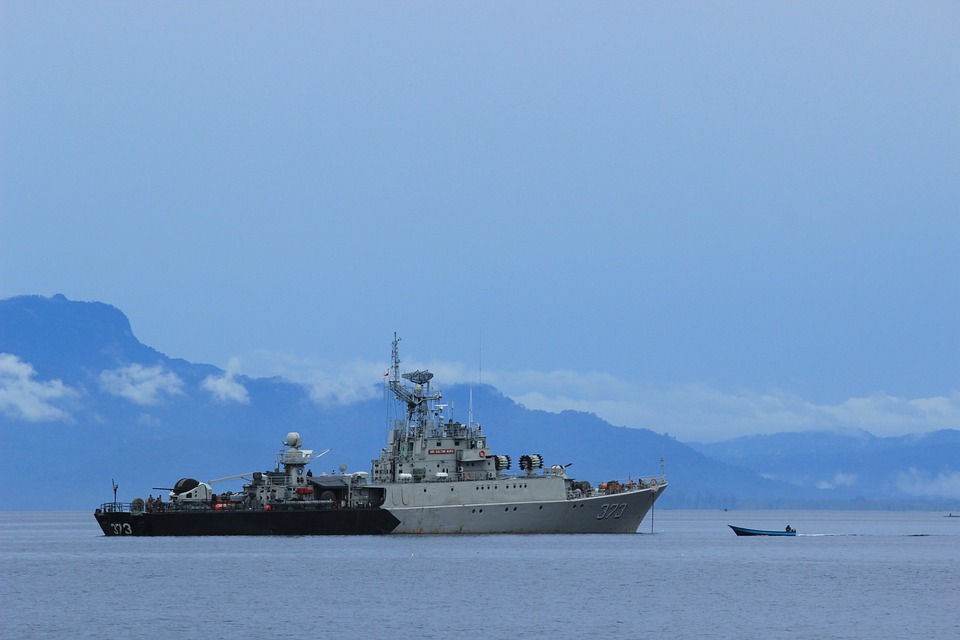
China is looking to make more aggressive efforts in assuming control over the majority of the South China Sea, angering the surrounding nations. An expert has claimed that amid tensions over the body of water, China is likely looking into hiding ballistic missiles in parts of the waters.
Tensions over the South China Sea are high as of late. According to Chatham House Asia-Pacific Program Associate Fellow Bill Hayton, China is likely adopting a defense strategy that involves hiding ballistic missiles in parts of the disputed waters. China made sweeping claims of sovereignty over the South China Sea, citing its nine-dash line but has been rejected by an international tribunal.
Hayton explained the move, citing that China may hide missiles in the waters as part of a defense against nuclear retaliation. Hayton also explained that China’s nine-dash line is not as historic as Beijing claims it to be, noting that they did not claim sovereignty over the waters until World War 2 and that they are doing so in order to extract resources.
“I think China has several objections in the South China Sea,” Hayton told Express. “Underlining it all is a belief that the rocks and the reefs within this nine-dash line belong to China. My own historical research has shown that that’s a bit of a myth. China didn’t claim the rocks and reefs in the southern part of the sea until World War II. The idea that this is an ancient historic claim is wrong. But it also, I think is looking to extract oil and gas as well as harvest all the fish in the South China Sea.”
China has previously been revealed to be building an “underwater Great Wall” in the disputed waters in order to spy on other countries. This is among several of its surveillance platforms that are laid out in the South China Sea.
The US has also opposed China’s sweeping claims, supporting other countries, including the Philippines. This week, US Defense Secretary Lloyd Austin reached an agreement with Philippine President Rodrigo Duterte to maintain the military treaty between the two countries called the Visiting Forces Agreement. The treaty would allow both countries to continue conducting joint military exercises amidst concerns that China is growing increasingly aggressive.







