


 US Pushes Ukraine-Russia Peace Talks Before Summer Amid Escalating Attacks
  Thailand Inflation Remains Negative for 10th Straight Month in January
  TrumpRx.gov Highlights GLP-1 Drug Discounts but Offers Limited Savings for Most Americans
  Global Markets Slide as AI, Crypto, and Precious Metals Face Heightened Volatility
  Trump’s Inflation Claims Clash With Voters’ Cost-of-Living Reality
  South Korea’s Weak Won Struggles as Retail Investors Pour Money Into U.S. Stocks
  Trump Signs Executive Order Threatening 25% Tariffs on Countries Trading With Iran
  South Korea Assures U.S. on Trade Deal Commitments Amid Tariff Concerns
  Trump Signs “America First Arms Transfer Strategy” to Prioritize U.S. Weapons Sales
  Norway Opens Corruption Probe Into Former PM and Nobel Committee Chair Thorbjoern Jagland Over Epstein Links
  U.S. Stock Futures Slide as Tech Rout Deepens on Amazon Capex Shock
  U.S. to Begin Paying UN Dues as Financial Crisis Spurs Push for Reforms
  China Extends Gold Buying Streak as Reserves Surge Despite Volatile Prices
  U.S. Lawmakers to Review Unredacted Jeffrey Epstein DOJ Files Starting Monday
  Gold Prices Slide Below $5,000 as Strong Dollar and Central Bank Outlook Weigh on Metals
  Japan Economy Poised for Q4 2025 Growth as Investment and Consumption Hold Firm
  Trump Backs Nexstar–Tegna Merger Amid Shifting U.S. Media Landscape


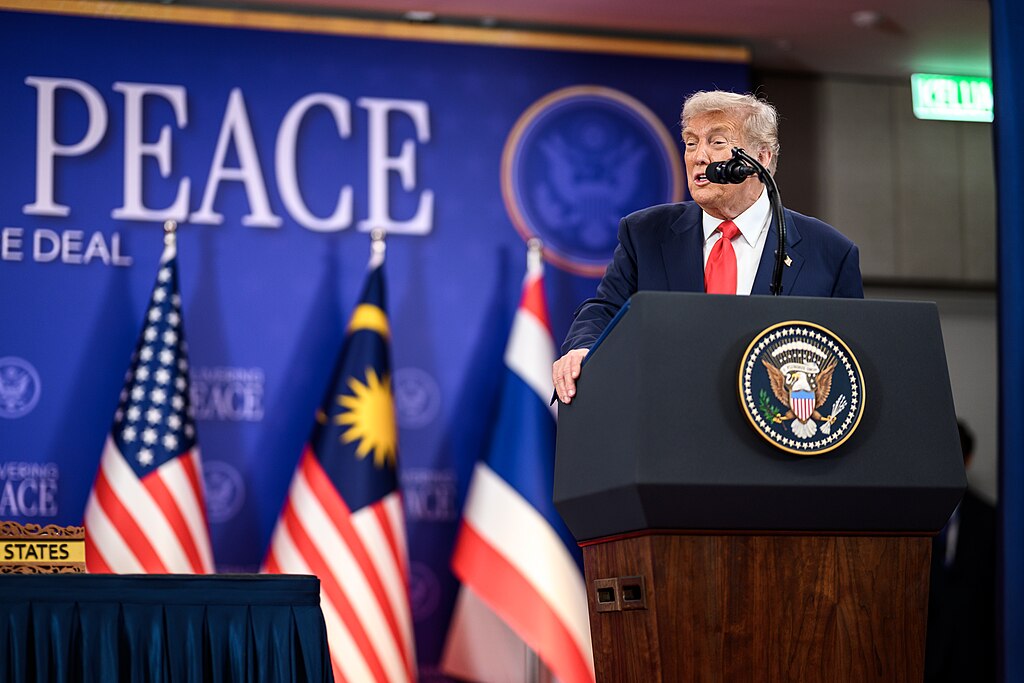
U.S. President Donald Trump intensified tensions with Europe on Sunday after claiming that Denmark has failed to counter what he described as a growing Russian threat to Greenland, adding that the United States would move to address the situation. In a social media post, Trump said NATO had warned Denmark for two decades that it needed to “get the Russian threat away from Greenland,” arguing that Copenhagen had been unable to act effectively.
Trump’s comments suggest a renewed push to bring Greenland under U.S. control, a demand he has made repeatedly in recent years. He framed the issue as one of national and transatlantic security, stating that the time had come for decisive action. The remarks come amid heightened strain between Washington and European capitals over trade and defense policy.
Only days earlier, Trump threatened to impose tariffs of up to 25% on several major European economies, including Denmark, France, and the United Kingdom. His Treasury Secretary, Scott Bessent, reinforced the administration’s stance by saying that European “weakness” made U.S. control of Greenland necessary, further inflaming diplomatic tensions.
Greenland, an autonomous territory within the Kingdom of Denmark, occupies a strategically critical position in the Arctic. Trump has argued that the island’s location makes it vital to U.S. national security, particularly as Russia increases its military and economic presence in the region. European leaders, however, have strongly rejected Trump’s claims and rhetoric. France has indicated it may consider retaliatory economic measures in response to both tariff threats and pressure over Greenland.
Concerns have also grown after Trump raised the possibility of military action related to Greenland, a statement that drew added scrutiny following a U.S. incursion in Venezuela earlier this year. Analysts warn that aggressive U.S. tactics over Greenland could undermine NATO unity and strain alliances at a time of global instability.
As debate continues, Trump’s stance on Greenland, Russia, and European trade policy underscores a broader shift toward hardline U.S. foreign policy, with potentially far-reaching consequences for transatlantic relations and the future of NATO.













