


 San Francisco Halts New Data Center Construction With 45-Day Moratorium
  Russia Targets Danish Ukraine Suppliers in Sabotage Campaign
  Trump Weighs FBI Probe Into Nolan Wells’ Death
  Crypto Lobbying Hits $13M as Clarity Act Stalls
  Florida Seeks Tougher Meta Rules to Protect Young Users
  US Conducts Non-Nuclear Explosion Test to Boost Nuclear Detection
  Trump Backs Florida Golf Course as Presidential Retreat
  New York Declares Measles Disaster Emergency as Cases Surge
  Hegseth Praises USS Abraham Lincoln Crew After Record Iran War Deployment
  Trump Envoy Meets Sudan Army Chief in Egypt
  Pentagon Launches Autonomous Warfare Command
  US, Greece Launch New Counterterrorism Security Program
  US DOT Ends Airline Privacy Review Without Enforcement
  Kalshi Wins CFTC Approval for S&P 500 Perpetual Futures
  JD Vance Says Iran Must Cut Nuclear Enrichment to End War
  Mike Rogers Calls for End to US-Canada Tariff War
  Houthis Strike Aden Airport as Yemen Fighting Escalates


 Add as a preferred source on Google
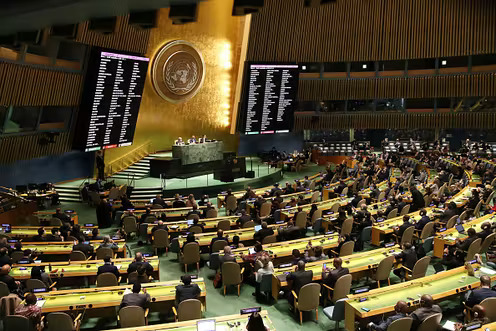
The United Nations has added Israel and Russia to its official blacklist of parties suspected of committing conflict-related sexual violence, a decision that has sparked strong international reactions and intensified diplomatic tensions. The designation appeared in the latest annual report submitted by U.N. Secretary-General António Guterres to the U.N. Security Council, highlighting allegations linked to ongoing conflicts in Gaza, the West Bank, and Ukraine.
Israel strongly rejected the decision, calling it politically motivated and disconnected from the facts. Israeli officials argued that the country has investigated allegations thoroughly and cooperated with international bodies. Following the announcement, Israel’s Foreign Ministry stated that it would suspend ties with the Secretary-General’s office until new leadership is appointed at the United Nations.
The report details multiple verified cases of sexual violence allegedly committed by Israeli armed and security forces. According to the findings, victims included men, women, and children from Gaza and the West Bank. Reported abuses ranged from rape and attempted rape to forced nudity, invasive searches, threats of sexual assault, and violence targeting victims’ genital areas. Several incidents reportedly occurred during detention, interrogation, military operations, and at checkpoints.
The U.N. also documented a significant number of cases involving Russian armed and security forces in Ukraine. Investigators verified hundreds of incidents, including rape, gang rape, genital mutilation, electric shocks, and other forms of sexual abuse. The victims included men, women, and girls affected by the ongoing conflict.
Hamas remains on the same U.N. blacklist, and Israeli officials criticized the decision to place Israel alongside the militant group. Meanwhile, Ukrainian authorities welcomed the inclusion of Russia, describing it as an important step toward accountability.
Pramila Patten, the U.N. Special Representative on Sexual Violence in Conflict, noted a dramatic global rise in verified conflict-related sexual violence cases during 2025. She warned that the documented incidents likely represent only a fraction of the actual number of abuses occurring in conflict zones worldwide.
Although inclusion on the blacklist does not automatically trigger sanctions, it can result in serious reputational consequences and may restrict participation in future U.N. peacekeeping operations. The latest report underscores growing international concern over sexual violence in armed conflicts and the need for greater accountability and protection for victims.







