


 Michael Burry Shorts Tesla at $416 as AI and Semiconductor Bearish Bets Expand
  Switch Seeks $2 Billion Funding at Nearly $50 Billion Valuation Ahead of Potential IPO
  Apple Eyes Chinese Memory Chips as AI Shortage Pressures iPhone Supply Chain
  US Egg Producers Settle Price Manipulation Probe, Agree to Pay $3.3 Million and Donate 53 Million Eggs
  Sheinbaum Says No One Is Above the Law After Abuse Video of Ex-Pemex Chief Emerges
  Maria Corina Machado Vows Return to Venezuela After Earthquakes Despite Obstacles
  Trump Administration Declines USMCA Renewal, Opens Talks on New Trade Changes
  Lenovo Shares Slide as AI-Driven Memory Demand Signals Higher DRAM and NAND Prices
  The government is ‘doubling down’ on its social media ban. But bigger penalties for platforms aren’t enough
  Northern Star Appoints New CEO as Activist Elliott Pushes for Leadership Overhaul
  Chip Stocks Rally as Samsung and SK Hynix’s $1.3 Trillion Investment Plan Boosts AI Optimism
  SK Holdings, KKR Launch $1.3B Renewable Energy Venture in South Korea
  SoftBank’s LY Corp, Bain Raise Kakaku.com Bid to ¥670 Billion, Intensifying Takeover Battle
  Anthropic Restores Claude Fable 5 and Mythos 5 After U.S. Lifts AI Export Controls
  US Resumes Dollar Shipments to Iraq After Months-Long Suspension
  Apple Challenges India Antitrust Probe, Says CCI Copied Rivals’ Claims in App Store Case


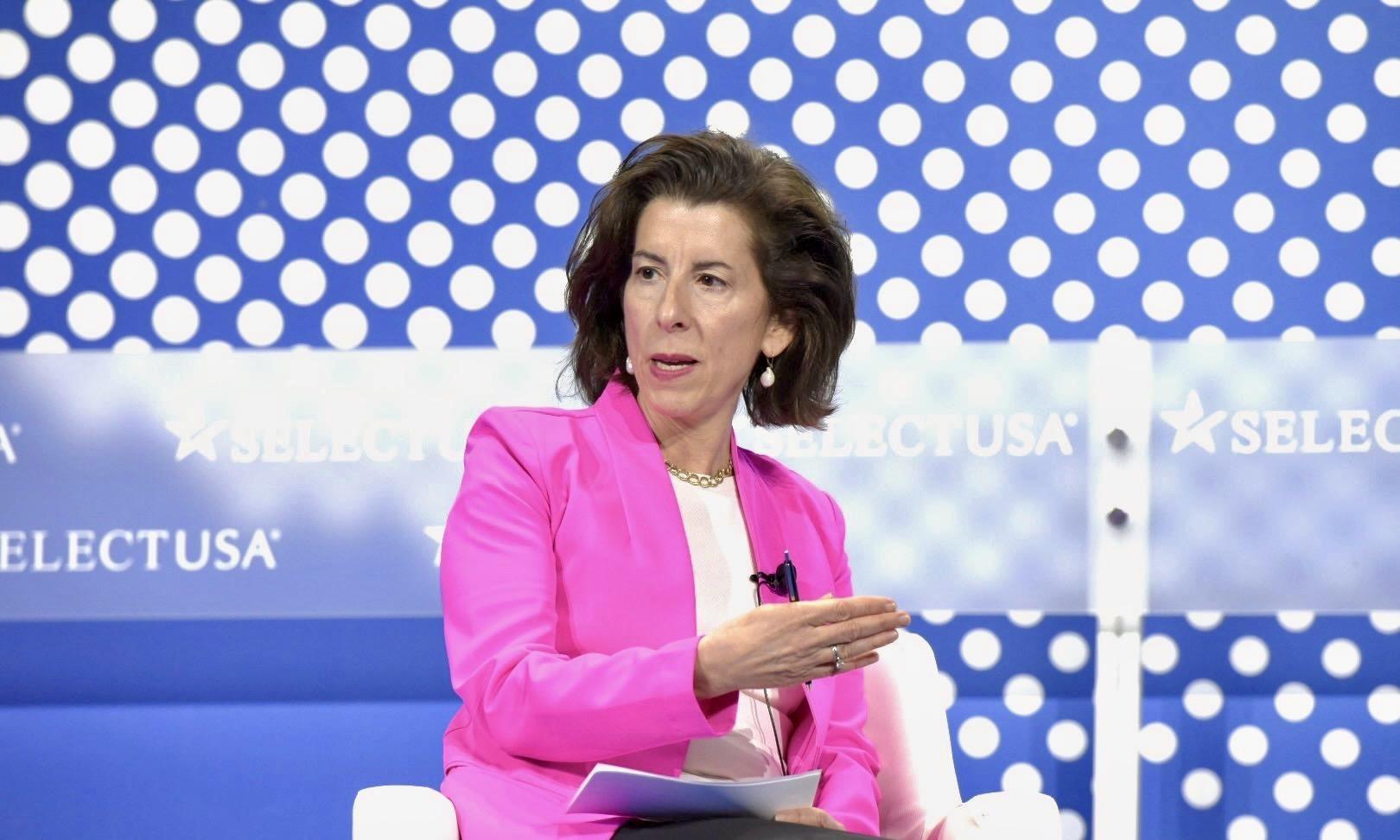
In an interview on CBS News' "60 Minutes," Commerce Secretary Gina Raimondo stated that the latest Huawei Mate 60 Pro phone's chip remains significantly behind U.S. technology despite being the most advanced from China. She asserts this validates the effectiveness of ongoing U.S. export controls to limit China's semiconductor advancements.
Despite Huawei's Recent Advances, the U.S. Maintains its Technological Edge, Affirms Commerce Secretary Raimondo
According to Reuters, Huawei, subject to trade restrictions since 2019, startled the industry and the U.S. government by releasing a new phone powered by sophisticated technology in August. Despite Washington's continued efforts to undermine China's ability to develop innovative semiconductors, the Huawei Mate 60 Pro was viewed as a sign of the country's technical revival.
Many saw it as a blow to Raimondo, who was in China then. However, in an interview with CBS News' "60 Minutes," Raimondo argued against that viewpoint.
"What it tells me is the export controls are working because that chip is not nearly as good, ... it's years behind what we have in the United States, she said. "We have the most sophisticated semiconductors in the world. China doesn't."
Washington has been working for years to prevent Beijing from obtaining advanced semiconductor chips and the tools required to manufacture them, fearing that they would be used to bolster China's military capabilities.
Huawei's New A.I. Laptop Stirs Controversy; U.S. Tightens Scrutiny Amid Ongoing Tech Tensions
Huawei, a symbol of that tech conflict, was included in the so-called entity list in 2019 due to concerns that it could spy on Americans. This would force its U.S. suppliers to acquire difficult-to-obtain permission to ship to the country.
However, its vendors, including Intel, have acquired billion-dollar licenses to continue selling to the corporation. This month, Huawei announced its first AI-enabled laptop powered by an Intel CPU has sparked outrage among Republican China supporters.
Raimondo was adamant when asked if she was harsh enough on big business.
"I hold businesses accountable as much as anyone," she told Lesley Stahl on "60 Minutes." "When I tell them they can't sell their semiconductors to China, they don't love that, but I do that," she added.
The Huawei phone also spurred the Biden administration to look into the specifications of the chip that runs it, which is the most advanced semiconductor China has ever made. However, specifics about the review have been few.
Photo: InternationalTradeAdministration/Flickr(PDM 1.0 DEED)







