


 Trump Administration to Launch Voluntary AI Standards for Frontier Models
  Kuaishou Stock Jumps as Kling AI Secures $2 Billion Funding Round
  SK Holdings, KKR Launch $1.3B Renewable Energy Venture in South Korea
  Meta CEO Zuckerberg Says AI Agent Development Has Slowed Despite Massive AI Investment
  Lockheed Martin Emerges as Frontrunner to Acquire Ultra Maritime in $3.5 Billion Defense Deal
  Super Micro Employees Detained in Taiwan AI Server Export Investigation
  EU Chip Industry Faces Growing Risks From China Export Controls and U.S. Technology Dependence: Report
  Anthropic Tightens AI Access Controls After Reports of China-Based Workarounds
  Kioxia Bets on AI Memory Boom With Next-Gen NAND Production in Japan
  Meta Stock Jumps as AI Cloud Expansion Challenges AWS, Microsoft, and Google
  Trump Reports $1.4 Billion in Crypto Income as Digital Assets Become Top Wealth Source
  Samsung to Invest $90 Billion in South Korea to Expand AI Chip, Display, and Battery Production
  Northern Star Appoints New CEO as Activist Elliott Pushes for Leadership Overhaul
  Apple Eyes Chinese Memory Chips as AI Shortage Pressures iPhone Supply Chain
  Texas Man Charged After Fatal Tesla Full Self-Driving Crash in Katy
  Switch Seeks $2 Billion Funding at Nearly $50 Billion Valuation Ahead of Potential IPO
  Kawasaki Heavy Shares Slide on Report of ¥200 Billion Capital Raise Plan


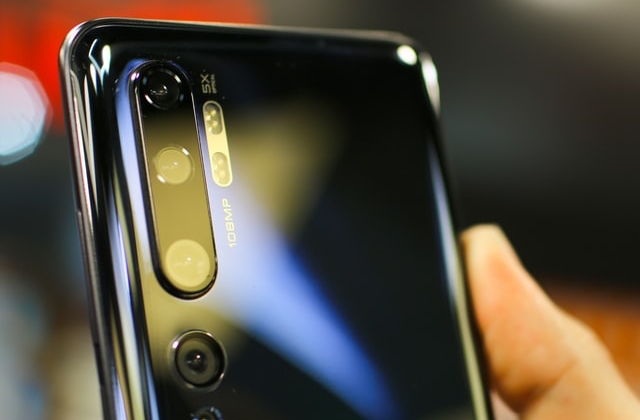
Xiaomi may be allowed to do business again in the U.S. after the country’s federal court stopped the government from prohibiting the Americans from investing in the company. This means that the restrictions against the Chinese smartphone-maker have been lifted.
The root of the ban
Under Donald Trump’s administration, Xiaomi was added to the list of companies that allegedly have ties with the Chinese military. It was the state’s Defense Department that included the tech company in the list, and this resulted in the then-president’s decision to impose financial restrictions on the company.
This prohibited businesses in the U.S. from investing and doing business with Chinese companies, including Xiaomi. This effectively blocked the smartphone manufacturer from selling or supplying its goods to U.S. clients.
Xiaomi wins in its lawsuit
However, on Friday, March 12, U.S. District Judge Rudolph Contreras of Washington temporarily blocked the Defense Department from disallowing U.S. investments in Xiaomi. The judge just canceled the ban and clearly sided with the Chinese company in its lawsuit that aims to have its name removed from the blacklisted firms.
In his decision, Judge Contreras said that the move was “arbitrary and capricious” and visibly stripped Xiaomi of its rights to due process. As per Bloomberg, the judge added that Xiaomi is also most likely to win in the lawsuit and fully reverse the ban so it can start doing business again in the U.S.
The decision was also said to have been placed to prevent the company from suffering from further irreparable harm. This is because when the prohibition was initially announced, Xiaomi was faced with the likelihood of being de-listed from the U.S. stock exchange, which in turn will lead to its removal from global benchmark indexes. When this happens, it will be a big business disaster for the company.
Finally, The Wall Street Journal reported that Judge Contreras pointed out that being a technology company doesn’t suggest a link to the Chinese military. He said that “investment in technology does not necessarily equate to military link.” He further reasoned that the U.S. was not able to convincingly show that there is such a connection between Xiaomi and the Chinese army.
“Xiaomi is a publicly-traded company that produces commercial products for civilian use, is controlled by its independent board and controlling shareholders, and is not effectively controlled or associated with others under the ownership or control of the PRC or its security services,” he said.







