


 FDA Investigates New Cyclospora Outbreak as U.S. Cases Continue to Rise
  3 clinical-grade skincare creams you really shouldn’t buy online
  Venezuela Earthquake Health Risks Rise as Disease Monitoring Intensifies
  Novo Nordisk Raises 2025 Outlook Despite Wegovy Pill Miss and CagriSema Setback
  Trump Administration Bars U.S. Travelers From Congo Flights Amid Ebola Outbreak
  Novartis M&A Strategy Faces Investor Scrutiny After Drug Setbacks
  AstraZeneca Halts Phase III Volrustomig Lung Cancer Trial After Efficacy Setback
  Moderna Short Sellers Hit With $4.8 Billion Loss as Stock Soars
  GLP-1 Weight-Loss Drug Use Surges Among U.S. Children
  Novo Nordisk Eyes Turnaround as Oral Wegovy Challenges Eli Lilly in Weight-Loss Drug Race
  Sanofi, Regeneron Expand Drug Partnership in $8 Billion Deal
  Hims & Hers Shares Fall as GLP-1 Costs Widen Q2 Loss
  Trump Signs Order to Cut Routine Childhood Vaccines


 Add as a preferred source on Google
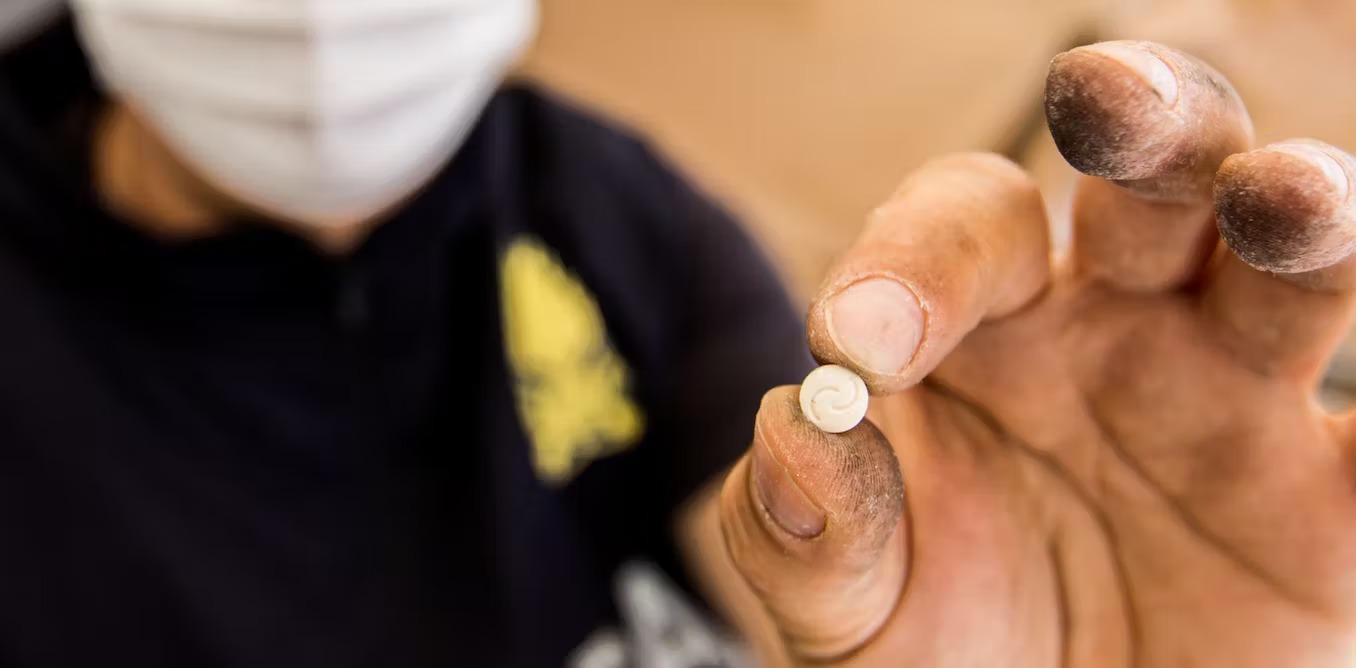

My friend Luke used to drink a pint of beer before a game of rugby. I don’t know whether he thought that it might reduce pain or improve performance, but the idea of taking drugs before “going into battle” goes back to the beginning of recorded history.
Indeed, we find frequent mentions of mead drinking by the warriors in Edinburgh in the seventh-century epic poem The Goddodin. These warriors feasted and drank mead for a year before riding out to their certain deaths in a hopelessly one-sided battle in Yorkshire. Similarly, Anglo-Saxon warriors were very fond of their mead-halls – think Beowolf.
These ancient warriors probably used alcohol to reduce anxiety and blunt the horrors they would face on the battlefield.
Other ancient cultures turned to psychoactive substances before doing battle. The berserkers were a gang of Viking warriors renowned for going into battle in a frenzied state, almost fighting friend and foe indiscriminately. They are believed to have used hallucinogenic mushrooms to achieve this state. Probably the red-capped Amanita muscaria or possibly a plant called Hyoscyamus niger – a member of the nightshade family. Although there would undoubtedly also have been a religious or spiritual element to their mental state.
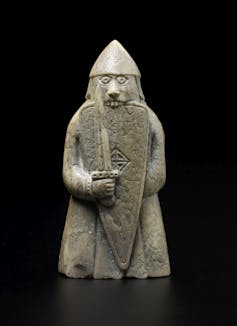
A chess piece depicting a berserker biting his shield. National Museums Scotland/Wikimedia Commons, CC BY-SA
Perhaps the next major advance in psychoactives for warriors was by the Germans in the second world war. Pervitin (methamphetamine) was given almost freely to all arms of the German war machine.
The frontline Nazis called them Panzerschokolade (tank chocolate), due to the feelings of incredible strength and invincibility that the pills gave them. Hitler’s doctor gave him daily injections of Eukodol, a stimulant causing euphoria and, clearly, terrible judgment.
Similarly, the US army in the Vietnam war (or the “first pharmacological war”) took unprecedented amounts of the amphetamine Dexedrine (“pep pills”). There were army instructions to take 20mg for 48 hours of combat readiness, but veterans report taking the drug “like candy”.
Jumping forward 60 years we find the combatants in the Middle East continuing to use amphetamines, this time mostly a stimulant called Captagon – the manufacture of which makes up the bulk of Syria’s foreign income.
Behavioural effects
The types of drugs taken by warriors can be lumped into three broad categories: depressants, hallucinogens and stimulants.
Alcohol is a depressant that calms the nerves by reducing brain activity. Psychedelic mushrooms such as Amanita muscaria contain a variety of psychoactive substances. Hyoscyamus niger also has a variety of active compounds that cause hallucinations and, importantly, aggressive and combative behaviour.
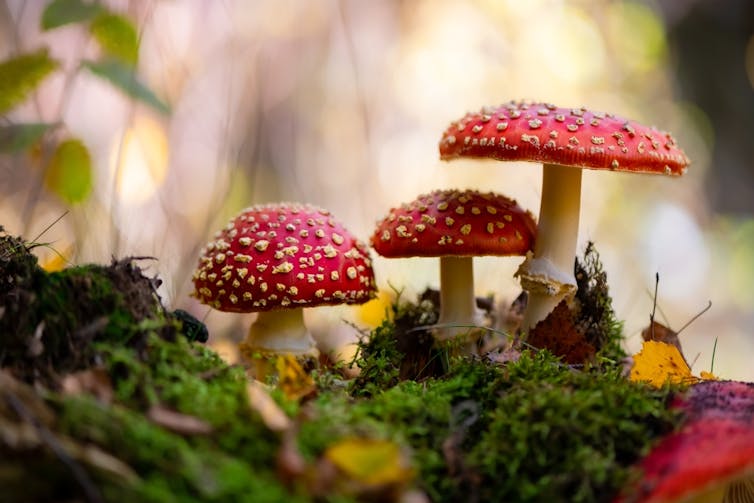
Berserkers are thought to have eaten Amanita muscaria mushrooms. ON-Photography Germany/Shutterstock
It would be important for combatants to take the correct dose of these drugs; just enough to take the edge off. Too much might leave the person stupefied. The word “groggy” meaning dazed and unsteady came from British navy sailors exhibiting this behaviour after their daily ration of rum and water (grog). Intoxication in the 18th and 19th-century British navy was common.
Methamphetamine, Pervitin, Dexedrine and Captagon are all psychomotor stimulants, that is they increase alertness and cause hyperactivity. Again, the dose of some of these drugs would be critical. Although it would be difficult to take too much nicotine and caffeine, mild stimulants that soldiers often take, it would be quite easy to overdose on the other stimulants.
Taking the correct dose of amphetamines would increase aggression and stamina, but high doses of amphetamines could lead to paranoia and hallucinations – hardly beneficial in a battle.
Ultimately, stimulants, if taken at very high doses, could lead to cardiac arrest or stroke. The stimulants, but especially methamphetamine, would also lead to significant weight loss even after only a few days of use. Long-term use, as we saw with the Nazis, would probably lead to emaciated soldiers.
Smart drugs
We have seen that soldiers take drugs before battles to calm nerves, deal with the horrors, reduce pain, tolerate lack of food and sleep and improve alertness. What will the soldiers of the future take? Probably not alcohol or mushrooms, more likely cognitive enhancers – known as “smart drugs” or “nootropics”.
The use of cognitive enhancers by students is well known and these might include low-dose stimulants and nootropics.
The stimulants include drugs such as amphetamine salt mixtures, methylphenidate and modafinil, while nootropics include piracetam, caffeine, cobalamin (vitamin B12), guarana, pyridoxine (vitamin B6) and vinpocetine. The pharmacological effects of the nootropics are largely unknown.
The integration of humans, technology and machines is thought to be the future of warfare and drugs that facilitate this are undoubtedly being researched by the military.
Post-traumatic stress disorder
So far, we have discussed drugs taken before or during combat, but what about afterwards?
There is a long history of soldiers taking alcohol and other drugs to deal with the horrors of what they have seen, or the disappointment of life after leaving the army. Think Tom Cruise in Born on the 4th of July.
But there is an emerging new cohort of ex-military drug takers. These veterans are taking MDMA and psilocybin on doctors’ orders as part of their treatment for PTSD.
It is thought that these drugs help the veterans open up about their experiences and form a stronger therapeutic alliance with their doctor, critical for psychotherapy to work.
Ketamine is useful for treating depression and LSD is also being tested for various psychiatric disorders.
The relationship between combatants and psychoactive drugs is an old one and looks certain to continue.







