ACLED recorded 19,500 protests in India from January to mid-October 2026, with demonstrators using violence in fewer than 4%, a measure that does not establish why the share was low.
Pearl Pandya, ACLED's South Asia regional expert, placed the share below 4% among the protests logged over that period.
ACLED defines a demonstration as an in-person public gathering of at least three people advocating for a shared cause. Its coding system separates peaceful protests, events met with intervention and demonstrations involving violence. It also records excessive force against protesters separately. The under-4% measure therefore concerns demonstrator conduct, rather than every kind of force connected to a protest.
India's election calendar includes national and state contests. The Election Commission of India announced the 2024 Lok Sabha general election alongside assembly elections in Andhra Pradesh, Arunachal Pradesh, Odisha and Sikkim. Its 2026 page lists assembly contests in Assam, Kerala, Tamil Nadu and West Bengal, plus Puducherry, a Union Territory.
Pravir Kumar, in an Economic Times opinion column, argues that repeated elections can give voters a way to voice grievances and press governments to respond. The published schedules show recurring voting opportunities and contests held together, but do not compare protest activity around election periods with activity at other times. They therefore do not test Kumar's proposed explanation for the ACLED pattern.
ACLED offers another possible interpretation, saying confidence in democratic institutions and constitutional processes may help limit escalation. The group says protesters often seek accountability and redress through those channels; its explanation is an assessment, not a demonstrated cause.
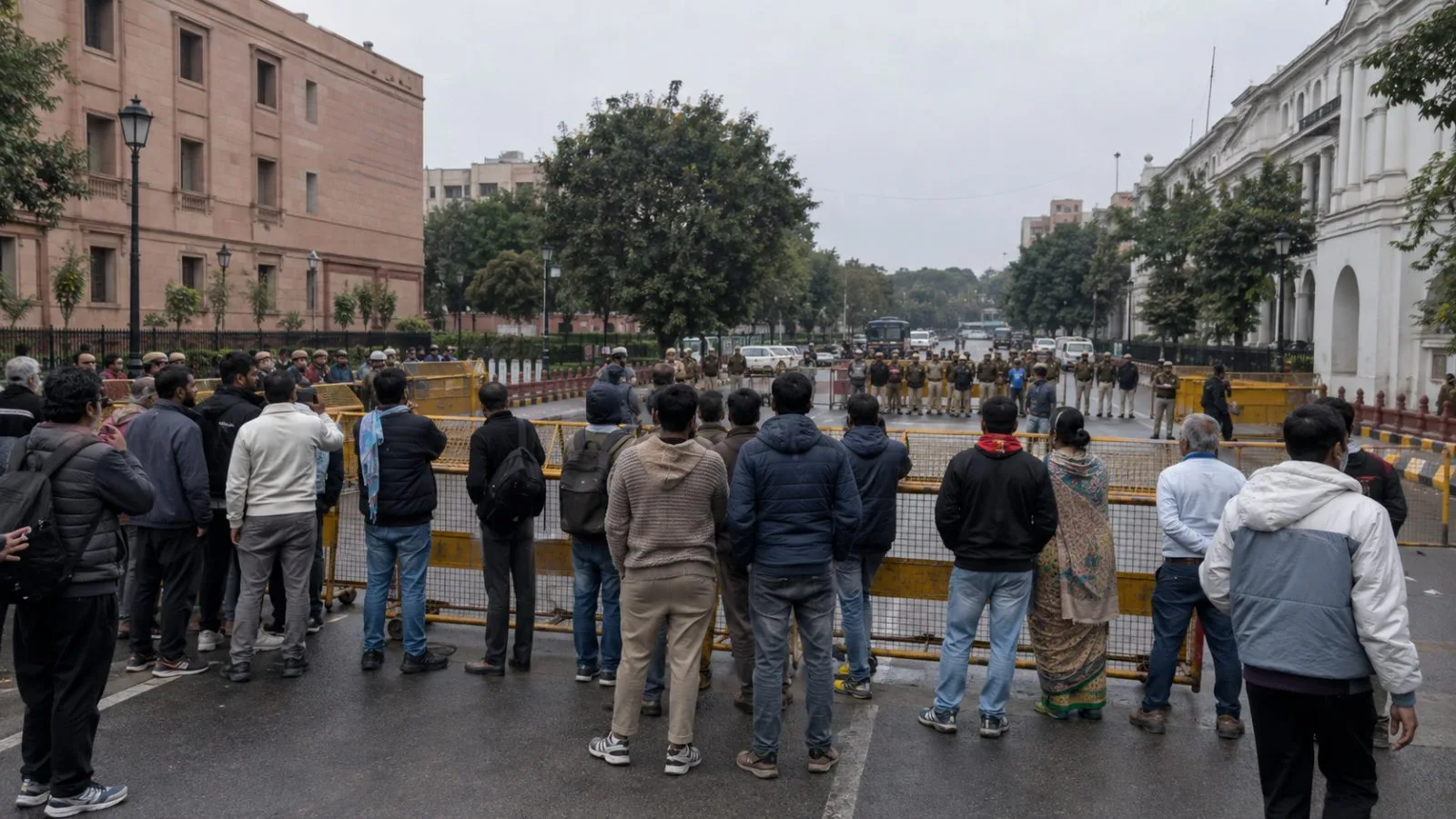
Separately, the Associated Press reported that police used tear gas and batons after thousands of people tried to push through security barricades at a youth-led protest. The AP account describes one confrontation and provides no count of how often such incidents occurred across India's protests during the period.