Outside investors and lenders are taking a larger role in U.S. AI infrastructure, as a Brookings scenario estimates $10.3 trillion in spending through 2032 and describes how financing divides exposure among companies, owners and creditors.
Stijn Van Nieuwerburgh, a Columbia Business School professor, gives the estimate in a September conference draft for Brookings. It projects $10.3 trillion in investment from 2025 through 2032, averaging 3.63% of U.S. gross domestic product annually. The paper models planned projects rather than funded or completed work. Its scenario counts only half of the reported capacity without a completion date, projecting 183 gigawatts completed by 2032 and another 118 gigawatts later.
An October version of Van Nieuwerburgh’s paper listed by the National Bureau of Economic Research estimates nearly $9 trillion, or 3.2% of GDP annually, for a 188-gigawatt buildout completed by 2032. The two versions do not explain the change.
The Brookings draft describes funding from data-center developers, infrastructure funds, real estate investment trusts and private-equity investors, as well as bank loans, private credit and securitization. Leases and joint ventures can separate the companies using computing capacity from the owners and financiers of the facilities.
The Bank for International Settlements (BIS) put outstanding private-credit loans at almost $2.5 trillion as of 2025. Its estimates show technology firms’ share of U.S. direct lending rose from 22%, or about $22 billion, in 2010 to 44%, or more than $1 trillion, in 2025. The figures cover technology companies broadly, not only AI businesses. The BIS said private-credit lenders may assess recurring income and intangible assets, which can give firms with few physical assets another financing route.
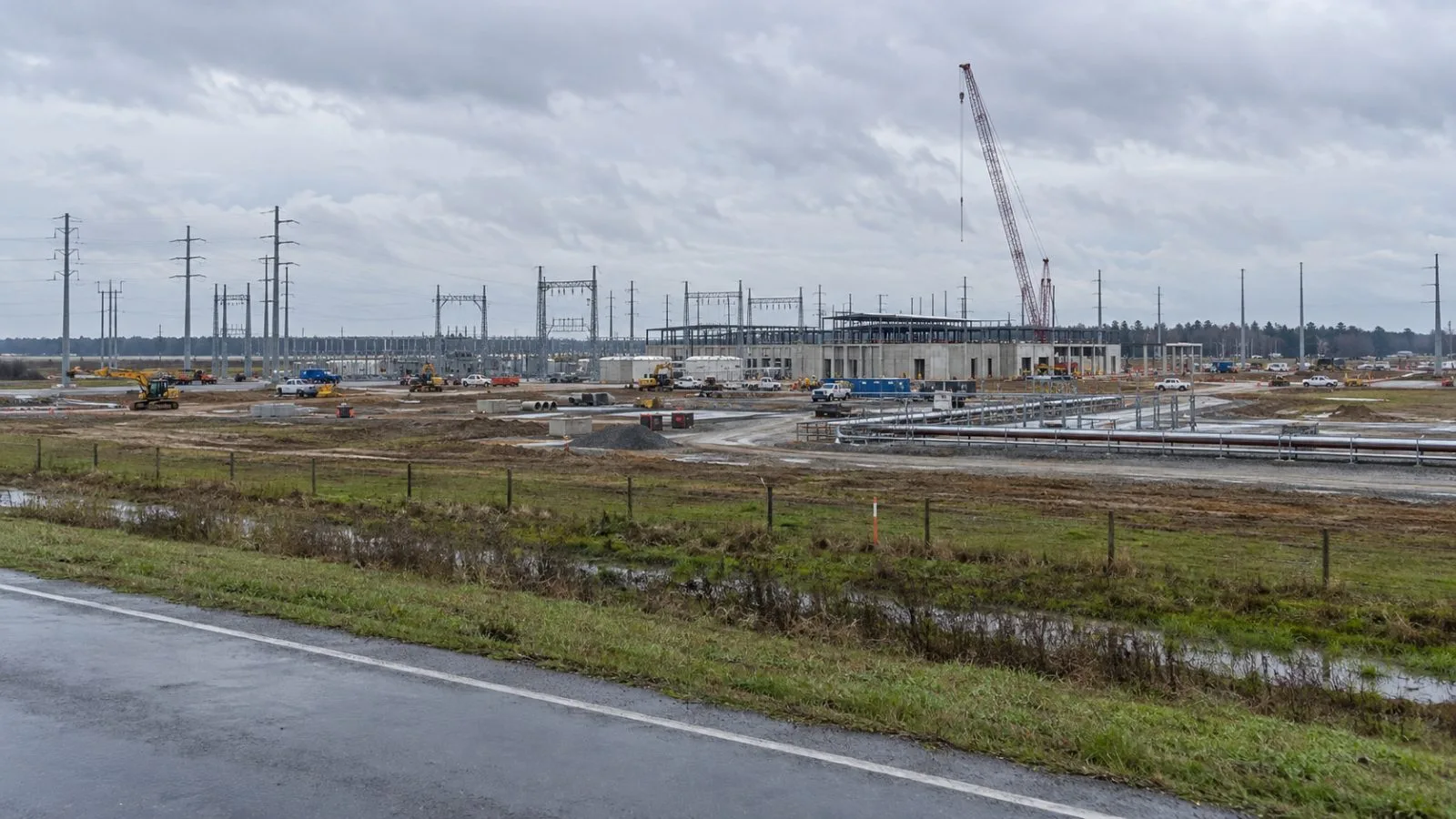
Meta said Blue Owl-managed funds hold an 80% stake in the venture developing its Hyperion campus in Louisiana, with Meta retaining 20%. The parties committed about $27 billion for buildings and power, cooling and connectivity systems. Meta plans to lease the completed facilities for an initial four-year term with extension options; some Blue Owl capital comes from debt issued to PIMCO and other bond investors. S&P Global Ratings reported that Beignet Investor issued about $27.3 billion in notes for the project, equal to roughly 90% of its $30 billion asset value, with a 1.12-times debt-service coverage ratio.
Van Nieuwerburgh said equity investors bear initial project losses and lenders face exposure if losses deepen. He also warned that financing through multiple vehicles can leave contingent obligations and exposures harder to see. He said it was too early to conclude that AI infrastructure posed systemic risk comparable to earlier credit booms.