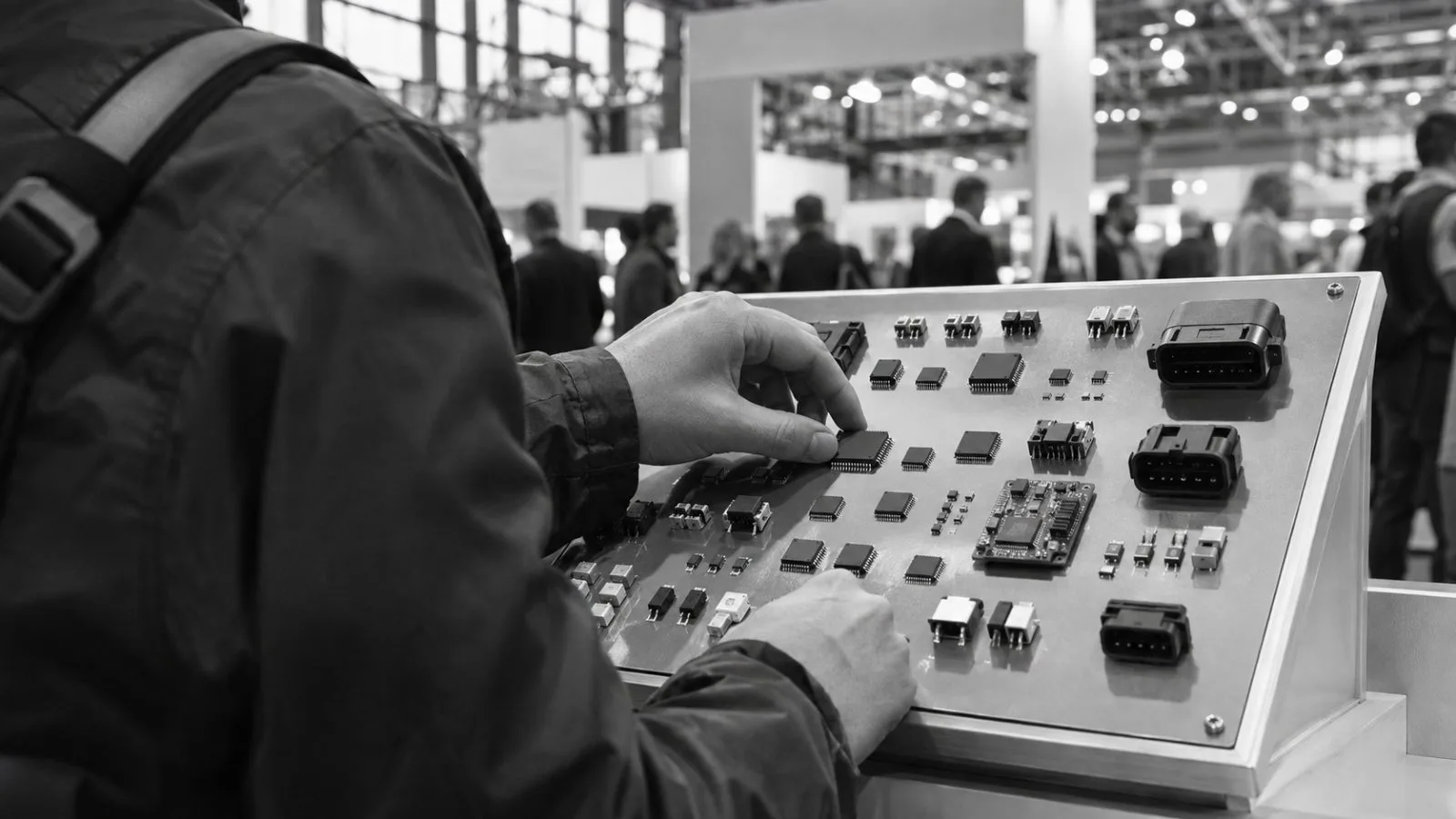
At Munich’s electronica trade fair, executives at Nexperia and STMicroelectronics warned of bottlenecks affecting parts of the automotive supply chain as AI demand draws on manufacturing and packaging capacity, Reuters reported.
Nexperia interim CEO Stefan Tilger told Reuters on Nov. 10 that the company’s supply was “totally oversubscribed.” He said some competitors had shifted capacity away from commodity semiconductors used in cars and industrial equipment as AI data centers and robotics drew on available supply. Tilger also cited a long period of underinvestment in older chip processes. Nexperia’s automotive products include diodes, transistors, power devices and logic chips.
The allocation of limited capacity is also a concern in other parts of the chip industry.
STMicroelectronics CEO Jean-Marc Chery said chipmaking and packaging firms were both facing bottlenecks, with resources being directed away from automotive and industrial customers, Reuters reported. At a Nov. 9 panel, Chery summarized the constraints as “many bottlenecks.”
In its Oct. 29 results release, STMicroelectronics said demand “remains well above supply” and named AI data centers among its growth drivers. The release did not say that AI demand caused the automotive constraints the executives discussed in Munich.
A separate warning concerns memory chips. The Alliance for Automotive Innovation and eight other U.S. trade groups said in a June 3 letter that AI data-center growth had reduced memory-chip supply for other industries and could threaten automobile production and availability. The letter addressed memory, a different chip market from the commodity components discussed at electronica.
During a separate Nexperia supply interruption in 2025, the European Automobile Manufacturers’ Association (ACEA) said qualifying alternative suppliers for specific car components could take months. That episode was distinct from the AI-related constraints described by the executives.