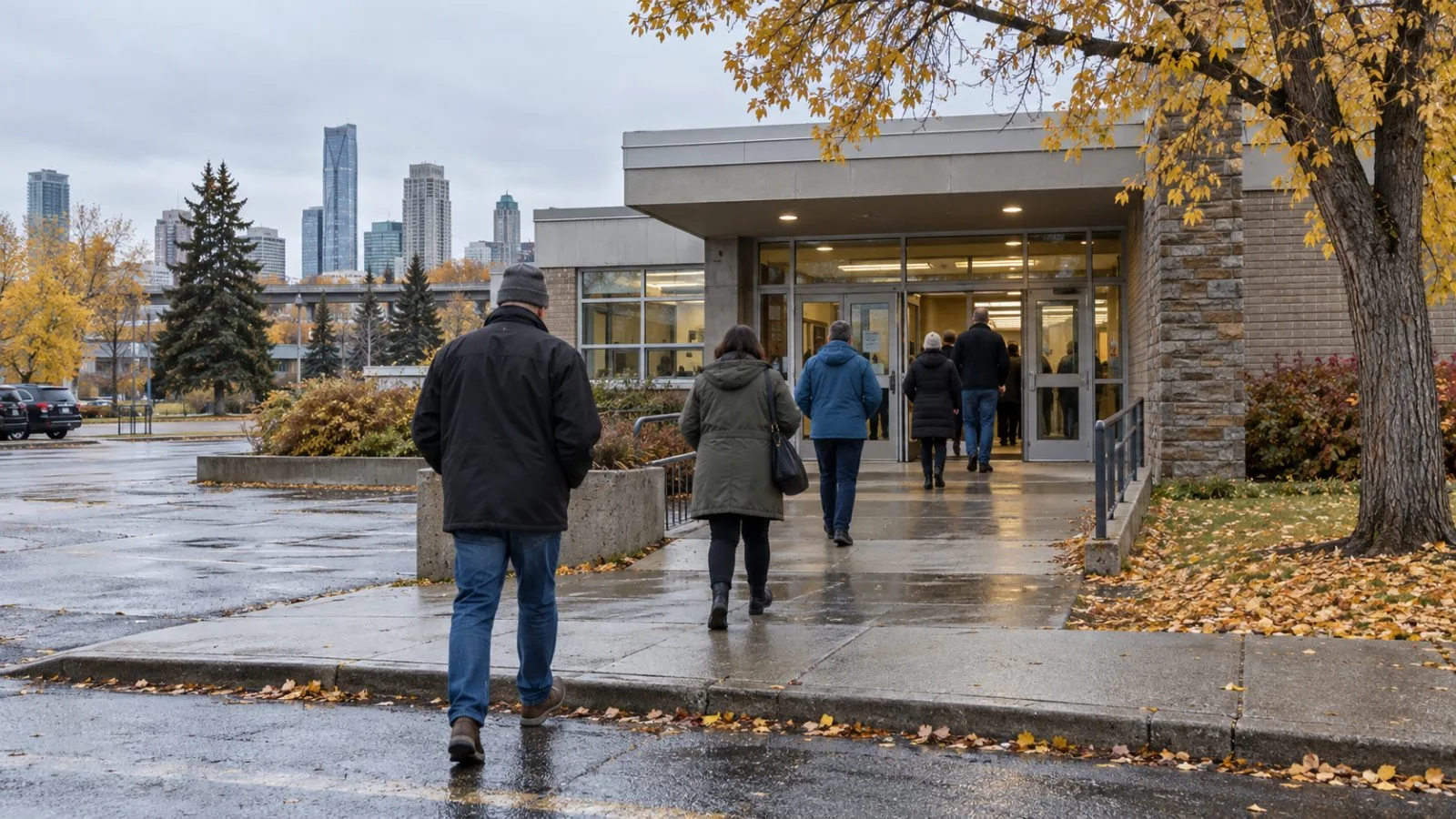
Albertans voted Monday on 10 questions concerning provincial control over immigration and services, constitutional changes, and whether the government should prepare for a later separation vote.
Question 10 offers a choice between keeping Alberta in Canada and asking the government to open a constitutional process toward a future binding separation referendum. Elections Alberta classifies the question as nonbinding: the result would not settle Alberta’s status or compel the government to continue toward another vote.
Questions 1 through 5 address immigration, public services and voting. Question 1 asks whether Alberta should seek greater immigration control to reduce arrivals, favor economic migrants and give Albertans priority for new jobs. Question 2 asks whether provincially funded services should be restricted to Canadian citizens, permanent residents and people with an Alberta-approved immigration status.
Under Question 3, people with non-permanent legal immigration status would have to live in Alberta for at least 12 months before qualifying for provincial social support. Question 4 asks whether non-permanent residents and their families should pay a reasonable fee or premium for public health care and education. Question 5 proposes requiring proof of citizenship to vote in provincial elections. These are proposals; the ballot alone would not put them into effect.
Questions 6 through 9 propose constitutional changes. They cover provincial appointments to the Court of King’s Bench and Court of Appeal, abolishing the federal Senate, allowing provinces to opt out of federal programs that intrude on provincial jurisdiction while retaining associated funding for social programs, and giving provincial laws priority in certain conflicts within provincial or shared areas of constitutional authority. Under Alberta’s referendum law, those four questions would have a limited binding effect on the provincial government if approved, but would not themselves change Canada’s Constitution.
Premier Danielle Smith says equalization and federal transfers burden Alberta taxpayers and that immigration levels pressure public services. She has said she will vote for Alberta to remain in Canada. Prime Minister Mark Carney has warned that uncertainty over separation could mean lost opportunities and made an appeal for Alberta to stay in Canada.
Elections Alberta’s count procedure puts Question 10 first, with unofficial results released as counts are confirmed. The official results announcement is scheduled for Oct. 29.