Alstom cut its 2026/27 adjusted EBIT margin target to about 1% and forecast a €1.5 billion full-year free cash outflow, citing operating issues that weakened its preliminary first-half performance.
The French trainmaker’s board reviewed unaudited results on Nov. 1 for the six months ended Sept. 30. Rail-car output totaled 1,860, down 8% from a year earlier, while the adjusted EBIT margin was about negative 4%, compared with 6.4% in the year-earlier half. Orders rose 5% to €11 billion. Sales reached €9.3 billion, up 3% on a reported basis and 2% organically.
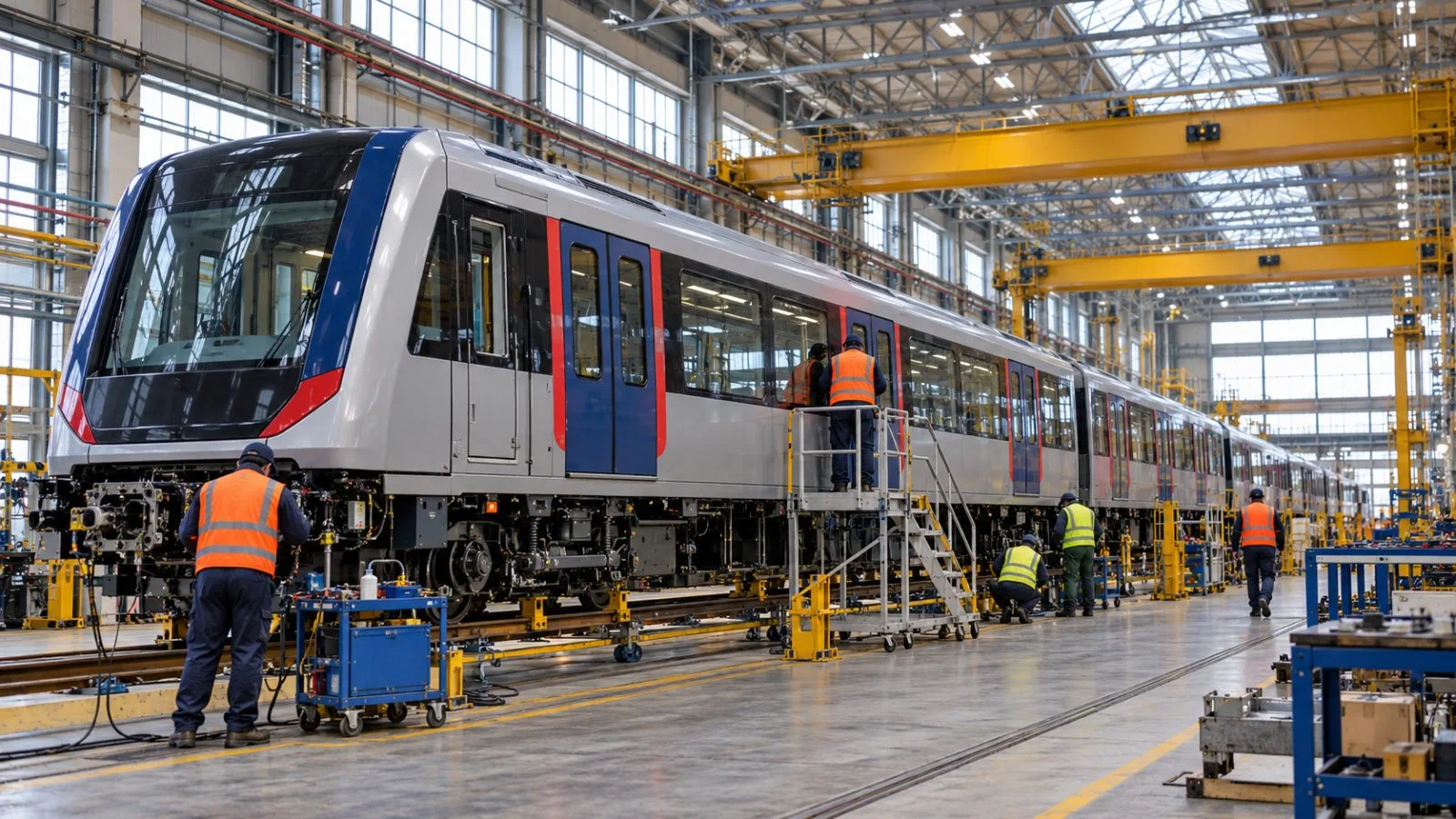
Alstom cited industrialization and homologation, or approval, challenges involving its Coradia Max trains. It also revised margins on selected projects executed for and from Germany. Production was paused in the first quarter to address issues and limit later retrofit work.
For the full fiscal year, Alstom now expects organic sales growth in the low to mid-single digits and production of about 4,000 rail cars. Its previous outlook called for about 5% organic growth and 4,400 to 4,500 cars. The company kept its book-to-bill target above 1, meaning orders are expected to exceed sales. Its annual adjusted EBIT margin guidance implies a margin of about 6.5% in the second half.
The first-half free cash flow outflow was €1.248 billion, compared with €740 million a year earlier. Alstom said seasonal cash use was partly offset by milestone and down payments brought forward into the period. Net debt stood at €1.1 billion on Sept. 30, up from €0.4 billion at the end of March.
The board is weighing measures within the business alongside outside transactions as it pursues about €2 billion in debt reduction by September 2027. Alstom said shareholders represented on the board support the review, while the timing and scale of any measures remain flexible.
Landesnahverkehrsgesellschaft Niedersachsen (LNVG), Lower Saxony’s transport authority, expects 34 trains ordered for €760 million to arrive in 2028, after seven delays since the 2021 order. The agency said replacement trains have kept scheduled services running, though some routes have fewer seats and replacement trains on RE9 lack air conditioning. NDR reported Oct. 21 that 42 Coradia Max trains for Schleswig-Holstein, initially due to enter service in December 2027, were also delayed until 2028. Alstom’s Nov. 2 announcement did not give a revised schedule for that fleet.
Alstom CEO Martin Sion said the company aims to “normalise” performance from next fiscal year. The company said it is simplifying processes, tightening cost and procurement controls, and working to resolve operational problems faster. Alstom plans to settle its organizational and operating models by early 2027 and present its long-term plan and medium-term financial outlook at a Capital Markets Day scheduled for the second quarter of 2027. Alstom’s financial calendar lists Nov. 17 for the full half-year results.