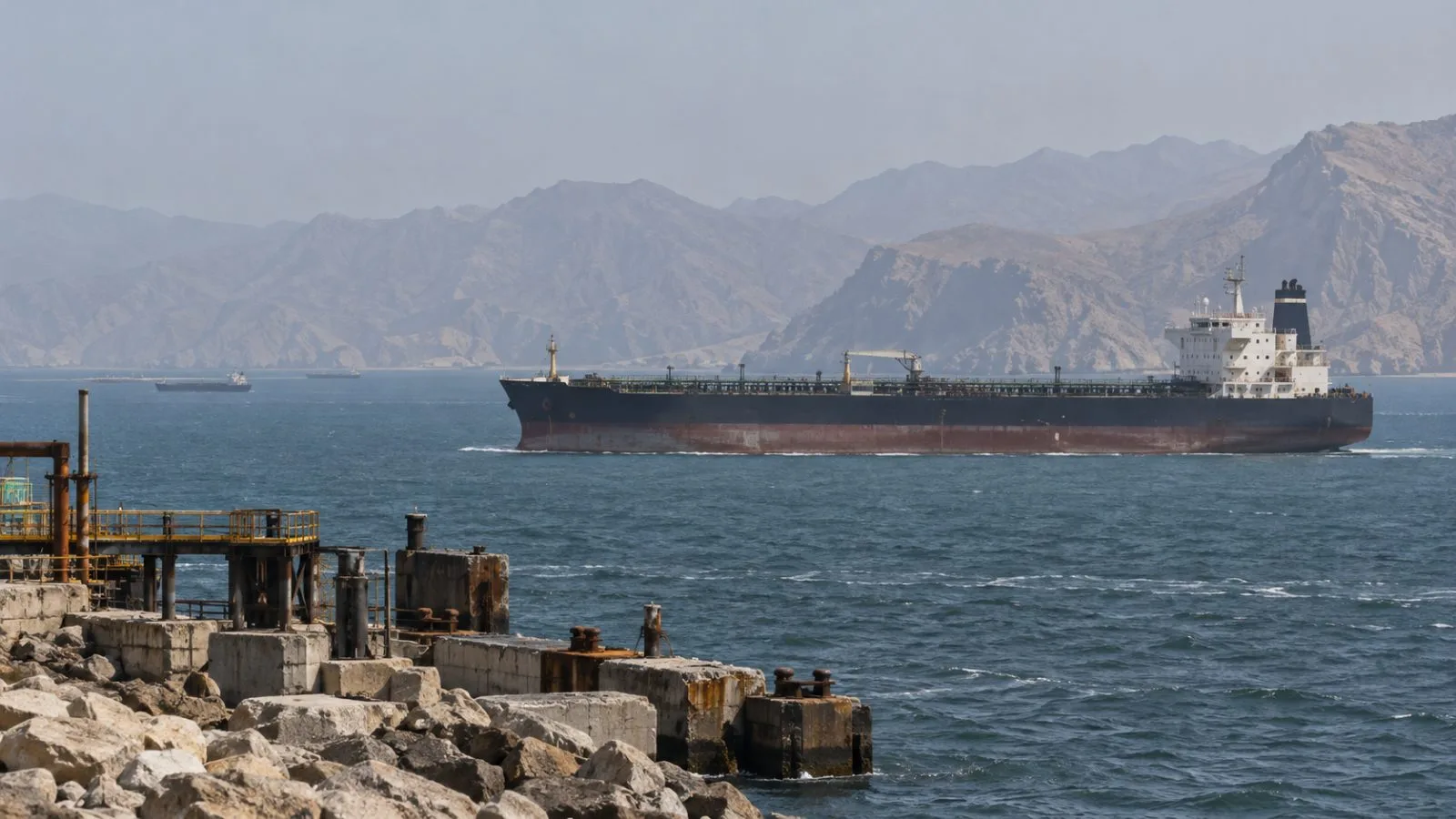
Iranian Foreign Minister Abbas Araghchi blamed the U.S.-Israeli war and an economic blockade for insecurity around Hormuz, a route that carries one-fifth of global hydrocarbons in normal times.
Araghchi made the accusation during a joint news conference with Russian Foreign Minister Sergei Lavrov in Tehran on Monday. Reuters reported that he also urged regional countries to establish a shared security arrangement without foreign forces and pursue diplomacy.
Lavrov has said Moscow’s mediation effort aims to prevent the conflict from again reaching large-scale war, Agence France-Presse (AFP) reported. His Tehran visit was his first since the war began in February with U.S.-Israeli strikes on Iran, AFP said. A ceasefire in April and a June U.S.-Iran memorandum did not end hostilities around the strait, according to the agency.
Iran claims control over the waterway. AFP reported that Iran has targeted vessels crossing without its authorization. The United States has maintained a naval counter-blockade of Iranian ports, the agency reported.
The Gulf Cooperation Council (GCC) Ministerial Council’s Oct. 18 communiqué called for shipping to return to conditions that prevailed before Feb. 28, 2026, and rejected requirements for advance permission to transit. It warned that disruptions put energy, food and medicine supplies and global trade at risk.
Separately, Araghchi has proposed a seven-day sequence that would begin if Washington accepts his plan. Initial U.S. steps would take about four to five days, followed by reopening of the strait on day six and talks on day seven, the Associated Press (AP) reported. AP described disruption of the waterway as Iranian bargaining leverage and compared the proposal with a June interim deal that collapsed. EconoTimes previously covered Araghchi’s proposal to reopen the strait.