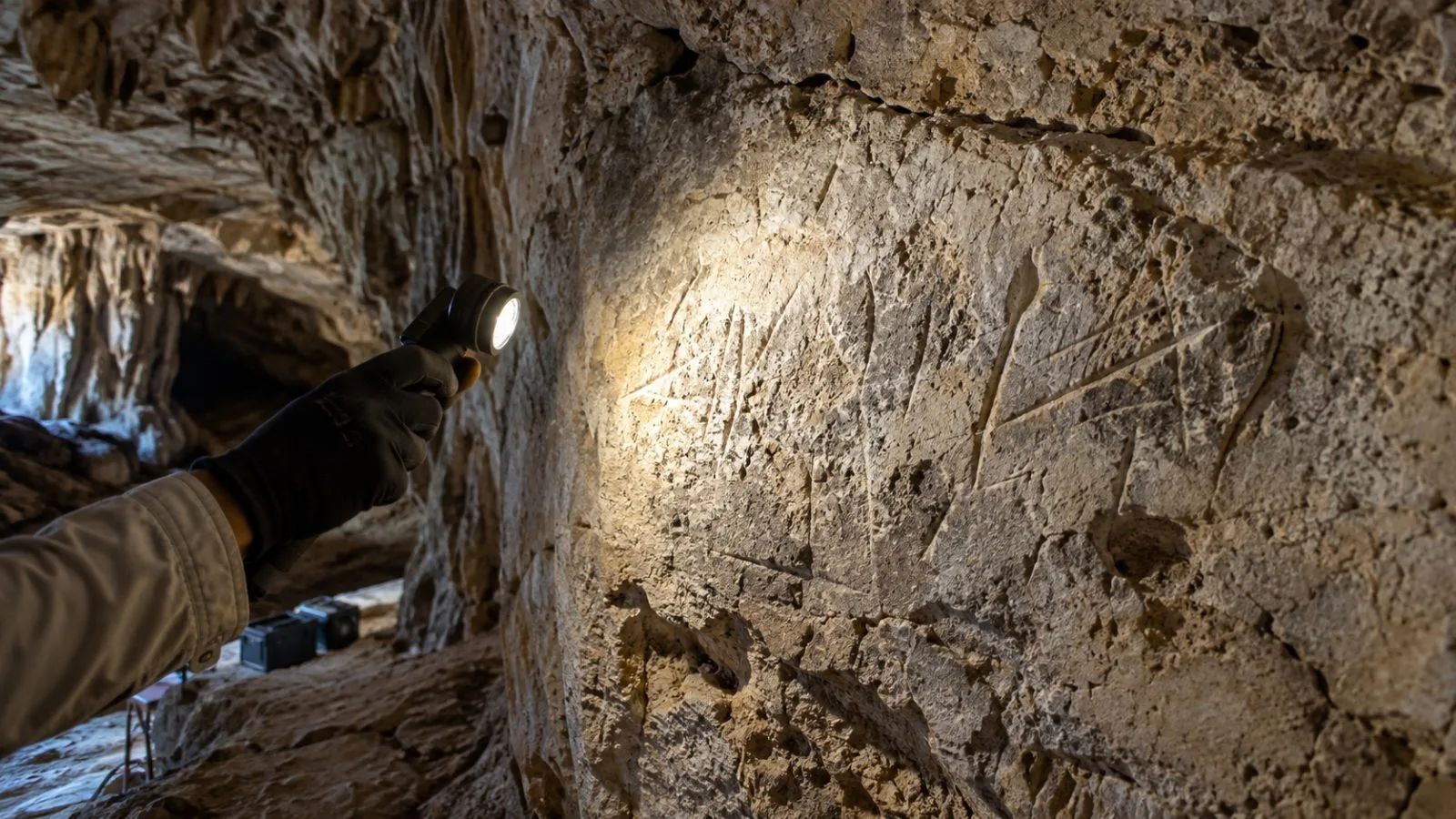
Archaeologists have documented at least 120 Latin inscriptions at Cova Dones near Valencia, Spain, clarifying the Roman sanctuary’s place in a cave with evidence from widely separated periods.
The University of Alicante said its May–June 2026 field campaign brought the tally to at least 120. About 15 inscriptions were known before the campaign, and most of the texts are believed to date to the first and second centuries A.D. The earlier EconoTimes report on the inscriptions covered the initial tally.
Five votive inscriptions name a goddess as Domina, while “MALACI” appears in three of those five texts. Several inscriptions include women’s names, which researchers say indicate women took part in worship. The term’s reading remains under study. University of Zaragoza ancient historian Silvia Alfayé said it may be connected to water.
The inscriptions are on the walls and ceiling of a chamber more than 200 meters from the cave entrance. Finds reported from the sanctuary include two rings, a bracelet, spindle whorls and vessels. The research team said natural pools in the chamber held offerings.
Cova Dones is roughly 500 meters long and has evidence from much earlier periods. A 2023 paper in Antiquity recorded more than 110 graphic units of Paleolithic art. The researchers used stylistic evidence to estimate that some art is more than 24,000 years old; they also noted a cave bear claw mark overlapping finger markings. The paper did not directly date every image.
A separate study in Lucentum identified nearly 200 chalice-shaped vessels among Iberian-period finds. It also examined offerings associated with water from the fifth through third centuries B.C. Those records point to activity in distinct periods, but do not establish continuous ritual use between them.
The University of Southampton identified La Griega’s 107 inscriptions as the previous high for a Roman cave sanctuary, below Cova Dones’ new tally. Researchers plan further study of the inscriptions and conservation work.