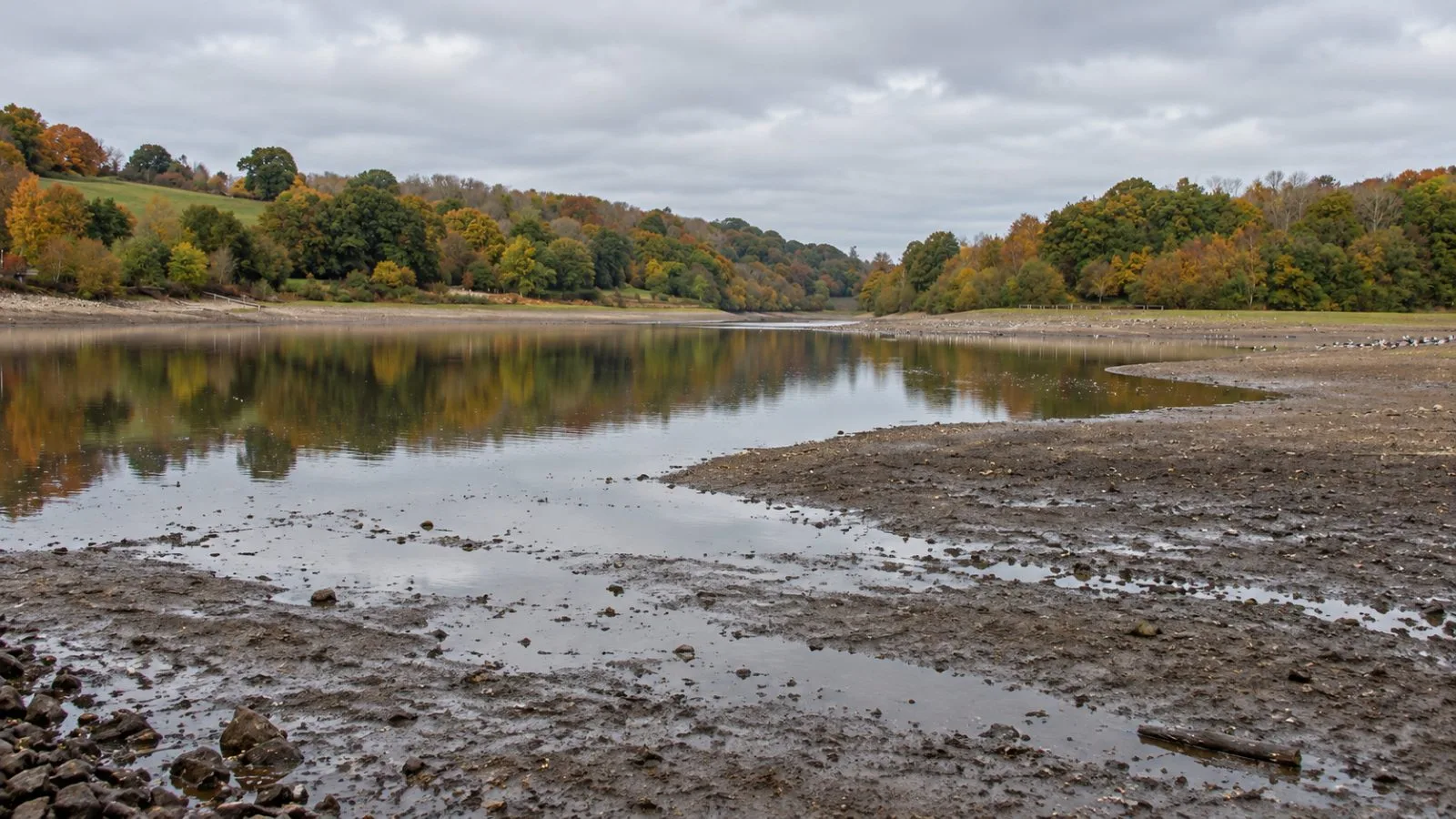
South East Water’s latest reading put Ardingly Reservoir in West Sussex at 18.8% of capacity on Sunday, Oct. 25, as a drought permit reduced water released to a tributary and the region faced continued pressure on supplies.
The company reported the October level. In a separate figure, the Environment Agency recorded the reservoir at 22.8% of capacity at the end of September.
The Environment Agency granted South East Water a permit on Sept. 29. It lowered the usual daily release to Shell Brook from four million liters to one million and is due to run until March 29, 2027, unless withdrawn earlier. The change lets the company retain more water for public supply, while leaving less in the river system, including at Barcombe Mills on the River Ouse. The agency said South East Water would need further actions under its drought plan to secure supplies.
South East Water says Ardingly and nearby Arlington Reservoir can hold 8.3 billion liters combined and provide 8% of its drinking water. Arlington was 40.3% full on Oct. 25. Weir Wood Reservoir, which the Environment Agency reported at 82% at September’s end, remained offline. Southern Water’s resource plan schedules a rebuilt treatment works there with capacity of 21 million liters a day from 2030-31.
Rainfall has been well below expected levels. South East Water said Sussex received just over 56% of expected rain from March through August. The Environment Agency recorded 42.3 millimeters in the Solent and South Downs area in September, 64% of the 66.2-millimeter long-term average.
The government declared severe drought in parts of East Sussex and West Sussex on Oct. 15. It said the South East and South West had their driest April-to-September period in more than a century. The Met Office provisionally ranked summer 2026 as the UK’s warmest on record, with a mean temperature of 16.5 degrees Celsius; its record series began in 1884.
South East Water removed some hosepipe-ban exemptions in Sussex on Oct. 9. An application to restrict certain commercial and other non-household water uses was still under consideration on Oct. 20. The Guardian quoted Haywards Heath resident Caroline Allan describing the reservoir: “I don’t remember ever seeing it this low.”
The Environment Agency linked Sussex’s recovery by spring to a winter with at least average rainfall, which it said is also needed to replenish Ardingly. For England nationally, the agency’s benchmark is at least 120% of average rainfall over six months before drought status can end by spring.