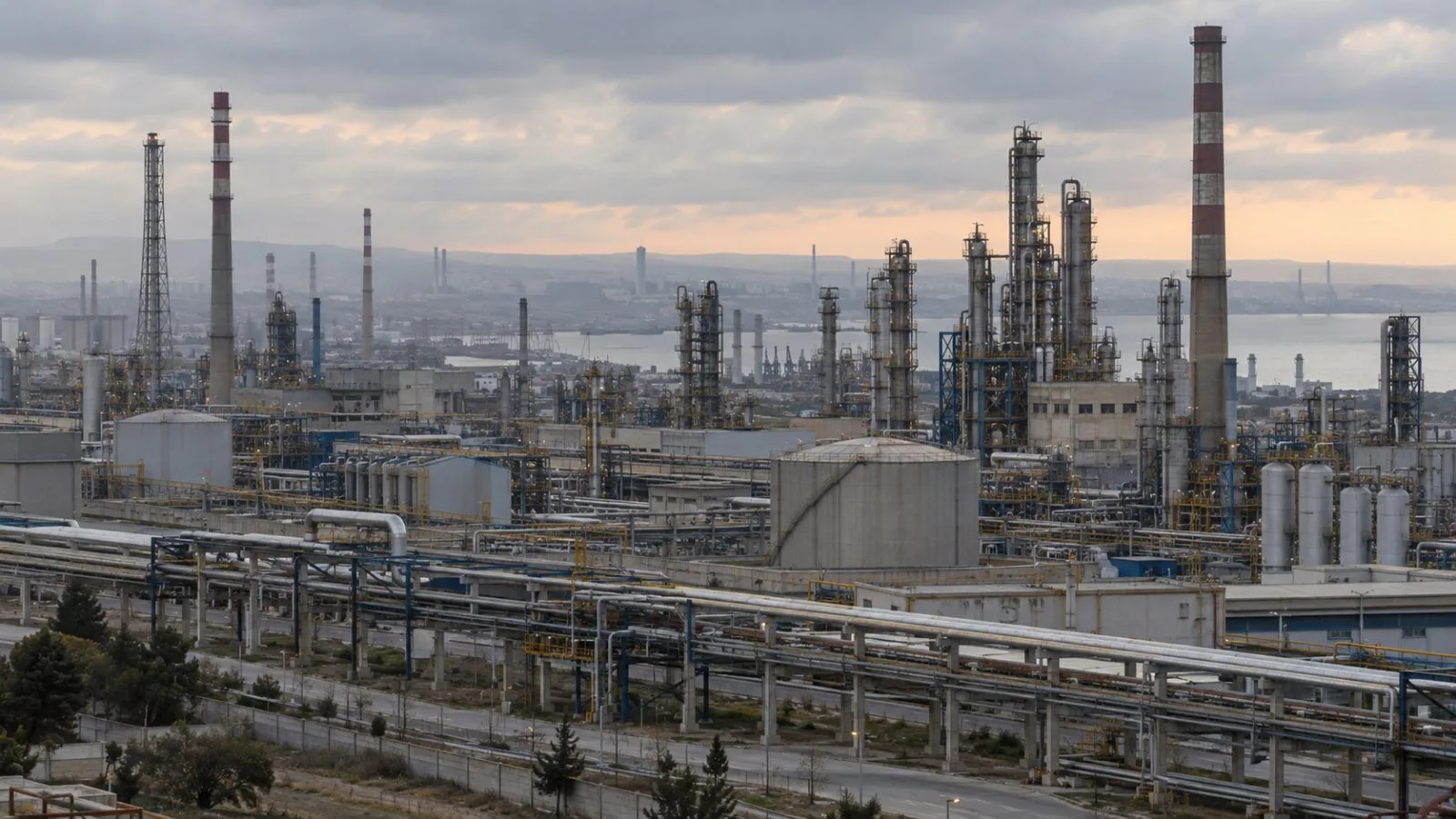
Azerbaijan’s non-oil and gas output grew 2.1% in January through August as oil and gas output fell 0.8%, while non-oil exports advanced 20.5% through September, official data showed.
Azerbaijan’s State Statistical Committee reported that overall gross domestic product reached 87,709.5 million manats in the first eight months of 2026, up 1.2% in real terms from a year earlier. Industry accounted for 34.6% of GDP, although its value added increased 0.6%.
Growth varied among other sectors. Information and communication value added rose 10.7%, while transportation and storage increased 8.7%. Tourist accommodation and food service activities grew 4.3%, and agriculture, forestry and fishing rose 2.6%, the committee said.
The Center for Analysis of Economic Reforms and Communication (CAERC) said preliminary figures put non-oil exports, excluding non-monetary gold, at $3.2 billion for January through September, a 20.5% year-over-year increase. Agricultural exports grew 16.5% to $776.8 million, and agro-industrial exports rose 28.6% to $299.7 million. Together, the categories totaled $1.08 billion, up 19.6%.
Manufacturing is among the areas the government is supporting. Azerbaijan’s Ministry of Economy said sales at Sumgayit Chemical Industrial Park exceeded 1.1 billion manats in the first half of 2025, including nearly 545 million manats in exports, about 20% more than a year earlier. Twenty-eight of the park’s 39 resident businesses were operating, and its products reached more than 70 countries.
The ministry had issued 633 investment promotion certificates to 528 businesses by Jan. 1, 2026. Projects covered by the certificates are projected to attract more than 9.2 billion manats and create more than 46,000 jobs. Certificate holders are eligible for seven years of incentives, including land and property tax exemptions, exemptions from customs duties and VAT on imported machinery, technological equipment and installations, and a 50% reduction in profit or income tax.
Azerbaijan’s Ministry of Energy said the country plans to develop about eight gigawatts of renewable energy capacity by 2032. It listed offshore wind, energy storage, power grids, digitalization, energy efficiency and regional energy corridors as possible areas for private-sector investment. Energy Minister Parviz Shahbazov said private companies could contribute technology and expertise alongside investment.
The International Monetary Fund (IMF) says hydrocarbons account for a larger share of Azerbaijan’s exports than they do in other oil-exporting countries, and points to lower reserves as a reason to keep broadening the economy. The fund expects a new Social and Economic Development Strategy to shape the country’s policy priorities for 2027-30.