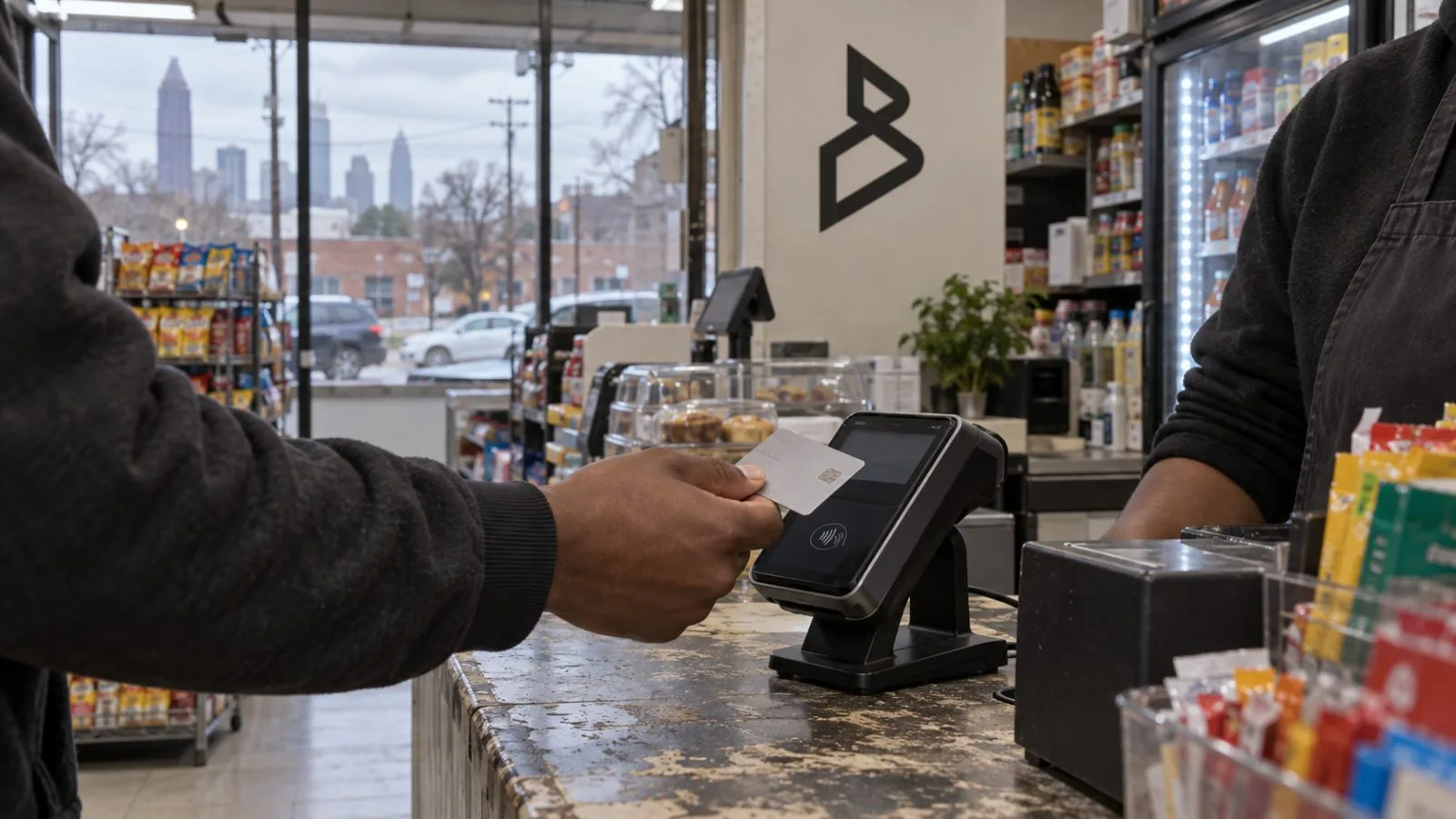
Bakkt raised its 2026 target for Total Transacting Volume to approximately $3 billion from approximately $2.5 billion, citing customer demand above its initial assumptions, an expanded commercial organization and a larger pipeline. The 20% increase is a company forecast, not a report of completed transactions.
The target sets a steep pace for the rest of the year. Bakkt reported $410 million in TTV for the six months ended June 30, including $168.8 million in the second quarter. Reaching approximately $3 billion would require about $2.59 billion in the second half — roughly 6.3 times the first-half total, based on the company’s figures.
Bakkt’s release says some of its largest commercial opportunities were still in early activation and were not yet contributing meaningful volume. The target assumes client integrations clear compliance and launch stages on expected timelines, pipeline relationships convert to live volume in the second half, and activity on the platform remains consistent with recent experience. Bakkt cautioned that implementation, partner and regulatory requirements, and market conditions could change the outcome.
TTV measures the notional value of transactions processed through Bakkt’s platforms; it does not measure revenue, profit, assets held or cash flow. Bakkt says that for payment activity, fees and spreads — rather than the notional value of payments — are recognized as revenue.
The company has been reshaping its business around digital assets and payments. It completed the sale of its loyalty business on Oct. 1, 2025, and acquired stablecoin and payments infrastructure provider Distributed Technologies Research on April 30, 2026. Bakkt says it is developing products for industries with recurring transaction flows, initially targeting energy, metals and agriculture.
A later partnership with Thredd points to a possible consumer use for Bakkt’s settlement infrastructure. Thredd said it would provide card processing and credit infrastructure for a planned U.S. program settling in stablecoins. The partnership’s first proof of concept is planned for January through June 2027, subject to product readiness, client launch timing, bank and network requirements, and applicable approvals. The announcement did not provide a volume or revenue forecast for the program.