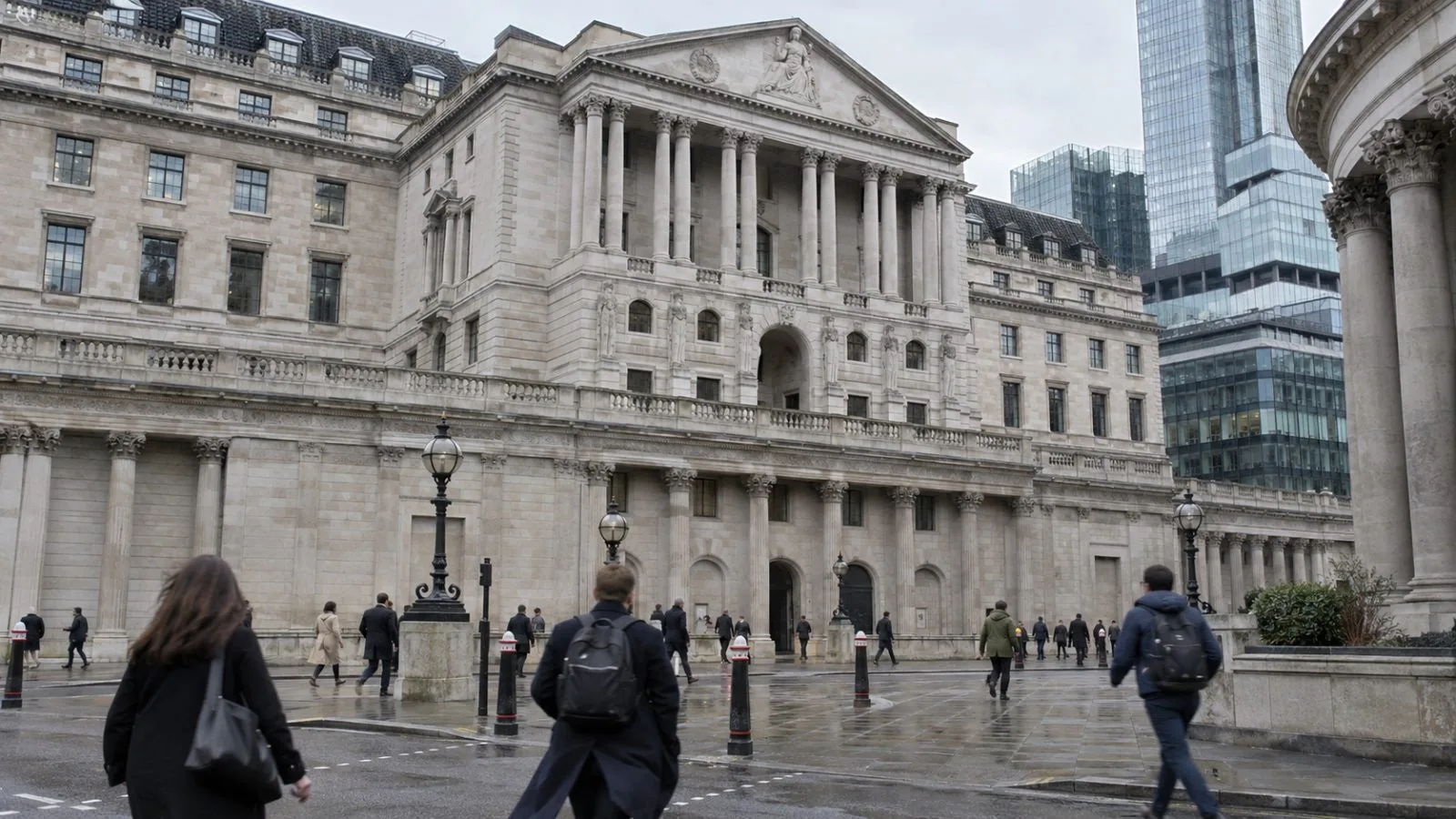
For UK borrowers, the Bank of England’s inflation outlook and a Guardian columnist’s December rate scenario bring borrowing costs back into focus, while existing mortgage estimates predate any such move.
The Bank’s November Monetary Policy Report projects inflation at around 5% by mid-2027, citing higher energy prices and their effects on other prices. In a Nov. 14 Guardian column, columnist Phillip Inman argued that another increase could come at the Monetary Policy Committee’s Dec. 17 meeting. Inman characterized analyst expectations as moving toward a rise and warned that tighter policy could hurt growth in an economy with limited flexibility. He also cited the post-pandemic terms “greedflation” and “shrinkflation,” and argued that businesses could raise prices for households and public-sector buyers.
The committee’s meeting ended Nov. 4, when it voted 8-1 to raise Bank Rate by 0.25 percentage point to 4%. The Bank published the decision Nov. 5. Bank of England Gov. Andrew Bailey said the increase should not be seen as the start of an inevitable series of hikes.
The separate mortgage estimates came from the Bank’s July 2026 Financial Stability Report. It projected that just over 5 million households would see repayments rise by the end of 2028. Nearly 750,000 households paying rates below 3% and due to leave fixed deals in 2026 were projected to face an average monthly increase of £170. For a typical owner-occupier refinancing within two years, the estimate was £45 a month.
The projections used mortgage data from the second half of 2025 and a market rate curve dated June 25, 2026; they do not estimate the effect of a December increase. EconoTimes previously reported on the Bank’s mortgage projections.
The Bank says changes to Bank Rate generally affect banks’ lending and savings rates. The next rate decision is scheduled for Dec. 17.