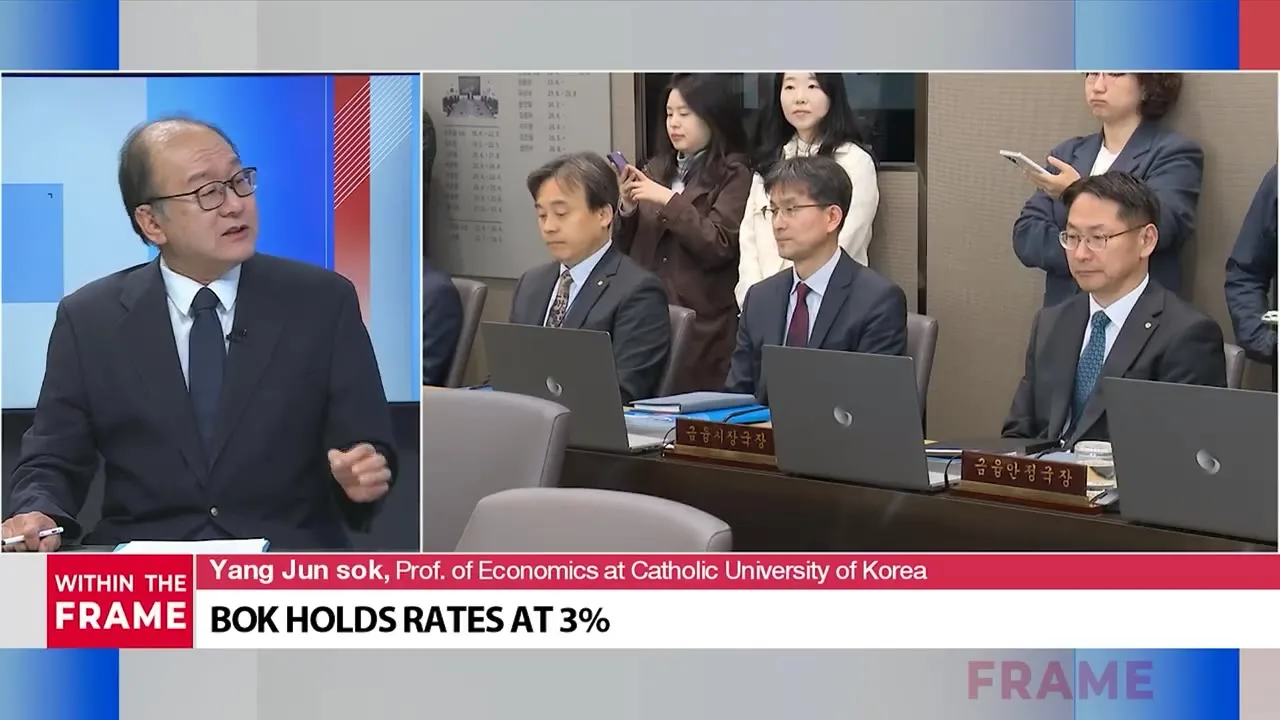
South Korea's central bank held its benchmark interest rate at 3% on Thursday while assessing earlier increases and uncertainty at home and abroad, the Bank of Korea governor said.
The unanimous decision followed quarter-point increases in July and August, according to Arirang News' Weekly Focus, published Oct. 24. It left the gap with the upper end of the U.S. rate range at one percentage point.
The governor said the central bank needed more time to assess how those increases affected the economy. Uncertainty included the Middle East conflict, monetary and fiscal policies in major economies, and possible U.S. policy changes after the midterm elections.
“Growth and inflation risks have risen at home, but we'll wait for more data before taking action,” the governor said.
The central bank expects economic growth this year and next to exceed its August forecasts of 3.3% and 2.9%, respectively. Strong semiconductor demand is expected to support exports and investment, while rising incomes support household spending.
The growth outlook has improved, but inflation remains a concern. The central bank expects headline inflation and core inflation, which excludes volatile prices, to stay close to its August forecasts of 2.7% and 2.5%, respectively, this year.
Both measures are expected to exceed the central bank's earlier forecasts for next year as consumer spending recovers. The remarks did not give revised inflation forecasts for that period.
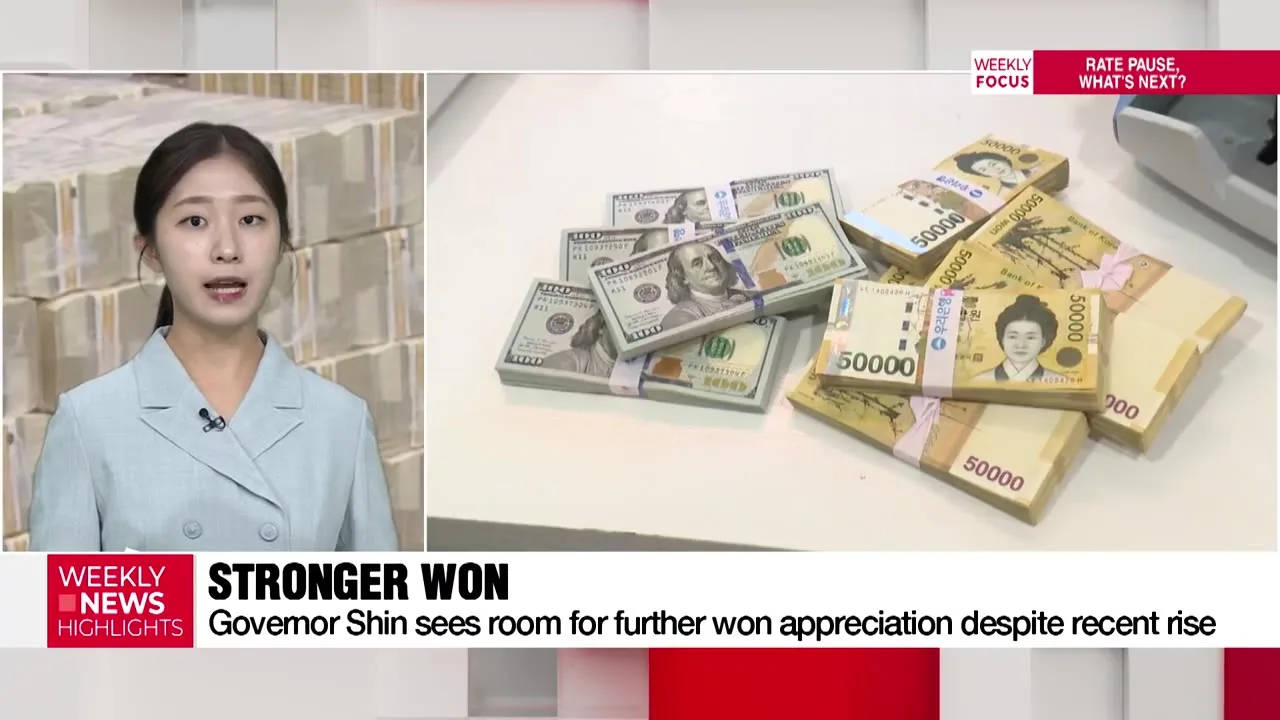
The won's recent rise against the dollar has eased the pressure for an immediate rate increase. The governor said the currency remains relatively weak against a broader group of currencies.
Inflation, household and corporate debt, and the housing market remain considerations for the next decision. Another question is whether semiconductor demand driven by artificial intelligence investment can sustain South Korea's growth.
“We need to see whether demand for AI investment can last and whether those investments remain profitable,” the governor said.
The strength of chip exports has also raised questions about how far the recovery extends into the rest of the economy. Domestic consumption and construction remain weak, with high interest rates adding to their difficulties.
Further rate increases could weigh particularly heavily on construction, affecting employment and other industries. Abroad, higher energy costs linked to the Middle East conflict could spread to manufactured goods prices.
The governor said inflation needed to return firmly to the central bank's 2% target. The remarks left the timing and direction of the next rate decision open.
The U.S. Federal Reserve's meeting next Tuesday comes before further domestic readings. South Korea's third-quarter gross domestic product figures are due next week, followed by October inflation data in early November.