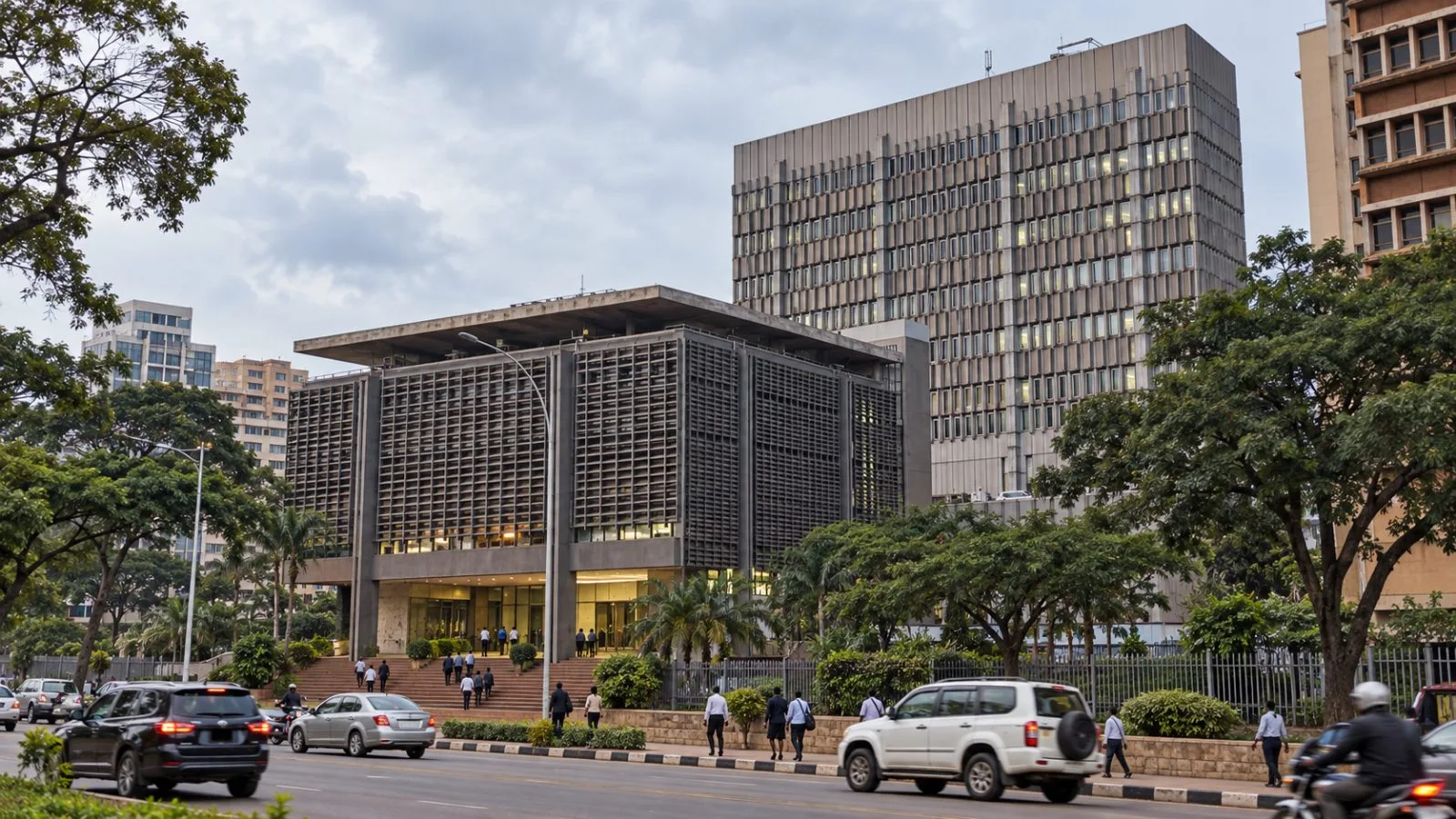
The Bank of Uganda and EIB Global signed an agreement on Oct. 21 to improve supervision of climate risks at lenders and support financing for environmentally sustainable activities.
EIB Global, the European Investment Bank Group’s development arm, will help the central bank prepare a roadmap for greening the financial sector. The work also covers the central bank’s climate-risk disclosure framework, reporting by financial institutions and its capacity to supervise those risks.
Uganda’s National Climate Finance Strategy estimates the country requires $28.1 billion to implement its climate commitments by 2030. The government’s National Green Taxonomy, published in 2025, classifies environmentally sustainable activities to guide investment. The agreement will support its implementation.
The central bank had already issued climate-related financial risk management guidelines for banks in October 2025. They took effect Dec. 31, 2025, according to the Bank of Uganda’s Financial Sector Stability Forum.
Bank of Uganda Deputy Governor Prof. Augustus Nuwagaba said the effort should strengthen resilience “without unnecessarily constraining access to finance.” He said the financial system needs to understand emerging risks while continuing to finance productive activity.
EIB Vice-President Marko Primorac said better information about climate risks would help banks assess green projects and could attract private capital for climate action. “Banks can’t manage a risk they can’t see,” he said.
Germany and Luxembourg fund the broader EIB technical assistance program through the Greening Financial Systems Fund, in coordination with the NDC Partnership. EIB Global gave no Uganda-specific budget in its announcement.
The assistance will also reach selected Ugandan commercial banks. EIB Global named Housing Finance Bank as the first lender set to benefit, with support planned for climate-risk management, disclosure and processes intended to expand green lending.