Food Banks Canada calculated that spending on food, shelter and transportation equaled 112% of disposable income for Canada's lowest-income fifth of households in the fourth quarter of 2025, as March food-bank visits reached a record.
The group's HungerCount 2026 report put the comparable ratio at 91.4% in the first quarter of 2021. Its price figures cover a different period: from January 2021 to March 2026, transportation costs rose nearly 24%, housing costs 28% and food prices about 30%.
Food Banks Canada says rising essential costs have eroded households' financial buffers, with those on low incomes particularly exposed. Among food-bank clients in its study, 71.8% lived in market rental housing, while 17.9% reported employment as their main income source.
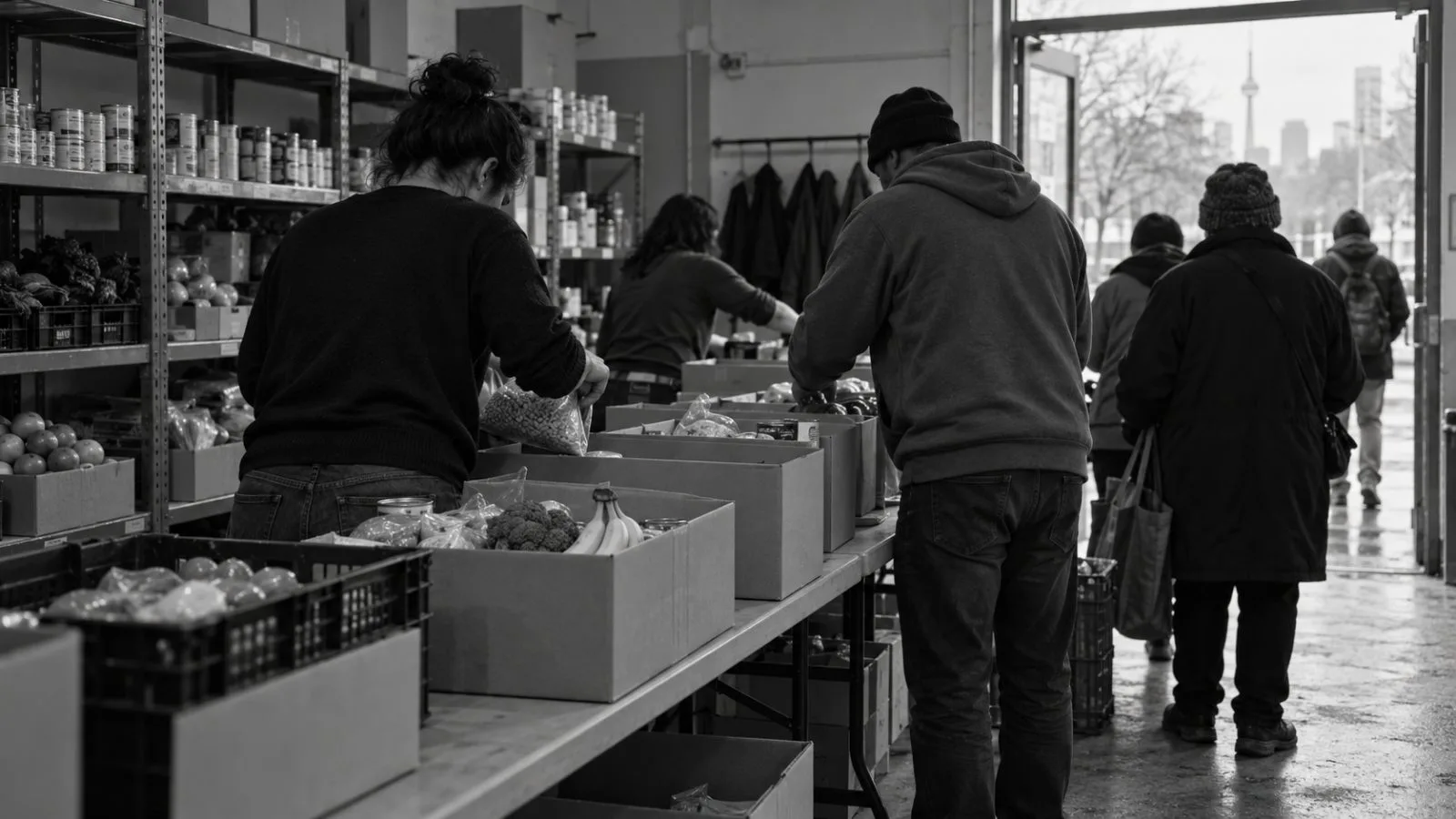
The organization recorded 2,355,075 food-bank visits in March 2026, up 8.7% from March 2025 and 116.8% from March 2019. Visits involving children numbered 775,658. The total is a record for the study's annual March count, which drew on data from 2,575 reporting food banks.
As EconoTimes previously reported on the March count, visits are not a count of distinct people: household members receiving a food hamper are counted, and a person who returns during the month counts again. Food Banks Canada estimated missing values for 196 organizations in Quebec using reported growth from 459 others.
Food banks also reported tighter supplies. In a 2026 network survey of 284 organizations, 21% said they ran out of food before meeting demand, compared with 10% in 2021. Another 51% said they gave people less food because they were running out, up from 20% in 2021.
A separate estimate from Statistics Canada's 2024 Canadian Income Survey found that nearly 10 million people lived in food-insecure households during its 2024 reference period, including more than 2.6 million who experienced severe food insecurity. The interviews took place in 2025; the estimate does not measure the full 2025 calendar year.
Food Banks Canada recommends doubling the Canada Workers Benefit and directing up to $500 million from the Food-Link Fund to food-bank infrastructure. Those are the organization's proposals, rather than announced government measures.