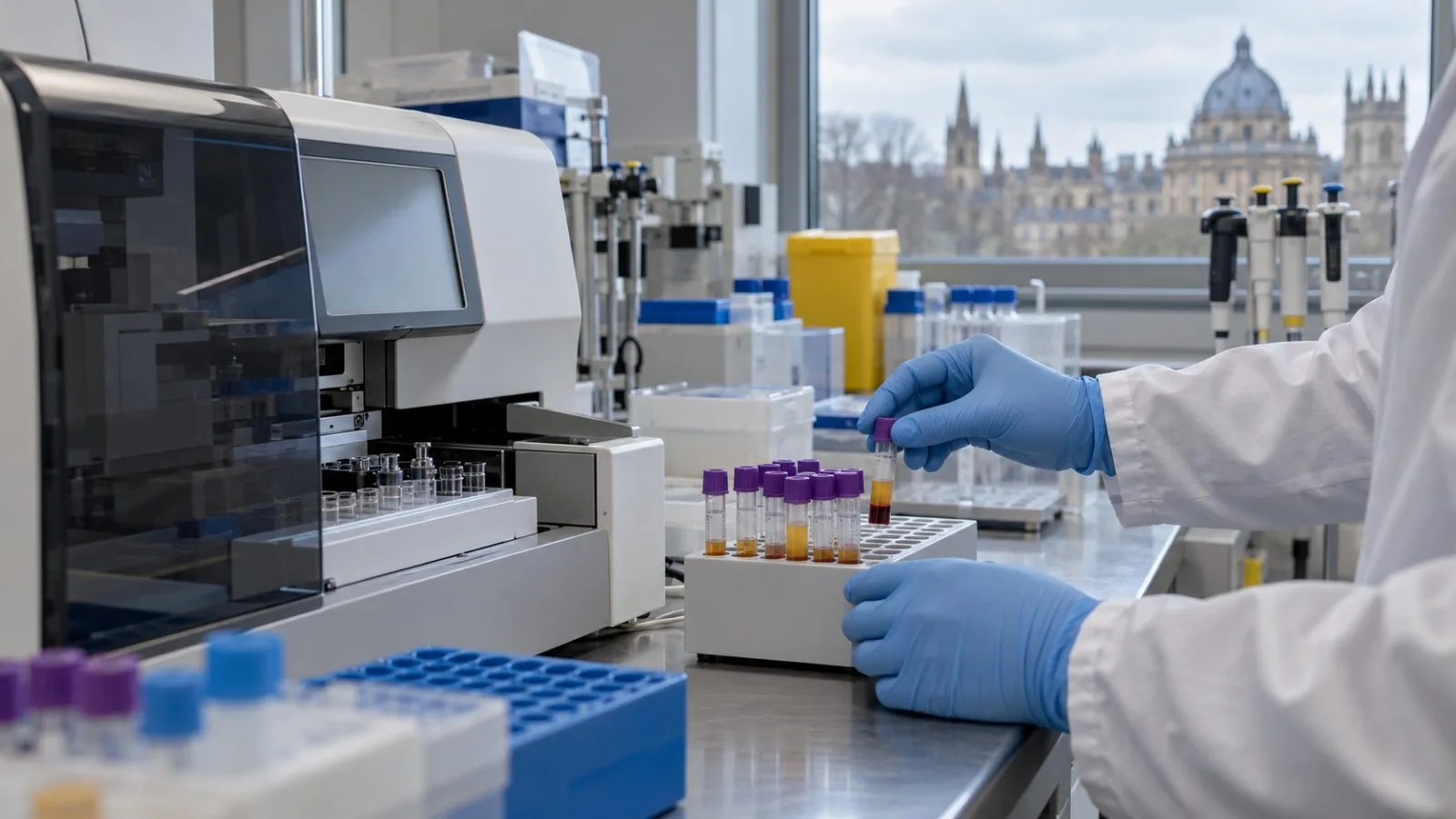
An Oxford-led study found that blood proteins were associated with prostate cancer diagnosed more than 15 years later, identifying research leads while stopping short of a screening tool.
Published in European Urology, the case-cohort study drew on stored plasma from 982 men who later received a prostate cancer diagnosis and 1,573 participants in a subcohort of the European Prospective Investigation into Cancer and Nutrition (EPIC). The SomaScan 7k platform measured more than 6,000 proteins. The analysis of aggressive prostate cancer included 290 cases.
Researchers found 12 proteins associated with cancers diagnosed more than 15 years after sampling, including ANXA2, GZMK and OSCAR. Seven proteins were associated with aggressive disease. ANKRD1 showed links across several clinically relevant subtypes. The study also reported associations between future aggressive cancer and proteins linked to ERBB3, KRAS and NRAS, genes previously linked to prostate cancer.
Three proteins — ACP3, FLT4 and KLK3 — were associated with overall prostate cancer risk. For each one-standard-deviation increase in measured protein level, the study reported hazard ratios of 1.20 for ACP3, 1.26 for FLT4 and 2.28 for KLK3. A hazard ratio compares the rate of an outcome between groups; it does not give an individual's absolute chance of developing cancer.
The findings do not establish that the proteins cause cancer or can accurately predict an individual man's risk. The study reported incomplete replication in outside cohorts and differences in the outcomes available for comparison. The University of Oxford said the markers are not ready for clinical tests and that the findings do not show cancer was already present when blood was collected.
Prostate cancer accounted for about 330,000 new diagnoses in the European Union in 2022, or 12.1% of cancer cases, the European Commission estimated. Eurostat recorded 68,277 male prostate cancer deaths in the EU that year.
Dr. Zhe Huang, the study's first author and a postdoctoral epidemiologist at Oxford Population Health, said cases range from slow-growing cancers that may never cause harm to aggressive forms that can be life-threatening. Oxford said its Prostate Cancer Aetiology and Prevention Programme will examine whether the findings can contribute to improved risk prediction or prevention.