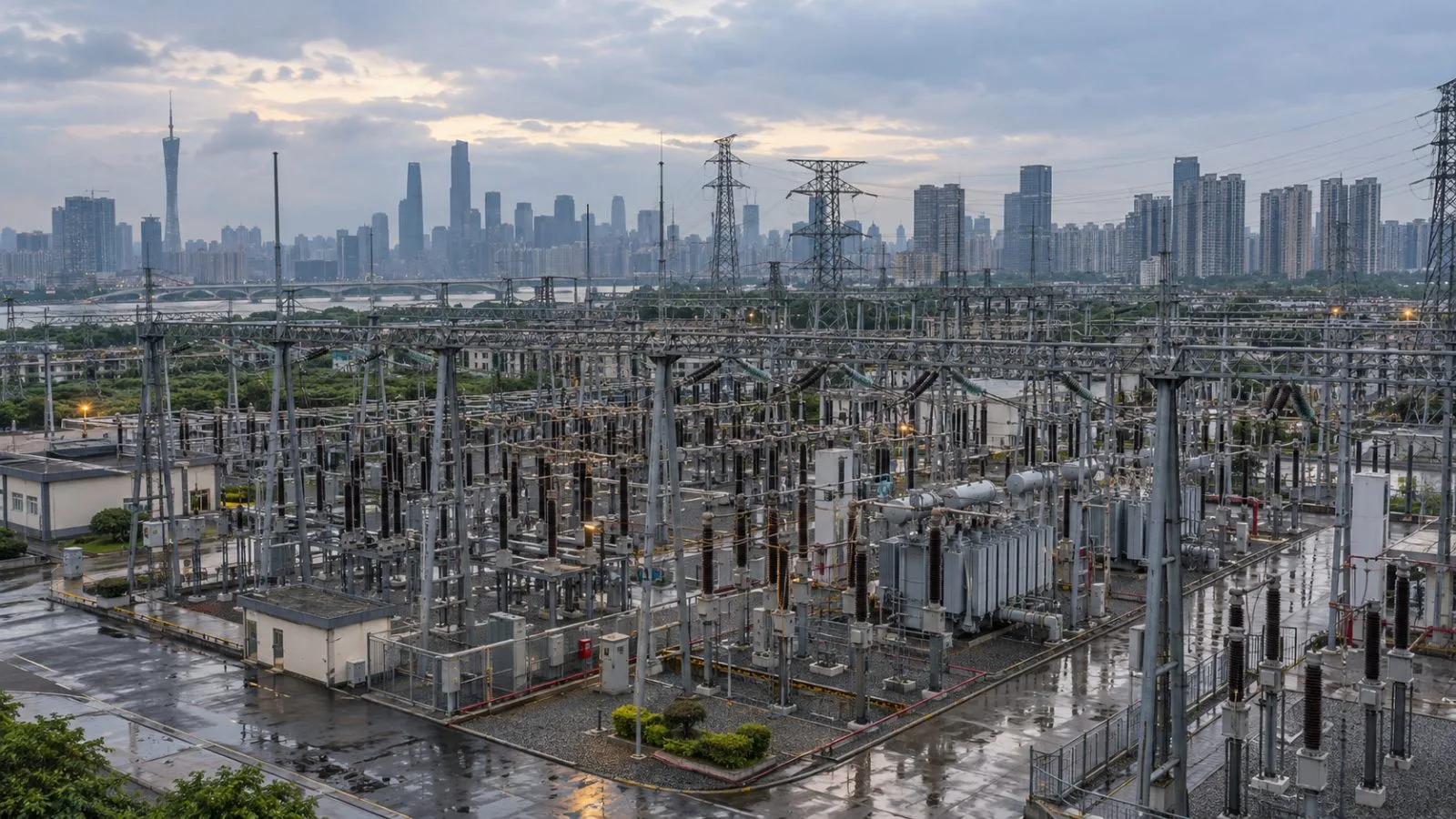
Bloomberg News reported that Guangdong’s spot electricity price more than tripled year over year on Oct. 18, as first-half data showed widespread retailer losses and gas offers above coal’s.
Bloomberg said the Oct. 18 rate was about 810 yuan ($121) per megawatt-hour, based on Rystad Energy data. It attributed price pressure to weaker hydropower and wind output and said gas generators were increasingly setting prices during peak hours.
The Guangdong Power Exchange Center’s first-half report said 298 of 500 retail electricity companies lost money. Average retailer profit was 0.0039 yuan per kilowatt-hour, and about 90% of market electricity volume was covered by medium- and long-term contracts. Bloomberg reported that retailers with customer contracts setting prices in advance were exposed when wholesale prices rose.
The exchange center reported average offers of 0.8177 yuan per kilowatt-hour for gas-fired generation, compared with 0.3892 yuan for coal. As of June 30, gas-fired units made up 20.8% of Guangdong’s grid-controlled installed capacity and coal-fired units 30%. Those shares describe installed capacity, not the amount of electricity generated by each fuel.
A 21st Century Business Herald report, citing China Southern Power Grid’s Guangdong unit, put provincial electricity use at 775.996 billion kilowatt-hours from January through September, up 7.67% from a year earlier.
The World Meteorological Organization (WMO) forecast a Niño 3.4 sea-surface-temperature anomaly of about +3.8°C for November 2026 through January 2027, with warming expected to peak around December. WMO Secretary-General Celeste Saulo said in an Oct. 21 statement that the current El Niño event “could be unprecedented in strength.” The global outlook does not establish a local cause for the power-output changes reported in Guangdong.
The exchange center’s second-half work plan calls for preparing key mechanisms for 2027 and supporting the Southern regional market’s move to formal operation. It does not set a date for that transition.