The Boring Company has cut tunneling costs below $10 million a mile since its founding in 2017, bringing cheaper underground transportation closer, venture capital firm Andreessen Horowitz said.
That puts tunneling below the cost of adding an urban highway lane. The firm said so in its Nov. 17 newsletter, “The Boring Company & the Future Underground.” Its analysis described a further halving of costs as within reach, without giving a timetable.
The firm's account traced the company's development from its first digging efforts to its Las Vegas passenger service. It argued that reducing construction costs must come before building a hyperloop, a proposed transport system carrying passengers through underground tubes at very high speeds.
“The hard part about Hyperloop is tunneling,” Steve Davis, the Boring Company's chief executive, said. Faster travel requires straighter routes, forcing builders to dig through or beneath obstacles over long distances. The firm's analysis identified the historical cost of that construction as the obstacle to making such journeys practical.
The company's Vegas Loop offers an early example of its approach, the firm said. Teslas carry passengers through underground tunnels directly to their destinations. The service has carried more than 4 million passengers since opening beneath the Las Vegas Convention Center in 2021.
The firm also identified projects underway or planned in Nashville, San Antonio, Orlando and Dubai. Davis eventually wants to connect cities with hyperloops. His ambition is to commute between Washington and Las Vegas in half an hour, a journey the analysis described as requiring average speeds above 4,000 miles an hour.
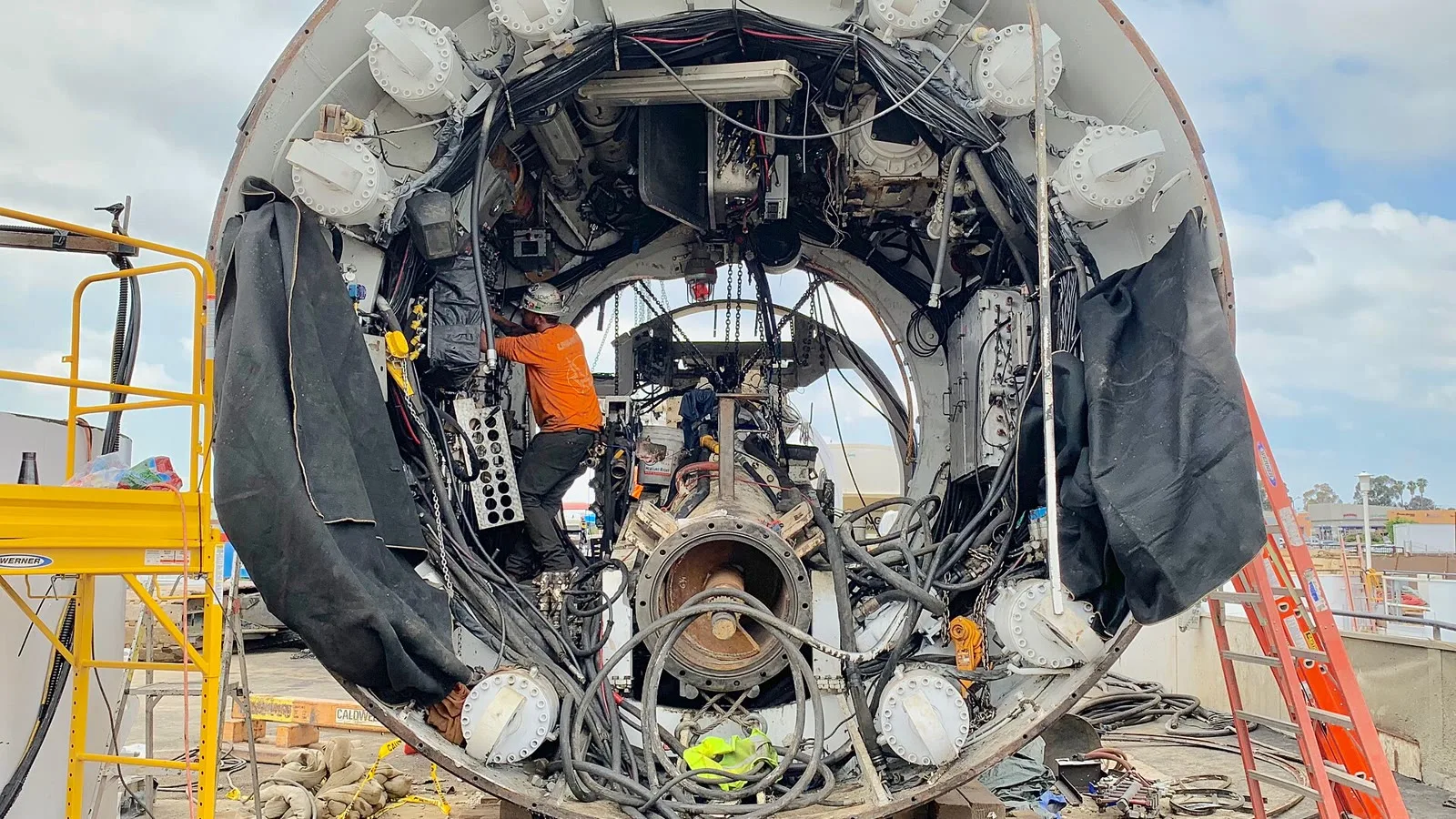
The analysis attributed the company's approach to efforts by Davis and founder Elon Musk to simplify machinery and repeatedly reduce costs. It described an established tunneling industry that relied on machines built for individual projects, with little standardization and limited incentive to make construction cheaper.
Davis and his team believed they could improve tunneling speed and cost by at least a factor of 10, the firm said. Their early work began with a used boring machine supplied by a Wisconsin contractor, which arrived at SpaceX's headquarters in April 2017 with a crew to help operate it.
The account presented cheaper tunnels as the foundation for a larger underground transport network. Davis put that ambition in terms of competing with roads. “If we're below $5 million,” he said, “why would you ever build a road again?” That threshold remains an objective in the firm's account, rather than a cost the company has already achieved.