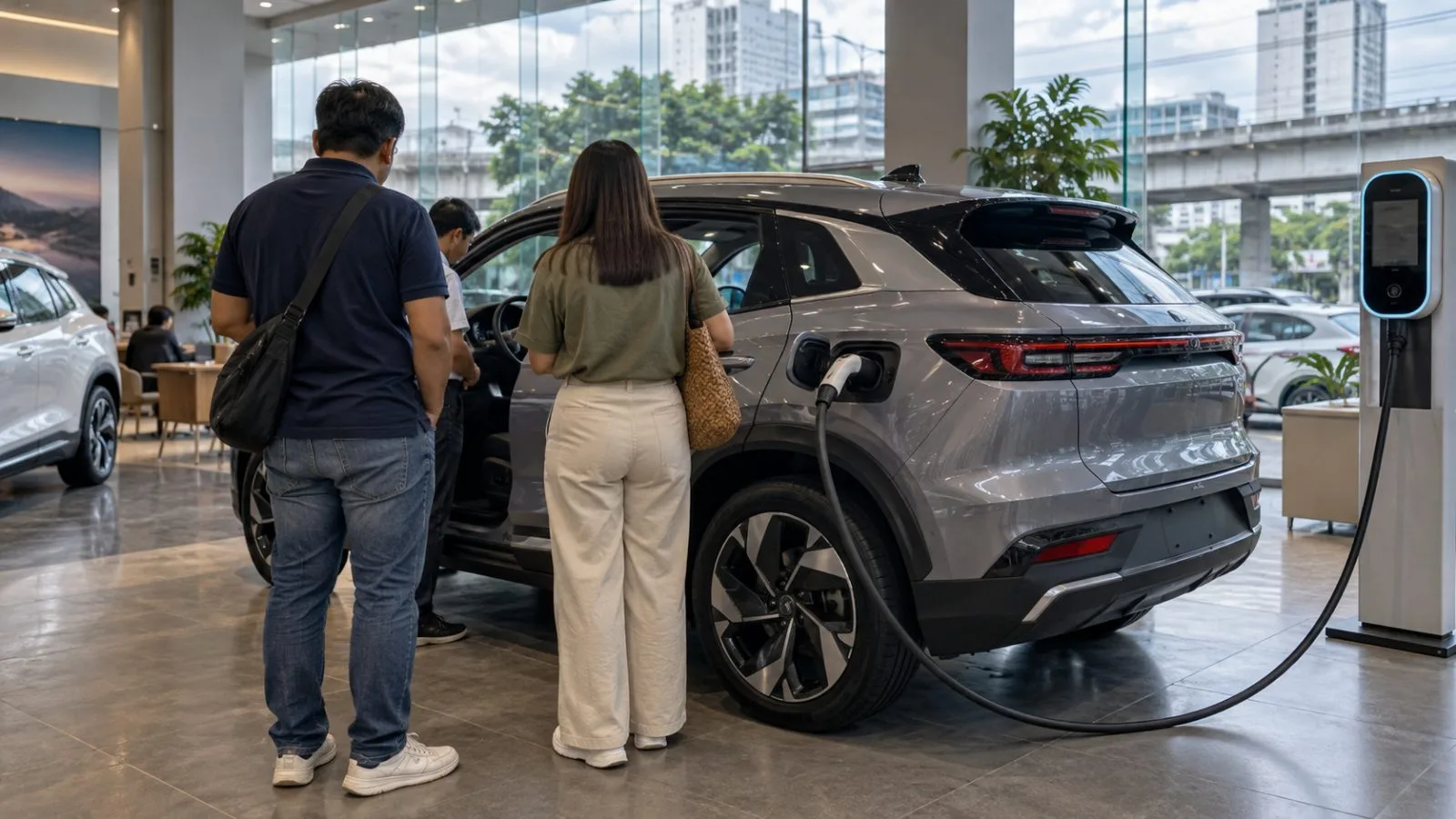
Electrified vehicles took a larger share of sales by two Philippine auto industry groups in the first nine months of 2026, with September sales quadrupling even as overall member sales declined.
Chamber of Automotive Manufacturers of the Philippines Inc., known as CAMPI, and the Truck Manufacturers Association (TMA) said their members sold 8,959 electrified vehicles in September, up 300.5% from 2,237 a year earlier. Their combined sales across all vehicle types fell 5.8% to 35,722 from 37,915. The figures cover the groups' members rather than every vehicle seller in the Philippines.
For the first nine months, the groups reported 54,372 electrified vehicle sales, versus 20,676 in 2025. Their share of member sales rose to 17.71% from 6.05%. Overall member sales for the period fell 10.2% to 307,060 vehicles.
Battery electric vehicles accounted for 3,075 September sales, a 711.3% increase from a year earlier. Members also sold 3,933 hybrid electric vehicles, up 123%, and 1,951 plug-in hybrids. Together, those three types make up the groups' electrified vehicle category. September's total was 26.7% above August's 7,073.
Separately, Executive Order No. 121, signed July 29, established the Electric Vehicle Incentive Strategy (EVIS) Program to encourage domestic manufacturing of battery electric and hybrid vehicles and their components. The order says the program aims to narrow the cost gap with conventional vehicles.
The program allows eligible manufacturers to seek fiscal support if they meet its conditions. The order caps that support at ₱60 billion, subject to budget appropriations, and requires annual reviews of the program.