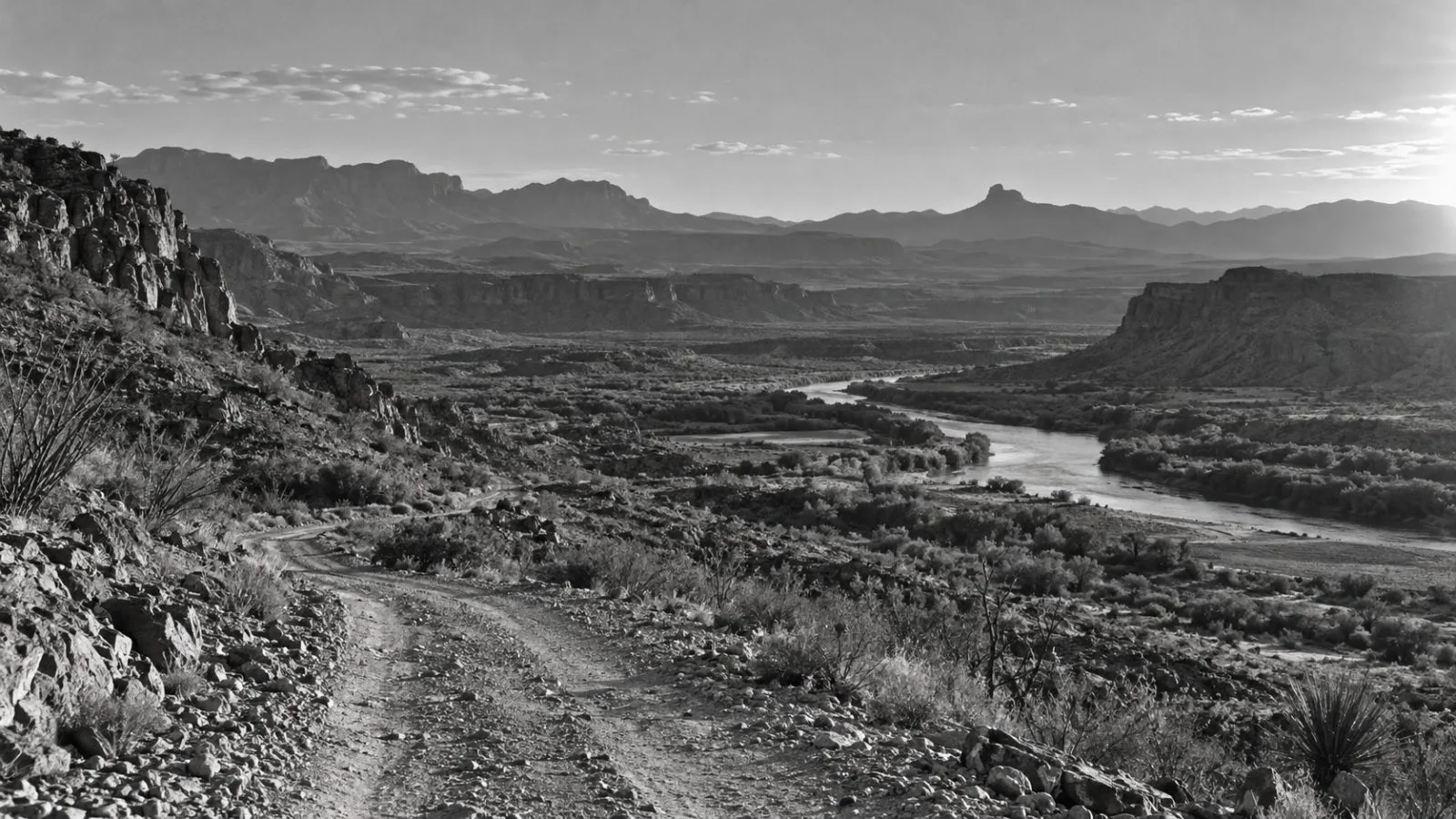
U.S. Customs and Border Protection Commissioner Rodney Scott defended planned barriers and related infrastructure in Texas’ Big Bend region as the Supreme Court considers the administration’s request to lift an injunction that has halted work there.
Issued Oct. 2, the preliminary injunction stops construction and ground-disturbing activity across the Big Bend Sector until the government meets applicable legal requirements. In an Oct. 14 opinion, U.S. District Judge Kathleen Cardone found that at least one plaintiff claim was likely to succeed and that plaintiffs were likely to suffer serious harm that could not later be remedied without the order.
Scott told the Associated Press in an interview published Friday, Oct. 23, that if other border areas were fortified while Big Bend had no wall or related infrastructure, he was convinced the region would be “overrun and destroyed.” The Associated Press also reported opposition from a bipartisan group of area landowners, businesses and environmental advocates.
Public Law 119-21, Section 90001, appropriated $46.55 billion to CBP for a nationwide border infrastructure and wall system, with the money available through Sept. 30, 2029. The law sets no separate amount for Big Bend.
CBP said its limited plans included a new access road, improvements to existing roads, detection technology and vehicle barriers. The agency said the three protected areas — Big Bend National Park, Big Bend Ranch State Park and Black Gap Wildlife Management Area — would not get a 30-foot wall or stadium lighting. The Justice Department’s Oct. 21 Supreme Court filing describes vehicle barriers in separated segments totaling 17 miles inside the national park, no barriers in the state park and 30-foot pedestrian barriers elsewhere in the sector. Scott told the Associated Press he could not provide park-specific details while lawsuits were pending.
The administration says the infrastructure would help prevent illegal crossings and smuggling. A Department of Homeland Security waiver described Big Bend as an area of high illegal entry, citing more than 89,000 Border Patrol apprehensions during fiscal years 2021 through 2025. Cardone later described it as having the border’s lowest illegal-entry rate; the five-year apprehension total and the rate comparison use different measures.
CBP told the court that three-quarters of a mile of barrier had been installed by the injunction. The agency estimated contractor suspension costs at $462,800 per day or more, based on rough projections. The Department of Justice’s request to resume Big Bend construction is pending; the docket sets a response deadline of 4 p.m. EDT Thursday, Oct. 29, and lists no decision date.