Two California ferry projects show how battery-electric service depends on vessel design and terminal power: FlyTahoe is developing a hydrofoil route on Lake Tahoe, while San Francisco Bay Ferry plans a fleet shift.
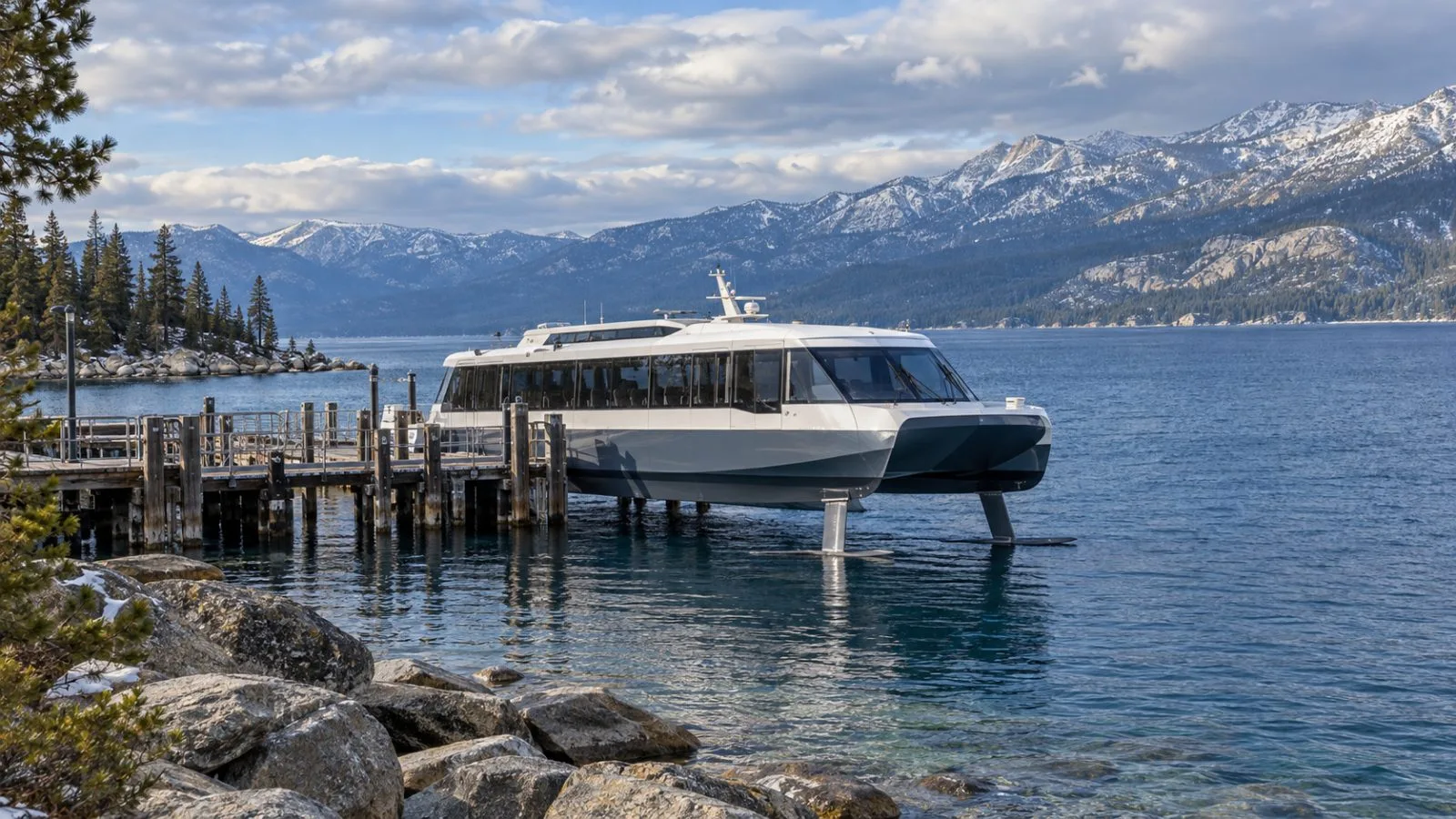
Vessev announced Aug. 20, 2026, that FlyTahoe was its first U.S. customer. FlyTahoe is developing the Lake Tahoe route and says the service depends on regulatory approval. As the VS–9 picks up speed, its foils lift the hull clear of the water. The Guardian reported that Vessev says the design cuts drag by about 66%, allowing a smaller battery pack.
The Guardian reported that the San Francisco Bay Area Water Emergency Transportation Authority (WETA) plans to add four battery ferries to San Francisco Bay Ferry over the next two years. The outlet valued the wider electrification program at about $500 million. WETA’s January 2026 blueprint for the California Energy Commission (CEC) says the existing fleet runs on diesel and includes plans for dockside charging.
The blueprint divides the transition into four phases, starting in 2025 and extending beyond 2035. It says current battery-electric vessels cannot serve the bay’s longest routes; liquid hydrogen and methanol are among the alternatives under study. Route length, vessel speed, battery weight, charging windows and grid capacity all affect whether a vessel can keep to its schedule. The report identifies funding and terminal power coordination as needs.
The program faces a large upfront investment and the cost of charging infrastructure. The Guardian reported that lower fuel and maintenance costs could reduce operating expenses over time. It also reported that vessels and batteries are being built in the United States. WETA Executive Director Seamus Murphy told the Guardian that the shift could create work for U.S. shipbuilders and manufacturers.
The Guardian cited electric hydrofoil ferries carrying commuters in Stockholm and Norway’s order for 20 such vessels. WETA’s blueprint lists grant seeking and continued coordination on terminal power as next steps, while FlyTahoe’s service remains dependent on regulatory approval.