Cameroon’s April constitutional amendment gives President Paul Biya discretion over whether to name a vice president, whose succession role applies only after death, resignation or permanent incapacity duly ascertained by the Constitutional Council.
Law No. 2026/002, dated April 14, allows the president to appoint and dismiss a vice president and delegate powers to that official. It sets no deadline for an appointment.
If one of the specified conditions creates a vacancy, the vice president would serve the balance of the president’s seven-year term. If no vice president can serve, the law calls for a presidential election within 20 to 120 days after notification of the vacancy, with the Senate president acting as interim president.
Opposition lawmakers and the Cameroon Bar Association criticized the amendment, saying an appointed successor could weaken democratic legitimacy, the Associated Press reported.
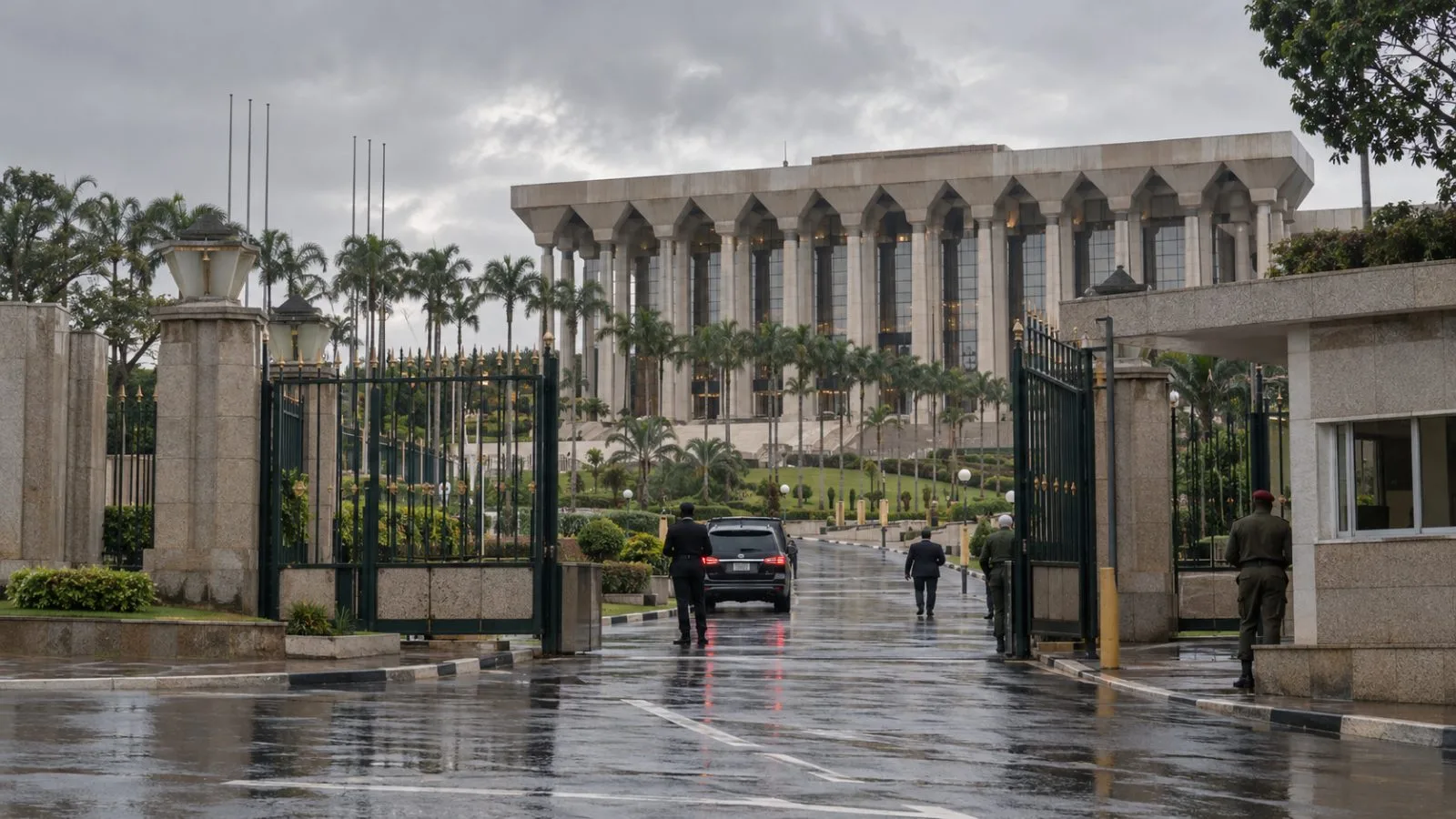
The Presidency said Biya left Yaoundé on June 7 and returned Aug. 20. Al Jazeera reported that his absence lasted 74 days. The Associated Press described Biya waving from a vehicle on arrival; its account did not show him stepping off the aircraft or giving a public briefing.
The Presidency also said Biya signed three military decrees on Aug. 3 while abroad. They included the promotion of five colonels to brigadier general and appointments in the Defense Ministry and Presidential Guard. The published orders list formal decisions but do not establish Biya’s personal involvement in ordinary government work.
Al Jazeera reported Oct. 17 that the vice presidency remained vacant and that no new government had been appointed by Oct. 6. In his Dec. 31, 2025, address, Biya said he would form a government in the coming days.
Jason Healy, a sub-Saharan Africa country-risk analyst at BMI, part of Fitch Solutions, told Al Jazeera prolonged uncertainty could make companies more hesitant to commit to major projects with long timelines. The law sets no deadline for filling the vice presidency.