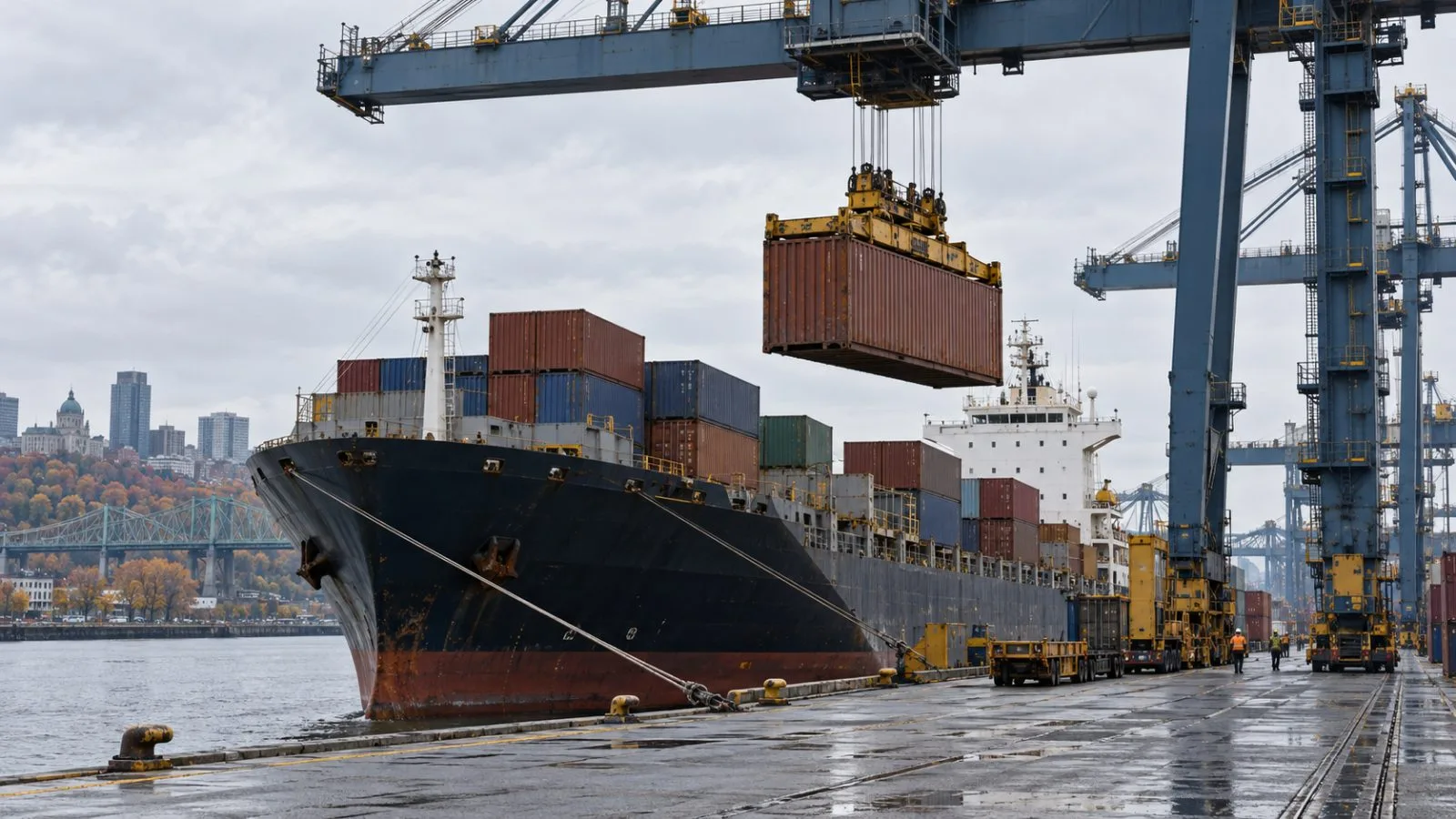
Canada and European Union trade in goods and services was valued at $178.3 billion in 2025, as Ottawa marked 10 years since signing CETA and prepared for a bilateral summit later this month.
Global Affairs Canada said the EU is Canada’s second-largest trading partner for goods and services and its second-largest source of foreign direct investment. Trade with the bloc has expanded faster than Canada’s trade with the rest of the world. Canadian merchandise exports to the EU rose almost 21% from January through August 2026, the department said.
The Comprehensive Economic and Trade Agreement (CETA) has been provisionally applied since September 2017 and covers virtually all sectors in Canada-EU trade in goods and services, according to the department. Merchandise trade was more than 78% above pre-CETA levels. In a separate measure, services trade had grown nearly 90%, Global Affairs Canada said.
International Trade Minister Maninder Sidhu’s Dublin program includes talks with EU Commissioner for Trade and Economic Security Maroš Šefčovič and Ireland’s Minister for Foreign Affairs and Trade Helen McEntee. The announced agenda covers economic security, supply-chain resilience, clean technology, critical minerals and defense. Sidhu is also scheduled to meet Austria’s Minister for Economy, Energy and Tourism Wolfgang Hattmannsdorfer and Slovenia’s Minister of the Economy, Labour and Sport Anže Logar. The department said the meeting with Logar will recognize Slovenia’s recent ratification of CETA.
Sidhu is also due to continue discussions on a proposed Canada-EU Digital Trade Agreement. The Canadian government says an agreement could give Canadian businesses operating in Europe more predictable regulations and support interoperability between digital technologies and services in the two markets.
The Dublin visit precedes the Canada-EU Summit in Montréal, Quebec, scheduled for Oct. 29-30. The two sides plan to use the meeting to strengthen their partnership, Global Affairs Canada said.