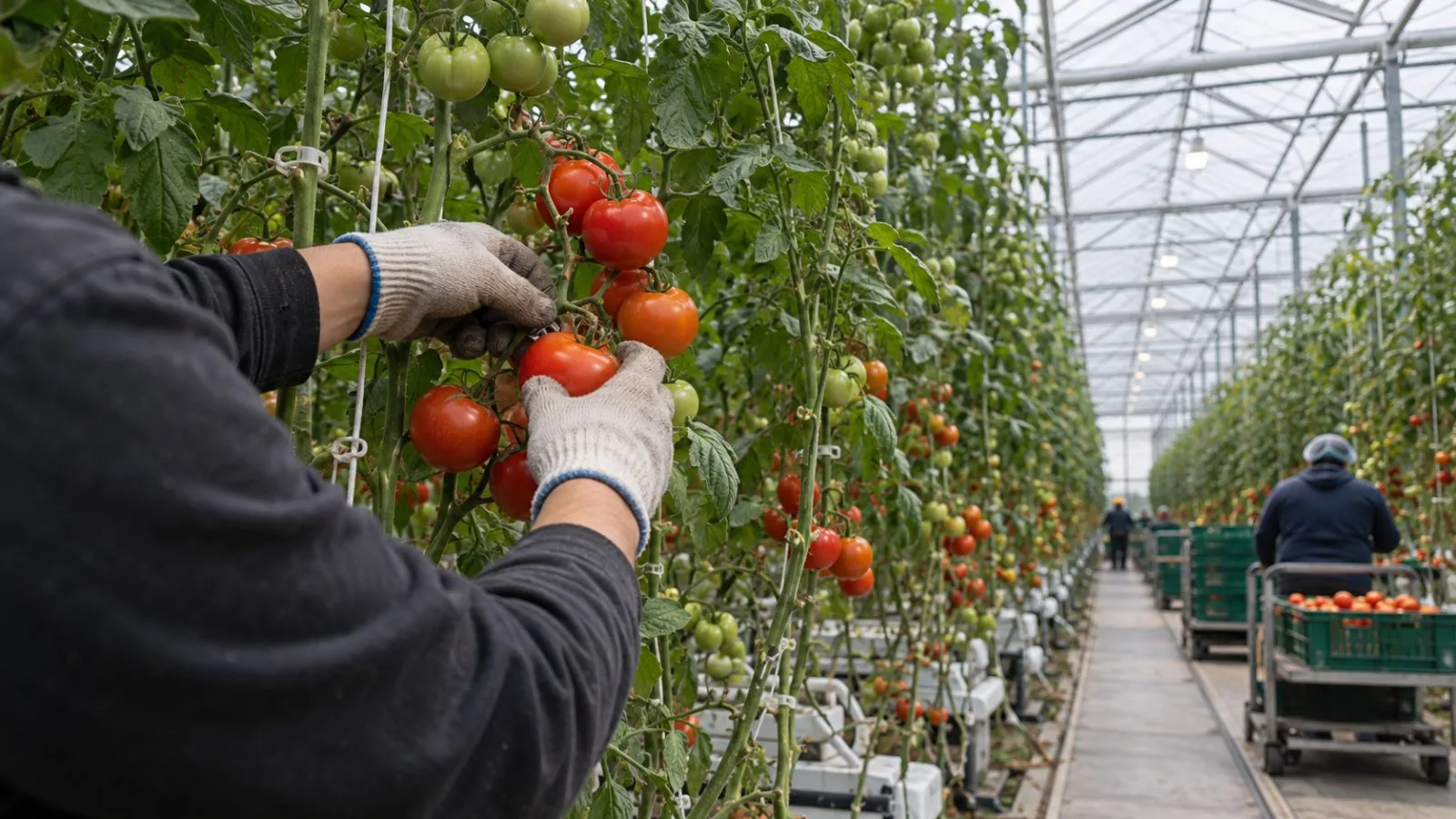
Canada is directing $750 million toward controlled-environment agriculture, aiming to help domestic producers supply more fruits and vegetables throughout the year and lessen reliance on imported produce.
Agriculture and Agri-Food Minister Heath MacDonald announced Friday, Oct. 30, the launch of the Controlled Environment Agriculture (CEA) Growth Pathway Program. The initiative divides the funding between two streams: $650 million for producers adding or modernizing controlled-environment capacity, and $100 million for community-developed efforts to expand food production in rural and northern regions.
The technology stream can support automation, robotics, lighting and digital growing tools. The second stream is aimed at locally designed projects that increase food output and access to fresh food in rural and northern communities. Agriculture and Agri-Food Canada says approved projects may receive from $100,000 to $10 million.
The program forms part of Canada's $3.2 billion National Food Security Strategy, which Prime Minister Mark Carney announced June 11 and which is supported by spending over 10 years. The government says it wants to strengthen domestic supply, make the food system less dependent on imports and improve Canadians' access to affordable produce. MacDonald said the investment can also support employment and economic activity.
Other measures under the strategy include a $1 billion Agri-Food Project Finance Fund managed by Farm Credit Canada, a separate $1 billion Food-Link Fund and tax treatment that allows immediate expensing for eligible greenhouse buildings.
Technology contributions may be repayable or nonrepayable depending on a project's nature and the benefits it is expected to generate. Rural and northern projects will receive nonrepayable contributions.
Eligible applicants include Canadian producers, for-profit and nonprofit organizations, Indigenous individuals and communities, First Nation, Inuit or Métis communities and governments, not-for-profit associations and other levels of government. Organizations could begin submitting a Project Summary Form at noon ET Friday, Oct. 30. The department says applicants whose proposals fit the program's objectives may be asked to submit a full application. Project summaries are due Dec. 23, 2026.