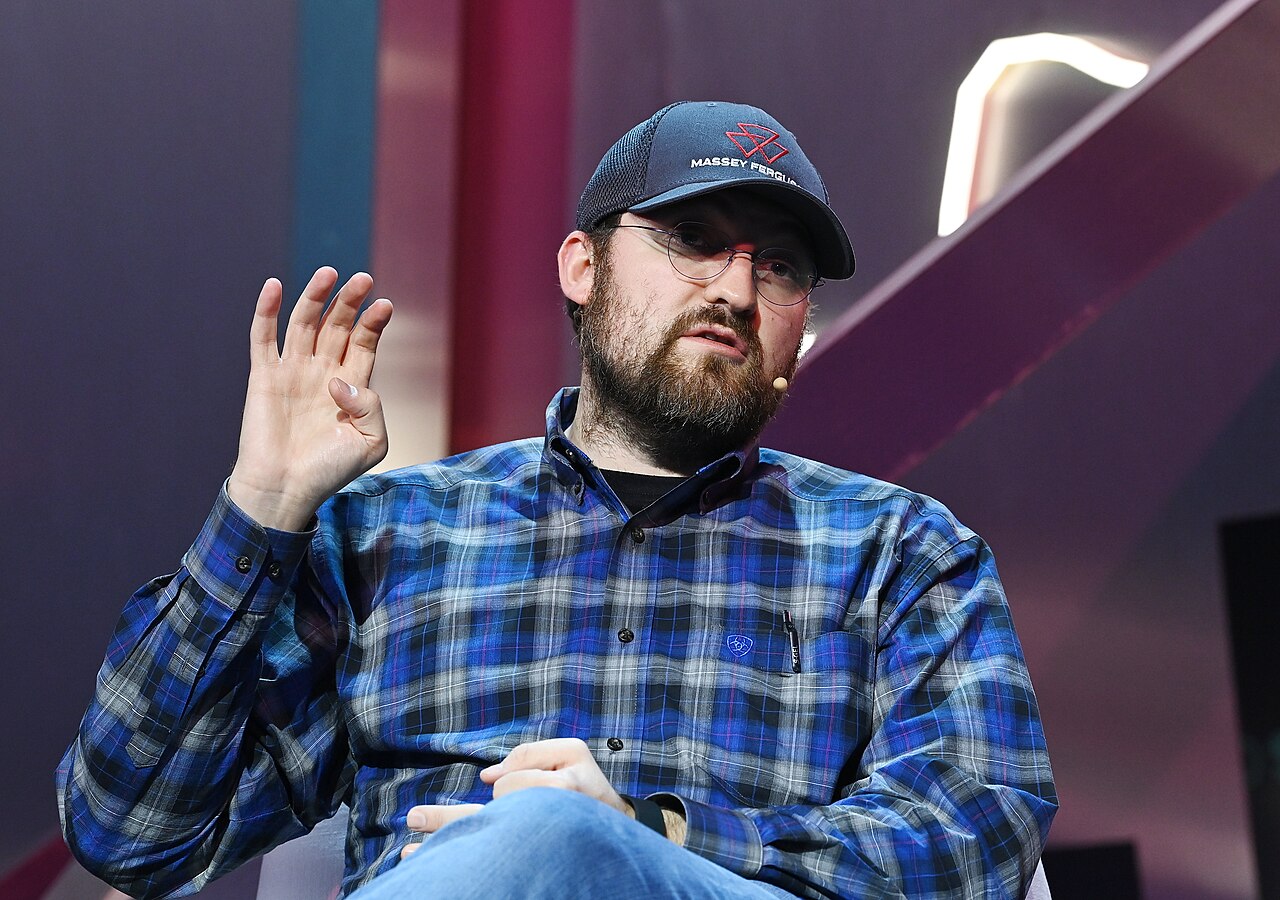
Cardano founder Charles Hoskinson is personally developing a new programming language designed to enhance blockchain transactions, smart contract functionality, and cryptographic verification across the Cardano ecosystem.
The proposed language aims to become the first to integrate transaction intents, proof-carrying data, and Groth16 zero-knowledge proofs into a single framework, potentially simplifying how decentralized applications (dApps) operate.
Hoskinson confirmed the initiative in a Sunday post on X, revealing that he is collaborating with Lucas Rosa, a software engineer at Input Output Global (IOG) and co-creator of Aiken, an established Cardano smart contract programming language.
Despite leading a major blockchain development company, Hoskinson is taking a hands-on role in creating the technology, highlighting its potential importance to Cardano's future infrastructure.
The new programming language will incorporate three core technologies intended to improve blockchain efficiency, security, and developer accessibility.
Transaction intents allow users to specify their desired outcomes without defining every technical step. For example, a cryptocurrency trader could request a token swap under specific pricing conditions while allowing the application to determine how to execute it.
Proof-carrying data enables information to include cryptographic evidence confirming that predetermined rules have been satisfied. This allows other applications to verify the information without repeating complex calculations.
Meanwhile, Groth16 is a zero-knowledge proof system capable of generating compact cryptographic proofs that can be verified efficiently. The technology can demonstrate compliance with certain conditions without exposing sensitive underlying information.
By combining these capabilities, the proposed Cardano programming language could enable developers to build more sophisticated decentralized finance (DeFi) applications, automate complex transactions, and securely exchange verified information between blockchain services.
The approach could also reduce computational requirements by allowing Cardano to verify smaller proofs rather than independently processing every underlying operation.
Currently, Cardano developers primarily use Plutus, a smart contract platform based on Haskell, alongside Aiken, which offers an alternative development environment.
Separately, Midnight, the privacy-focused blockchain developed by IOG, uses Compact, a programming language designed for applications involving confidential information.
Although Hoskinson has outlined the technical direction of the project, several important details remain undisclosed.
The Cardano founder has not announced an official name, released publicly accessible source code, or provided a development timeline.
As a result, the language remains an early-stage initiative, with its potential impact on Cardano smart contracts and blockchain adoption dependent on future development and implementation.