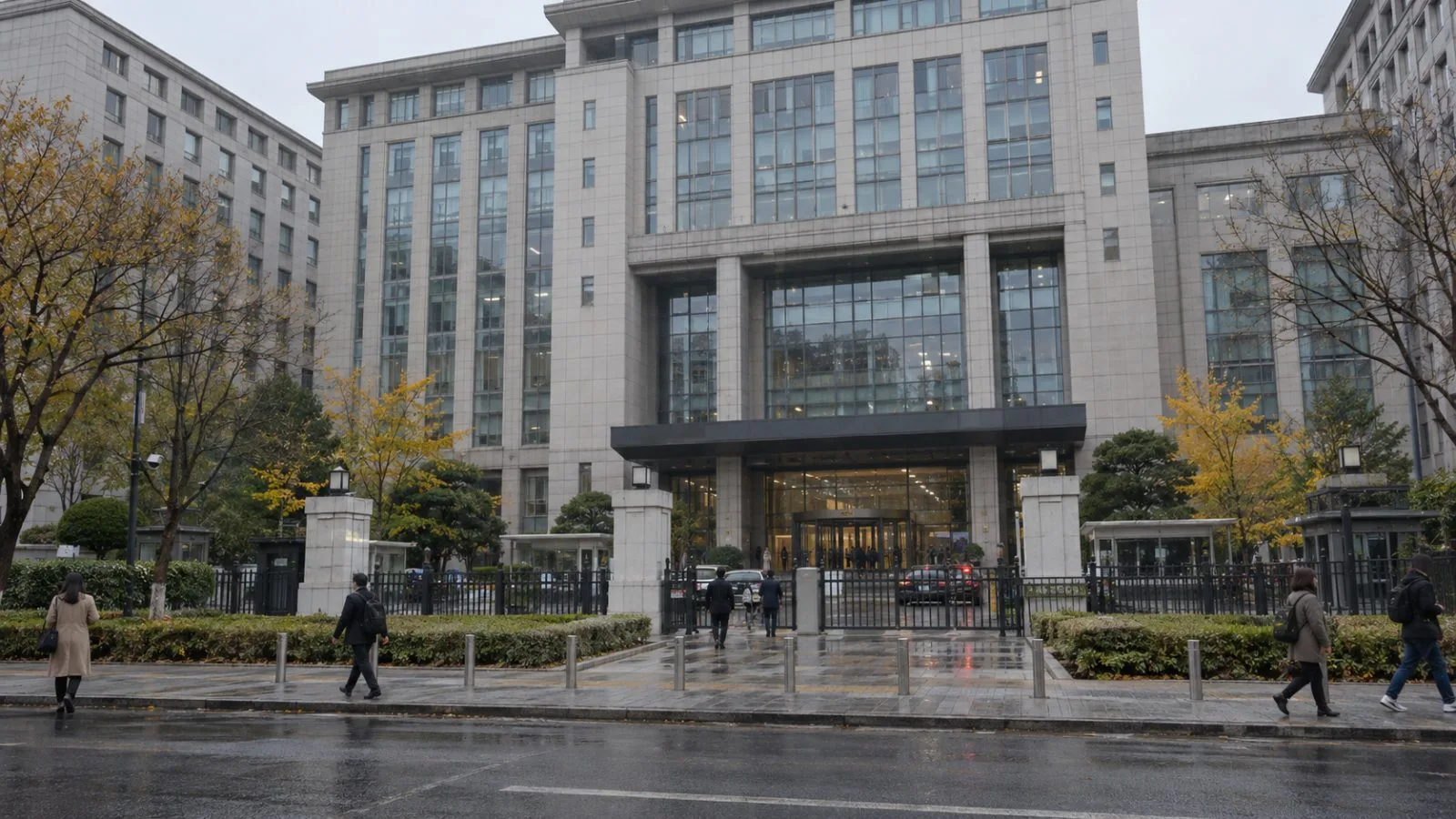
China’s Ministry of Commerce said it reserved the right to respond to a U.S. plan to restrict some American investments tied to Chinese biotechnology, warning the proposal could harm business ties.
The ministry said Saturday that the rules would expand investment restrictions against China and disrupt economic cooperation. It described the proposal as conflicting with an “important consensus” reached by the countries’ presidents but did not identify the agreement or name any potential countermeasures.
The U.S. Department of the Treasury (Treasury) announced the proposed rule on Oct. 22 under the Comprehensive Outbound Investment National Security (COINS) Act. The draft would add certain biotechnology activities to the Outbound Investment Security Program, including developing or using biological systems to produce or control pharmaceutical compounds.
Treasury’s examples include vaccines, cell and gene therapies, monoclonal antibodies and related delivery systems. The proposal concerns certain transactions by U.S. persons involving covered foreign persons, including some equity acquisitions, limited-partner investments, greenfield projects, joint ventures and debt financing. Some transactions would be prohibited, while others would require notification.
The draft sets a $50,000 exception for transactions that otherwise require notification, with the amount aggregated over the preceding 12 months. The exception does not apply to prohibited transactions. Certain publicly traded securities transactions are also excluded, subject to a carve-out for deals that grant governance rights beyond standard minority-shareholder protections.
The existing program took effect Jan. 2, 2025, and covers certain U.S. investments involving China, Hong Kong and Macau in semiconductors and microelectronics, quantum information technologies, and artificial intelligence. Congress enacted the COINS Act on Dec. 18, 2025, giving Treasury authority to add technologies beyond those named in the law.
China’s ministry said the proposal could harm U.S. companies’ interests. Treasury Secretary Scott Bessent said the measure is meant to keep U.S. investment from helping adversaries develop sensitive capabilities, including technologies that “threaten U.S. national security.”
Treasury is accepting written comments through Dec. 7, 2026. The department said it will issue final regulations later, and those rules will establish the program’s effective date; the existing rules remain in effect until then.