
Patients assigned to a three-year coached exercise program had higher eight-year survival in a randomized colon cancer trial, while musculoskeletal adverse events were more common in that group.
The phase 3 CHALLENGE trial report, published in The New England Journal of Medicine, estimated eight-year overall survival at 90.3% in the exercise group (445 assigned) and 83.2% in the health-education group (444 assigned). The 7.1-percentage-point gap compares the estimated survival rates in each group; it does not estimate added life expectancy for an individual patient.
The 889 participants had surgery for stage III or high-risk stage II colon cancer and had completed adjuvant chemotherapy. The trial was conducted at 55 centers.
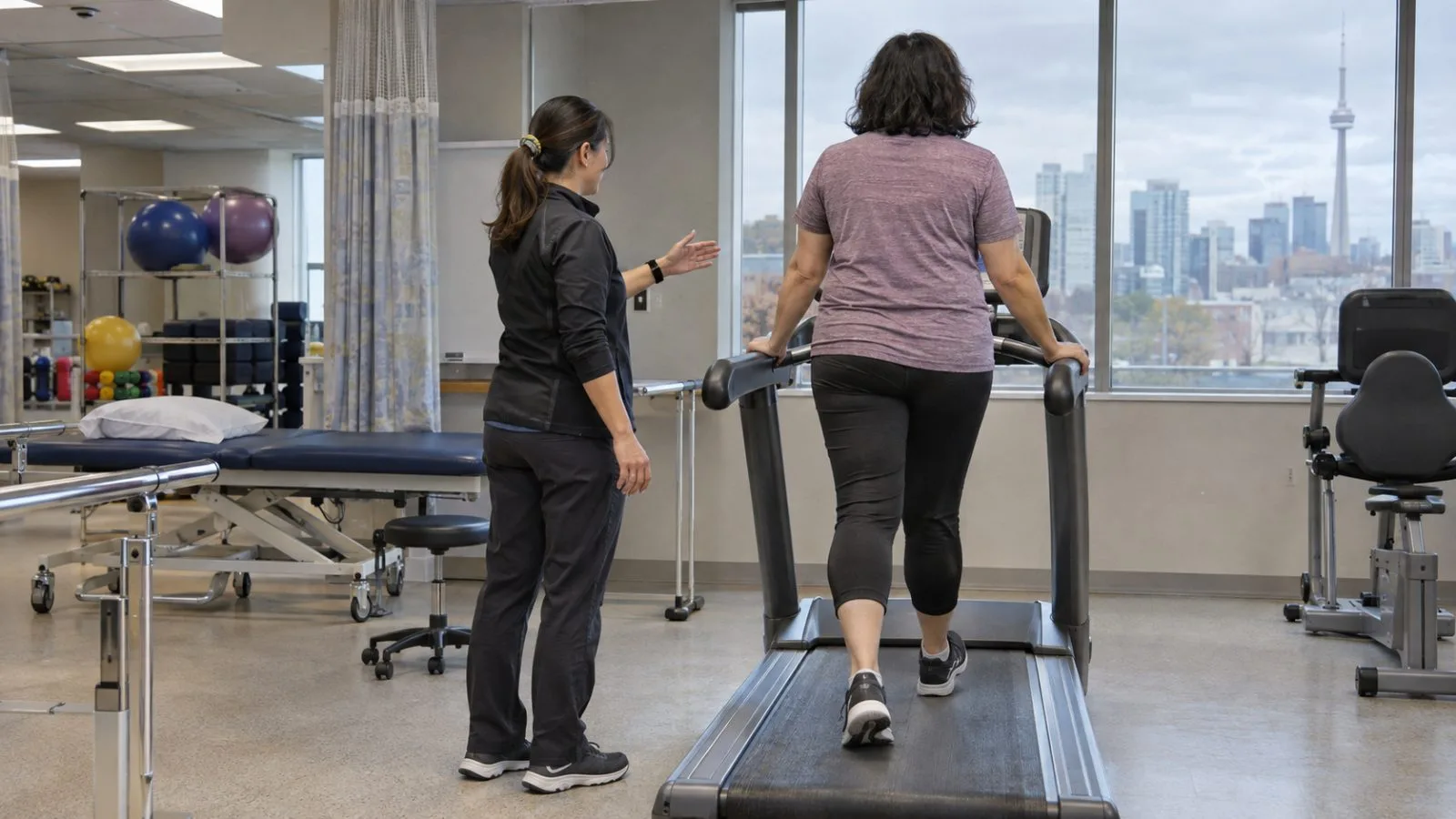
Patients assigned to exercise worked with an exercise specialist, physiotherapist or kinesiologist for three years. The goal was to add 2.5 hours of aerobic activity each week to their usual activity. Meetings were held every two weeks during the first year and monthly for the next two years.
At a median follow-up of 7.9 years, five-year disease-free survival was 80.3% in the exercise group and 73.9% in the health-education group. The trial counted time until cancer returned, a new primary cancer developed or the patient died. The hazard ratio for those events was 0.72 (95% confidence interval, 0.55 to 0.94; P=0.02); the hazard ratio for death was 0.63 (95% confidence interval, 0.43 to 0.94).
Musculoskeletal adverse events occurred in 18.5% of the exercise group and 11.5% of the comparison group.
A guideline update from the European Society for Medical Oncology described trial participants as relatively fit and as having limited comorbidities. It said whether similar results are possible without coaching and other support remains uncertain. The trial studied patients with colon cancer after chemotherapy, so it does not establish whether the program would produce similar results in people with other cancers.
