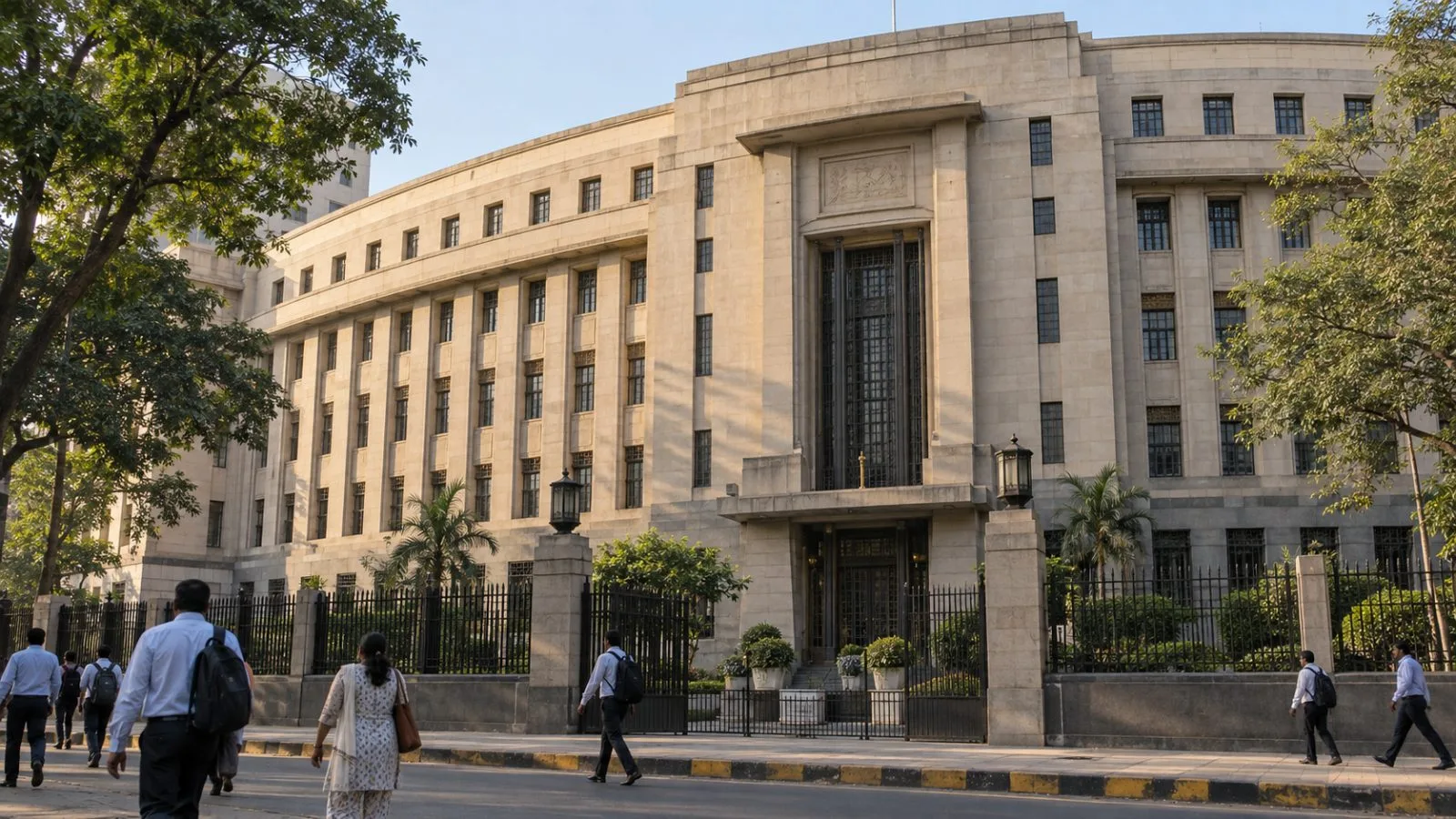
FXStreet quoted USD/INR at ₹95.23 per U.S. dollar, up 0.1%, at 08:02 GMT Oct. 29, and reported that Commerzbank strategists viewed Reserve Bank of India (RBI) policy and domestic activity as support for the rupee.
FXStreet reported that Commerzbank strategists Dr. Henry Hao and Charlie Lay put USD/INR’s six-month corridor at 94 to 97. They said high oil costs could pressure the rupee in the near term. The view follows Commerzbank’s earlier forecast of consolidation in the same range.
On Oct. 7, the RBI’s Monetary Policy Committee (MPC) unanimously raised the repo rate by 25 basis points to 5.50% and shifted its stance to “calibrated tightening.” The RBI projected real GDP growth of 7.1% for fiscal 2026-27 and said near-term rate cuts were not under consideration; future policy choices would depend on economic conditions and the outlook. Its statement also cited crude-oil price volatility amid renewed conflict in West Asia.
Official production figures showed year-over-year growth, with the Ministry of Statistics and Programme Implementation (MoSPI) reporting a 6.7% rise in its September quick estimate of industrial production. Manufacturing output climbed 7.6%, and electricity and gas supply grew 11.2%. MoSPI said quick estimates are subject to revision; its detailed table records August growth at 7.8% after a final revision.
MoSPI said the September estimate was compiled with an 86.5% weighted response rate, while the final-revised August figure used a 92.0% response rate. S&P Global reported the October HSBC Flash India Manufacturing PMI at 54.9, above the 50-point line dividing expansion from contraction.
India’s Petroleum Planning and Analysis Cell (PPAC) reported crude-oil import dependency at 88.2% for fiscal 2024-25, measured against petroleum-products consumption, leaving the country’s import costs exposed to oil-price changes. The next industrial production release, covering October, is scheduled for Nov. 30, according to MoSPI’s release calendar. The RBI’s next policy meeting is set for Dec. 2-4, according to its policy statement.